
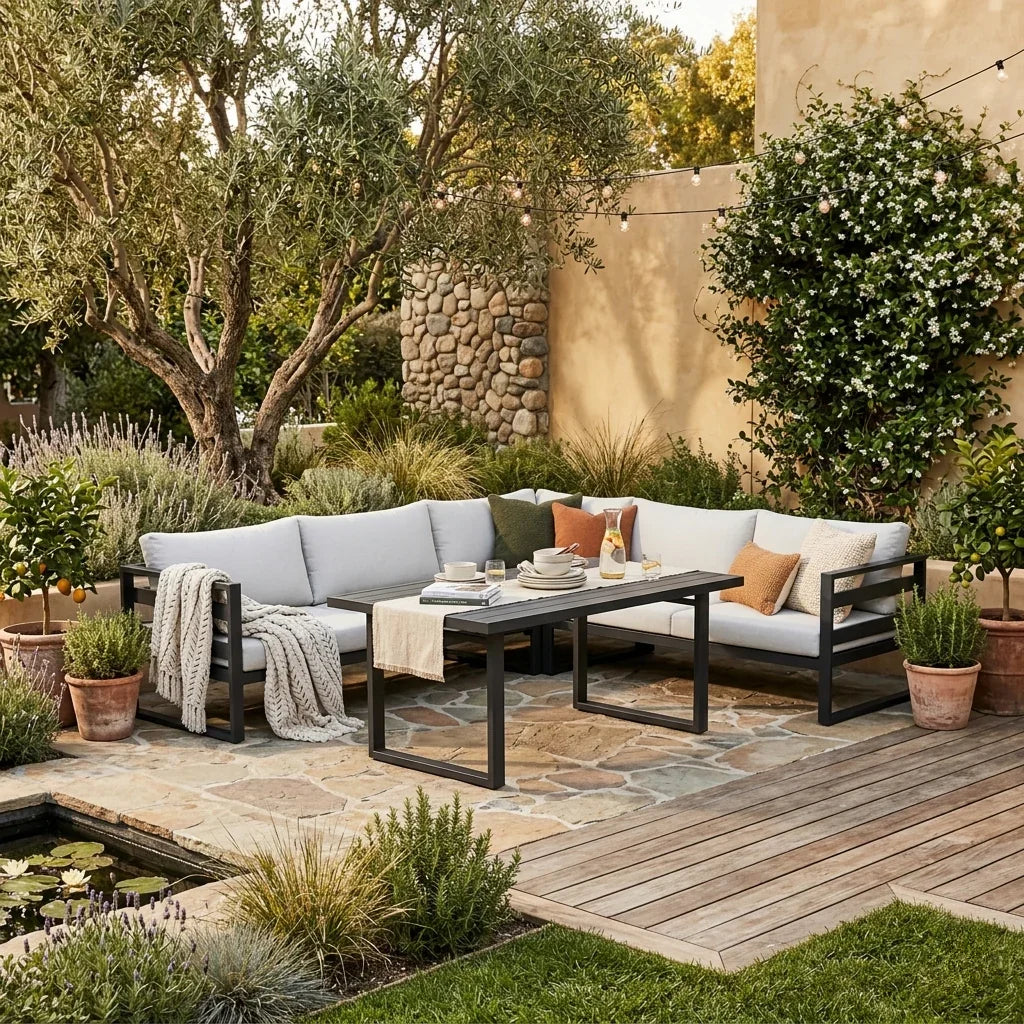
Pillar Guide · Outdoor Living
Queensland weather is made for outdoor living — and it's tough on the wrong furniture. Strong UV breaks down finishes and plastics, humidity fuels mould in cushions, and storm season tests whether your set stays put or becomes a projectile. This guide ranks every common outdoor furniture material against those three "Queensland killers", walks through a region-by-region and use-case-by-use-case buying approach, and covers the seasonal care habits that make a set last a decade instead of two summers.

Understanding Queensland's climate threats
South-East Queensland is subtropical, coastal areas add salt and wind, and the tropical north adds wet-season humidity and cyclone risk. A good purchase decision starts by matching your material to your exposure — full sun vs covered alfresco, coastal vs inland — and being honest about how often you'll actually maintain it. In practice, Queensland's outdoor furniture "fail modes" are predictable: UV breaks down finishes and plastics, humidity fuels mould in cushions, and storm season tests whether your set stays put. Choose materials and fabrics that address all three.
- Summer (Dec–Feb): 28–42°C. Peak UV and humidity; afternoon storms are common.
- Autumn (Mar–May): 20–30°C. Storms ease, humidity lingers, UV stays strong.
- Winter (Jun–Aug): 10–22°C. Milder and drier — the best season for maintenance.
- Spring (Sep–Nov): 20–35°C. Warming up, UV intensifies, and it's time to prep for storm season.
For the full seasonal breakdown of what to actually do each quarter, see our seasonal maintenance checklist.
Best outdoor furniture materials ranked for Queensland
These rankings focus on real-life Queensland performance — heat, humidity and storms — plus how forgiving each option is if you're busy.
1. Powder-coated aluminium — best all-rounder
A top pick for most Queensland homes because it's low-maintenance, corrosion-resistant, and easy to move when storms roll in. Rust-resistant for humidity and coastal suburbs, lightweight enough to shift or secure before a storm, and strong value over time. The trade-off: bare metal or dark finishes can get hot in full sun. Read our dedicated aluminium outdoor furniture guide for construction grades and powder-coat quality cues.
2. Teak timber — premium and ages well
Naturally water-resistant and comfortable in the heat, teak handles humidity swings better than most timbers and feels cooler than metal in direct sun. Left untreated it weathers to a silver-grey patina (not damage); if you want to keep the golden colour, plan on yearly oiling. See our full teak outdoor furniture guide.
3. PE synthetic wicker over an aluminium frame — great in covered areas
The key is choosing quality PE wicker (not cheaper PVC) with a rust-resistant frame underneath. Good humidity performance with airflow and a comfort-first lounging look — just avoid PVC wicker, which can turn brittle in Queensland heat. Compared in detail in synthetic wicker vs natural rattan.
4. Eucalyptus timber — budget-friendly
Solid value, Australian-grown, and more affordable than teak — but expect more frequent oiling to reduce greying and drying.
5. Steel and cast iron — only with proper coatings
Standard steel is risky near the coast. If you choose metal here, look for higher-grade finishes and be strict about care; heavy pieces can be storm-stable, but chips and scratches lead to rapid corrosion, and dark steel absorbs heat in direct sun. See powder-coated steel vs aluminium and stainless steel for coastal Queensland.
6. Standard plastic or low-grade resin — short lifespan in QLD
Many budget plastics fade and turn brittle quickly under Queensland UV — higher-quality HDPE is the exception. Lowest upfront cost, but expect fading, brittleness and a shorter working life through the stormy months.

Side-by-side comparison
Use this to compare the big Queensland threats — UV resistance, humidity performance, heat comfort, storm safety and maintenance — plus a typical Queensland lifespan.
| Material | UV resistance | Humidity | Heat comfort | Storm safety | Maintenance | Typical QLD lifespan |
|---|---|---|---|---|---|---|
| Powder-coated aluminium | Excellent | Excellent | Good (light colours) | Good — light & movable | Very low | 15–25 years |
| Teak timber | Very good | Very good | Excellent | Good — heavier, stable | Low–moderate | 20–30 years |
| PE synthetic wicker | Good | Good (with airflow) | Good | Moderate | Low | 8–12 years |
| Standard plastic | Poor | Fair | Fair | Poor — light & brittle | Very low | 1–3 years |
Best material by use case
Poolside
Chlorine, sunscreen, splashing and hot surfaces. Prioritise rust-resistant frames and fast-dry seating. Best pick: aluminium frames, quick-dry foam, solution-dyed fabric.
Outdoor dining
Heat comfort matters most. Look for ventilated chairs (mesh or open weave) and durable tabletops. Best pick: teak tops or aluminium frames with outdoor-rated fabrics.
Lounging
Covered alfresco zones can trap humidity — manage airflow to reduce mould risk. Best pick: PE wicker over aluminium, with removable covers.
Balcony or small spaces
Compact footprint and easy storm prep. Choose lighter sets you can move quickly. Best pick: aluminium bistro sets or compact teak — see our apartments & small spaces guide.
Regional Queensland guide
Queensland spans huge climate variation — use this to adjust your material choice by region.
- Brisbane & SEQ: subtropical, hot humid summers and mild winters. Prep for storms November–March. Best picks: aluminium, teak, PE wicker.
- Gold & Sunshine Coast: salt air and onshore winds. Rinse frames regularly and avoid mild steel. Best picks: marine-grade aluminium, teak.
- Tropical North: wet season, extreme humidity and cyclone risk. Secure or store furniture in season. Best picks: aluminium, marine-grade options, PE wicker.
- Ipswich & inland: hotter peaks, less humidity. Shade structures become essential. Best picks: aluminium, teak, heavier tables.
For coastal properties specifically, see marine-grade outdoor furniture for coastal Queensland.
Cushions & fabrics — the anti-mould system
Frames can last decades, but cushions often fail first in Queensland. The win is breathable construction, fast drying, and washable covers.
Fabric hierarchy
- Solution-dyed acrylic (Sunbrella-style): best fade resistance and mould resistance.
- Olefin: great UV and moisture performance at strong value.
- Textilene / Batyline mesh: maximum airflow, dries quickly — great for dining chairs and sun loungers.
- Polyester: only worthwhile if it specifies UV stabilisers, otherwise it fades faster.
- Cotton or linen: avoid outdoors in Queensland — it absorbs moisture and invites mould.
Full fabric comparison in our Sunbrella, Olefin & UV-resistant fabric guide.
Quick-dry foam
Standard foam can stay wet for hours after storms. Quick-dry drainage foam lets water pass through and air-dry much faster, cutting mould risk significantly.

Seasonal care calendar
Consistency beats intensity. A handful of small habits each season dramatically extends lifespan in Queensland conditions.
- Summer (Dec–Feb): wipe down weekly, dry cushions after heavy rain, move or secure items before severe storms. Coastal homes should rinse aluminium frames regularly.
- Autumn (Mar–May): deep clean frames, tighten hardware, wash covers and dry fully.
- Winter (Jun–Aug): the best maintenance weather — oil timber if desired, touch up chips in coated frames.
- Spring (Sep–Nov): inspect before storm season, check umbrellas and weights, consider breathable covers.
See the full month-by-month system in our seasonal maintenance checklist.
Budget tiers
In Queensland, cheap sets often cost more over time if they fail within one to three summers. Here's a practical way to choose the right spend for your household.
- Budget — $300–$800: often plastic or low-grade steel; shorter lifespan in harsh UV; best for temporary use.
- Mid-range — $800–$2,500 (most popular): aluminium or quality PE wicker; best value for most Queensland homes; worth spending more on fabrics here.
- Premium — $2,500+: teak, marine-grade options and designer pieces; longest lifespan and best comfort; ideal for permanent alfresco zones.
Full pricing framework and warranty terms in our quality, pricing & warranties guide.
Queensland buyer checklist
Run through this before you commit — each point heads off a common Queensland failure point.
- Frame is powder-coated aluminium, a marine-grade option, or durable hardwood.
- If wicker: confirmed PE wicker (not PVC) on an aluminium frame.
- Cushions specify quick-dry or drainage foam.
- Fabric is solution-dyed acrylic, olefin or mesh — not basic polyester.
- Hardware and fixings are corrosion-resistant, especially in coastal suburbs.
- Measurements allow room for airflow, and space to store cushions when needed.
- Weight makes sense for storm season — can you move or secure it quickly?
- Maintenance matches your lifestyle — oiling timber vs a simple wipe-clean.
Shop the right category
Start with the category that matches how you actually use your outdoor space.
- Outdoor Dining Sets — entertaining-ready sets that handle Queensland weather.
- Outdoor Dining Tables — round, extendable and family-size options.
- Swing Chairs — create a resort-style corner at home.
- Outdoor Coffee Tables — finish your lounge zone with a practical surface.
Want a recommendation based on your suburb's exposure — coastal, covered, full sun or poolside? Visit us in-store or find your nearest showroom and contact details. We have five showrooms across South-East Queensland: Rocklea, Virginia, Beenleigh, North Ipswich and Bundall on the Gold Coast, all open seven days.
FAQs
-
What is the best outdoor furniture material for Queensland's humidity?
Powder-coated aluminium and quality teak are the strongest Queensland picks. Aluminium resists corrosion and stays low-maintenance, while teak is naturally water-resistant and handles humidity swings well.
-
How do I stop outdoor cushions going mouldy in Brisbane and South-East Queensland?
Prioritise quick-dry foam and breathable outdoor fabrics such as solution-dyed acrylic or olefin. After rain, stand cushions on edge to drain and dry, and avoid storing damp cushions in sealed boxes — they need airflow. See our full mould and mildew removal guide.
-
Is synthetic wicker good for Queensland weather?
Yes — if it's quality PE wicker (not PVC) over a rust-resistant frame, ideally aluminium. Keep airflow high and avoid trapping damp cushions in covered, humid areas.
-
What changes if I live near the coast, such as the Gold Coast or Sunshine Coast?
Salt air increases corrosion risk. Choose corrosion-resistant frames and rinse or wipe them periodically to remove salt build-up, and avoid mild steel altogether.
-
Is aluminium outdoor furniture too hot to sit on?
Bare metal in full sun can get hot. Choose lighter powder-coated finishes, use cushions or mesh seating, and add shade — an umbrella or pergola — for peak summer comfort.