
Pick up at Rocklea or delivery across SE QLD · free within 10 km*
Pay later: Afterpay, Zip, Klarna, Latitude, PayPal


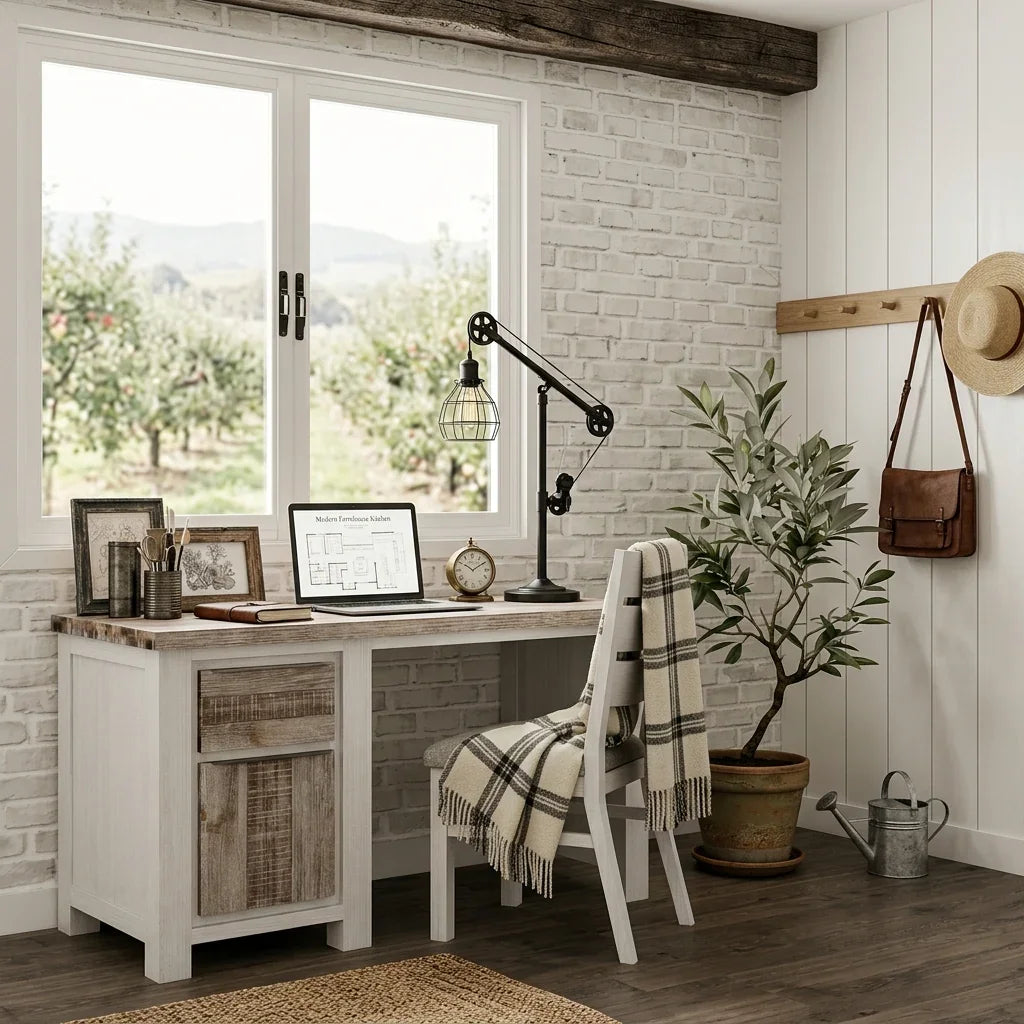
Cupboard · 1 drawer
Farmhouse white and acacia study desk with a single drawer and cupboard
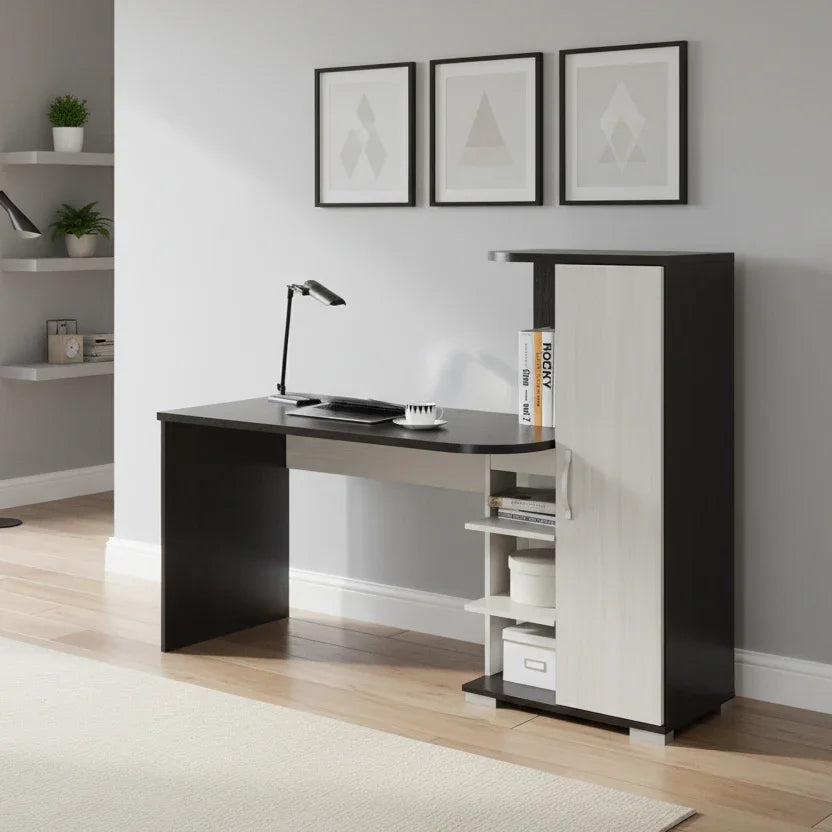
Cabinet & shelves
Two-tone wenge and oak MDF study table with built-in cabinet and shelves
Pick up where you left off
Recently viewed
A study table is more than a surface to work on — it shapes your posture, your focus, and how long you can sustain productive work. The right desk for a university student in a shared bedroom looks very different to what a professional needs for a full-time WFH setup. This guide covers what to consider before you buy, from size and storage to ergonomics and the right pairing with your chair.

Which Type of Buyer Are You?
The best study table for your situation depends on who's using it and how. Start here to identify the right desk style, size, and features before browsing.
Student Bedroom or Study Nook
Prioritise compact footprint and storage — you need space for a laptop or monitor, textbooks, and stationery without the desk dominating the room. Look for desks with at least one drawer and an 80–120cm surface. White and light oak finishes suit small spaces by keeping the room feeling open.
Dedicated WFH Workspace
You need more surface area — typically 120–160cm wide — to accommodate dual monitors, a keyboard, and documents comfortably. Cable management and drawer storage matter more at this level. Invest in a desk that pairs well with an ergonomic chair; you'll be sitting here 6–8 hours a day, and your posture depends on both pieces working together.
Kids' Study Corner
For school-age children, look for enough surface area for books, a laptop and craft materials, a finish that wipes clean, and storage that keeps school things off the desktop. At a standard 72–75 cm desk, a younger child may need a footstool so their feet rest flat.
Our Desks and Study Tables
We keep the range small, and both pieces build storage into the frame, so the basics have a place without a separate unit.
Homestead Study Desk
A soft white painted frame with acacia timber panels. A side pedestal holds one drawer above a cupboard, so stationery, notebooks and cables stay off the desktop. Desk dimensions are being confirmed with the supplier; call 07 3161 5415 and our team can check them for you.
Monalisa Study Table
A study table in two-tone wenge and oak MDF, with a built-in cabinet and shelves.
Getting the Ergonomics Right
Standard Desk Height
Most Australian desks sit at 72–75 cm, the range at which most adults can sit with their forearms roughly parallel to the floor and their feet flat on the ground. This is the measurement to start with when choosing a desk. If you're much shorter or taller than average, or the desk is for a child, check the height with the chair you plan to use.
The Elbow Rule
When seated at your desk, your elbows should bend at roughly 90 degrees and rest just above the desk surface. If the desk is too high, you'll hunch your shoulders; too low, and you'll lean forward. Getting this right is why we recommend sitting at the desk with the chair you plan to pair it with: ask which showroom has both on display — it's the only reliable way to check the fit before you commit.
Chair-to-Desk Pairing
A study table and an office chair work as a system. A chair with a gas-lift seat makes up for small differences in desk height. If your chair seat height is fixed, the desk height becomes critical. Most of our office chairs suit a standard 72–75 cm desk. The Copenhagen sits higher and suits a desk of about 76 cm or taller. Our in-store team can help you match both pieces in one visit.
Queensland WFH tip: Brisbane's summer humidity makes breathable mesh chairs far more comfortable than PU leather for long work sessions. If you're setting up a full-time home office in South East Queensland, prioritise ventilation in your chair choice.
Completing Your Workspace
A desk is the starting point — but a productive workspace is built around three elements working together: a desk that fits your space, a chair that supports your posture, and storage that keeps your surface clear. Our home office furniture range covers all three, and our showroom team can help you pull together a complete setup in a single visit.
- Desk: Choose the right type and size for your space and usage pattern.
- Chair: Match seat height to desk height, and consider a mesh back for breathability in Queensland's climate.
- Storage: A bookshelf or filing cabinet alongside your desk keeps the work surface clear, which directly supports focus and productivity.
Frequently Asked Questions
What is the standard height for a study table in Australia?
The standard desk height in Australia is 72–75 cm, the range at which most adults can sit with their forearms roughly parallel to the floor, elbows at approximately 90 degrees, and feet flat on the ground. This is the height to look for in a fixed desk if you're of average height. If you're shorter, taller, or buying for a child, check the height with the chair you plan to use. Ask which of our showrooms (Rocklea, Ipswich, Bundall, Virginia and Beenleigh) has the desk on display, and our team can help you check its height alongside the chair you plan to use.
What size study table do I need?
It depends on how you'll use it. For a laptop and light study, an 80–100cm wide desk is usually sufficient. For a desktop setup with a single monitor, aim for 100–120cm. For dual monitors or a full WFH setup with documents and peripherals, 120–160cm gives you the workspace you need. Always measure your available floor space first, and leave at least 90cm of clearance behind the chair so you can push back comfortably.
What is the difference between a study table and a computer desk?
The terms are often used interchangeably in Australian retail, but there is a practical distinction. A study table typically refers to a simple, flat work surface suited to general study, writing, and laptop use. A computer desk is usually designed with a monitor in mind — often wider (120cm+), sometimes with cable management, a keyboard tray, or overhead storage. If you're setting up for desktop computing with multiple peripherals, look specifically for computer desks with storage. If you mainly use a laptop, a study table will serve you well.
Should I get a study table with or without drawers?
With drawers if you have stationery, files, or study materials that currently live on your desk or on the floor. A clutter-free desktop directly supports concentration — keeping things off the surface but within reach is exactly what a drawer achieves. Without drawers if you already have separate storage, prefer a minimal look, or are working with a very compact space where a simpler desk with a thin profile suits better.
Does A2Z Furniture deliver study tables to Brisbane, Ipswich, and the Gold Coast?
Yes. We offer free local delivery within about 10 km of our Rocklea warehouse on eligible items when you pay outright (not pay later), ground floor only (terms and conditions apply). We also have 5 showrooms across South East Queensland — Rocklea (Brisbane), North Ipswich, Beenleigh, Virginia, and Bundall; ask which one has the desk you like on display. Call us on 1300 781 990 to confirm delivery for your postcode or to check current stock availability.
Do study tables come assembled or flat-pack?
Ask our team how each desk is packed. We offer a paid assembly service if you'd rather not build it — ask for details and pricing when you place your order.
Can I try a study table in person before buying?
Yes — and for a desk, we strongly recommend it. Ergonomics are personal, and the only reliable way to know if a desk height, depth, and surface area suit you is to sit at it. Ask which of our five South East Queensland showrooms — Rocklea (Brisbane), North Ipswich, Beenleigh, Virginia or Bundall — has the desk you like on display, then try it alongside our office chairs and get personalised advice from our team. No appointment needed. We're open 7 days a week.
Whether you're setting up a first study space or upgrading a WFH office, the A2Z Furniture team can help you find the right desk, chair, and storage to build a workspace that actually works for you. Visit one of our five South East Queensland showrooms — no appointment needed — or browse and order online.
Free local delivery terms and conditions apply. 5 showrooms across South East Queensland. Call 1300 781 990 or email info@thea2zfurniture.com.