
Materials · Coastal & Marine-Grade
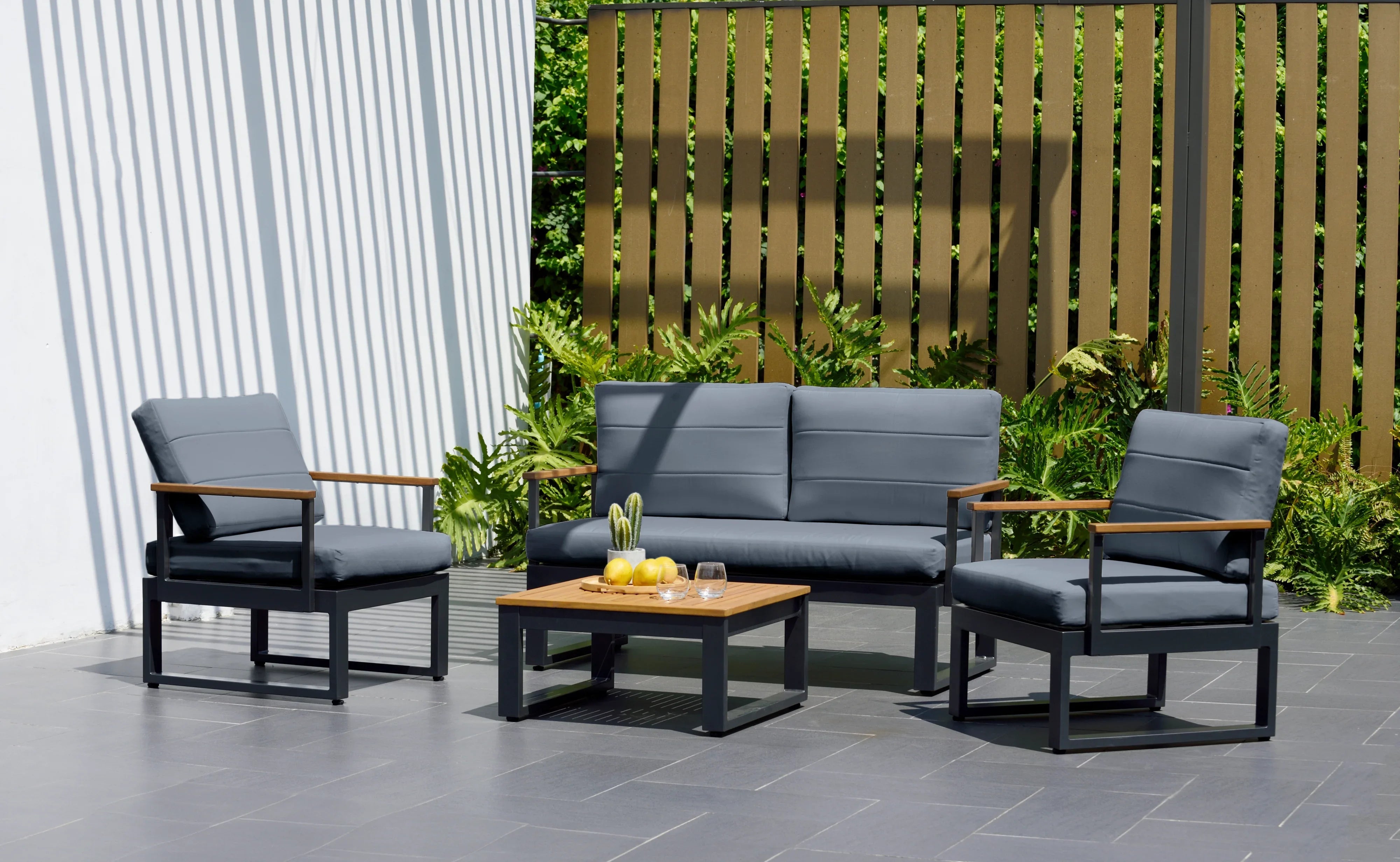
"Marine-grade" gets used as a vague quality marker on outdoor furniture listings, but it's actually a system spec — not a single material. A complete marine-grade piece needs the right frame, the right finish, the right fabric, the right hardware, and the right approach to where dissimilar metals touch each other. Get any one of those wrong and the piece fails at that weak link, regardless of what the other elements cost. This guide pulls together the coastal angle from across our Queensland materials guide into a single decision framework — the system-level view for buyers who own beachfront or near-coastal Queensland properties and want their outdoor furniture to actually last.

What "marine-grade" actually means
The term "marine-grade" is borrowed from the boating industry, where outdoor furniture lives in the harshest possible conditions — direct salt spray, constant UV, and ocean humidity year-round. Furniture engineered for that environment uses specific material specifications across every component, not just a single premium element. For Queensland coastal homes, the same system thinking applies even if the conditions are slightly less aggressive.
A genuinely marine-grade outdoor piece is built around five interrelated decisions:
- 1. Frame material. The structural metal or polymer. Powder-coated aluminium (specifically marine alloys 5052, 6061, or 6063) is the workhorse; 316 marine-grade stainless steel is the premium upgrade; HDPE marine-grade polymer is the maintenance-free alternative.
- 2. Finish. The protective coating on the frame. Multi-stage powder coating with corrosion inhibitors outperforms standard single-coat finishes in coastal conditions. The thickness, the pretreatment of the metal before coating, and the cure quality all matter.
- 3. Fabric. The cushion cover and any sling material. Marine-grade fabrics use solution-dyed acrylic (Sunbrella Marine Plus and similar) or marine-grade vinyl with antimicrobial treatments. Standard outdoor fabric works for the first few years; marine-grade is what survives 10+.
- 4. Hardware. Fasteners, hinges, sliding mechanisms, and umbrella tilts. 316 marine-grade stainless steel for fasteners is non-negotiable. Quality builds also use UV-resistant Tenara thread on stitching and hidden hardware that's protected from direct salt-spray contact.
- 5. Joint isolation. Where dissimilar metals touch each other (e.g., stainless screws into an aluminium frame), proper marine-grade construction isolates the contact point with nylon washers, plastic bushings, or sealant. Without isolation, galvanic corrosion eats the joint from inside — a failure mode covered later in this guide.
The buying lesson: a piece can fail any one of these tests and still be marketed as "marine-grade" or "coastal-rated." The label alone doesn't tell you whether the piece is genuinely engineered for the coast. The product specification — frame alloy, finish process, fabric brand and grade, hardware grade, joint construction — does.
The Queensland coastal exposure gradient
Not every "coastal" property faces the same conditions, and the gradient across South East Queensland is sharper than buyers realise. Direct ocean-front exposure on the Gold Coast strip is genuinely a different environment from bayside Brisbane homes 3km back from the water. The right marine-grade spec depends on which tier you're in. Our complete outdoor furniture guide for Brisbane and Queensland covers the broader climate-by-region framework; the marine-specific tiers below sit within that broader picture.
| Exposure tier | Distance from open water | Example SEQ locations | Recommended spec |
|---|---|---|---|
| Tier 1 — Direct beachfront | 0–200m, line of sight to ocean | Surfers Paradise high-rises, Mermaid Beach, Burleigh esplanade, Sunshine Coast beachfront, Coolangatta | Full marine-grade — 316 stainless or marine aluminium with multi-stage powder coat; Sunbrella Marine Plus or marine vinyl; 316 fasteners with isolators |
| Tier 2 — Bayside SEQ | 0.2–5km from open water | Sandgate, Wynnum, Manly, Bundall, Sanctuary Cove, Hope Island, Paradise Point | Quality marine-grade — powder-coated extruded aluminium, solution-dyed acrylic cushions, 316 stainless fasteners. Multi-stage powder coat optional but recommended |
| Tier 3 — Inner-suburban coastal | 5–15km, salt air present but moderate | Eastern Brisbane suburbs, parts of the northern Gold Coast, parts of the Sunshine Coast hinterland | Standard quality outdoor furniture is sufficient — powder-coated aluminium with solution-dyed acrylic cushions handles this exposure indefinitely |
| Tier 4 — Inland | 15+ km, no meaningful salt influence | Ipswich, Beenleigh, Logan, western suburbs | Marine-grade spec is overspecification — standard quality outdoor furniture is the right answer |
Tier 1 is where the full marine-grade system earns its premium. Tier 2 — the broad bayside-SEQ band where most Queensland coastal homes actually sit — gets most of marine-grade's benefits at lower cost by using quality powder-coated aluminium without necessarily paying for the highest-spec marine versions of every component. Tiers 3 and 4 don't need marine-grade at all.
The marine-grade frame decision
Frame material is the foundation of the marine-grade system. Three categories work in coastal Queensland; the right one depends on exposure tier, budget, and aesthetic preference.
Powder-coated marine-grade aluminium
The mainstream answer for most coastal Queensland buyers. Aluminium doesn't rust — it forms a thin, stable oxide layer that protects the metal underneath even when the powder-coat is breached. Marine-grade aluminium uses specific alloys (5052, 6061, or 6063) that have higher magnesium content for additional corrosion resistance compared to commodity aluminium. For Tier 2 buyers, standard extruded aluminium with quality powder-coating is sufficient; for Tier 1, marine-alloy aluminium with multi-stage powder coating is the upgrade. Our complete aluminium buyer's guide for Queensland covers the construction grades (cast vs extruded vs hollow) and powder-coat quality cues in detail.
316 marine-grade stainless steel
The premium upgrade for Tier 1 buyers and design-driven projects where the polished metal aesthetic matters. The key chemistry is molybdenum content — 316 contains 2–3% molybdenum that resists chloride pitting in a way 304 stainless cannot. Genuinely marine-grade stainless costs significantly more than aluminium for comparable performance, and "marine-grade stainless" on a product listing should always be specified as 316 (not 304). Our stainless steel buyer's guide for coastal Queensland goes deep on the 304-vs-316 decision and the situations where stainless genuinely outperforms aluminium.
Marine-grade polymer (HDPE / poly lumber)
The maintenance-free alternative, and an underrated answer for direct-beachfront buyers. High-density polyethylene marine-grade polymer cannot corrode — it has no metal to attack. For Tier 1 buyers who want to genuinely set-and-forget their outdoor furniture, MGP outdoor furniture (sold under brand names like Telescope Casual) handles direct salt spray indefinitely with only fresh-water rinses for care. The trade-off is aesthetic — the polymer category leans toward traditional Adirondack and Cape Cod styles rather than modern minimalism. See our polywood and recycled plastic buyer's guide for the full HDPE category.
Multi-stage powder coating and marine alloys
If you've decided on aluminium, the next decision is the finish quality — and this is where mainstream and marine-grade specifications genuinely diverge. "Powder-coated aluminium" gets used as a single category, but the manufacturing process varies significantly.
Single-coat vs multi-stage powder coating
Standard outdoor aluminium furniture uses single-coat powder coating: clean, electrostatic spray, bake. The result is good — typically 60–100 microns of hard finish that handles UV and most weather indefinitely. Multi-stage coating adds a chemical pretreatment phase (typically a chromate or zirconium conversion coating that bonds molecularly to the aluminium), an epoxy primer coat, and the colour topcoat. The total system is thicker, more chemically bonded, and significantly more resistant to chip propagation in salt-air environments. The cost premium runs roughly 25–40% over single-coat.
Marine alloy specifications
Standard outdoor aluminium furniture often uses commodity 1100 or 3003 aluminium grades — sufficient for most outdoor use but not optimised for marine conditions. Marine-grade aluminium specifications are:
- 6061 alloy — the workhorse marine aluminium. Higher magnesium and silicon content gives improved corrosion resistance and strength. Used in boat hulls, marine fittings, and premium coastal outdoor furniture.
- 6063 alloy — slightly softer than 6061 but excellent extrusion properties. Used in marine-grade architectural extrusions and quality coastal outdoor furniture frames.
- 5052 alloy — the highest magnesium content of the common marine alloys. Outstanding salt-water resistance, used in marine fittings, fuel tanks, and high-end coastal pieces.
For Tier 2 buyers, standard aluminium with quality single-coat powder is sufficient. For Tier 1 direct-beachfront buyers, marine alloy specifications and multi-stage powder coating both pay back over the piece's lifespan.
Marine-grade fabric, foam, and hardware

The frame is structural; the fabric, foam, and hardware are where the piece actually meets daily use. Marine-grade specifications for these components are upgrades worth knowing about.
Marine-grade fabric (Sunbrella Marine Plus and equivalents)
Standard outdoor solution-dyed acrylic fabric handles general outdoor exposure well. Marine-grade variants — Sunbrella Marine Plus is the most recognised name — add additional treatments specifically for salt and water exposure: enhanced UV stabilisers, antimicrobial finishes, water-repellent treatments above the standard outdoor specification. The price premium runs roughly 20–30% over standard solution-dyed acrylic. For Tier 1 direct-beachfront buyers, this premium is worth paying. For Tier 2 buyers, standard solution-dyed acrylic is usually sufficient. Our complete outdoor fabric guide covers the broader fabric decision and the foam-and-drainage considerations that matter as much as the cover material.
Quick-dry reticulated foam
A genuine marine-grade specification, regardless of exposure tier. Quick-dry open-cell reticulated foam allows water to drain straight through the cushion and dry within hours, even in 70%+ humidity. Standard closed-cell foam absorbs water and grows mould internally. For Queensland coastal cushions specifically — where salt-water rain and direct salt spray both occur — reticulated foam is the difference between a 5-year cushion and a 12-year cushion.
316 stainless hardware
Non-negotiable for any marine-grade piece. Fasteners, hinges, springs, umbrella tilts, sliding mechanisms — anywhere there's a metal component beyond the main frame, it should be 316 stainless. Standard 304 stainless hardware will pit and tea-stain in coastal conditions, eventually failing or staining the surrounding frame. The cost premium for 316 over 304 is typically only $50–$100 across an entire dining set, and it's the cheapest marine-grade upgrade available.
UV-resistant Tenara thread
The detail most articles miss. Standard polyester thread used to stitch outdoor cushions degrades under UV and salt exposure within 3–5 years; the seams fail before the fabric does. Marine-grade construction uses Tenara (a PTFE-based UV-resistant thread) or equivalent. Quality outdoor cushion specifications mention the thread; budget cushions typically don't. If you're buying premium cushions for direct-beachfront use, ask about the thread specification.
Hidden and weather-protected hardware
Where the hardware lives matters as much as what it is. Quality marine-grade construction places fasteners on undersides, inside protected channels, or behind decorative elements where direct salt-spray contact is minimised. Exposed hardware on top surfaces faces the most aggressive corrosion. Inspect a piece's underside before buying — quality builds rarely have visible fasteners on the topside.
The galvanic corrosion problem
Here's the technical detail that catches buyers out and shortens the lifespan of otherwise-quality coastal furniture. When two different metals touch each other in a salty, moist environment, the less noble metal corrodes faster than it would on its own — a phenomenon called galvanic corrosion. Salt water acts as the electrolyte; the dissimilar metals act as the battery's two terminals.
The most common version on outdoor furniture: a stainless steel screw threaded directly into an aluminium frame, with no isolation between the metals. In dry conditions, this is fine. In coastal Queensland's humid, salt-laden air, the joint becomes a slow electrochemical reaction — a fine white powder (aluminium oxide) develops at the contact point, the joint loosens over years, and eventually the connection fails. By the time it's visible, the structural damage is done.
How marine-grade construction prevents galvanic corrosion
- Nylon washers between the screw head and the aluminium surface. The nylon is electrically non-conductive and physically separates the two metals.
- Plastic bushings inside the bolt holes. The bushing isolates the screw threads from the aluminium internal surface, preventing direct metal-to-metal contact.
- Thread sealants applied during assembly. Marine-grade construction often uses anti-seize compounds or zinc-rich sealants on the threads.
- Sacrificial design in some premium pieces. Specific components are designed to corrode preferentially (replaceable sacrificial elements), protecting more important parts.
What buyers can check
Galvanic corrosion isn't visible on a new piece — it's a slow process that develops over the first 1–3 years in coastal exposure. But the construction quality that prevents it is sometimes inspectable:
- Look at the underside of the piece. Quality marine-grade construction shows nylon or plastic washers between hardware and frame; budget construction shows bare metal-on-metal contact.
- Ask the retailer about joint construction explicitly. "How are the joints isolated against galvanic corrosion?" is a fair question. Quality builders have a clear answer; budget brands often don't.
- Watch for early warning signs in the first year of use — fine white powder at any fastener point on aluminium furniture is the early stage of galvanic corrosion. Clean it off with a nylon brush, apply marine anti-corrosion spray, and replace any corroded fasteners with new 316 stainless before the damage spreads.
The simplest proven combination
Marine-grade specification can become a rabbit hole. For most Queensland coastal buyers — particularly Tier 2 bayside SEQ homes — the simple answer that handles 95% of real-world conditions is:
The proven combination: Powder-coated extruded aluminium frame + solution-dyed acrylic cushions + quick-dry reticulated foam + 316 stainless hardware. This system handles bayside SEQ salt air indefinitely, costs significantly less than full marine-grade upgrades, and is what we sell to most coastal Queensland buyers.
This combination works because each component resists a different failure mode: aluminium handles the corrosion, acrylic handles the UV and water repellency, reticulated foam handles the humidity-driven mould risk, and 316 stainless hardware prevents the fastener-side failures that take down lesser pieces. None of it is the absolute premium spec — but together, the system is genuinely durable for the broad band of coastal Queensland exposure.
The full marine-grade upgrades — marine alloys (6061/6063/5052), multi-stage powder coating, Sunbrella Marine Plus fabric, Tenara thread, MGP polymer — are worth paying for when you genuinely face Tier 1 direct-beachfront exposure or when you want furniture that genuinely doesn't need any thought for 20+ years. For most buyers, the simpler proven system is the smarter purchase.
Our Queensland care and maintenance guide covers the routine that maintains any coastal piece — fresh-water rinses, hardware inspection, post-storm care — and pairs naturally with a marine-grade purchase.
FAQs
-
What does "marine-grade" mean for outdoor furniture?
Marine-grade outdoor furniture is built to a system specification rather than relying on a single premium material. It typically combines a corrosion-resistant frame (powder-coated marine-alloy aluminium, 316 marine-grade stainless steel, or marine-grade polymer/HDPE), multi-stage powder coating or equivalent finish protection, solution-dyed acrylic or marine vinyl fabric, 316 stainless hardware, and proper joint isolation between dissimilar metals. The label "marine-grade" alone doesn't guarantee all five components meet the specification — buyers should ask about each element separately rather than relying on the term.
-
Is marine-grade outdoor furniture worth the extra cost in Queensland?
For direct beachfront properties (within 200m of open ocean) — yes, the full marine-grade specification typically pays back over 15+ year lifespans. For bayside SEQ homes (0.2–5km from water, including Sandgate, Wynnum, Manly, Bundall, Sanctuary Cove) — partial marine-grade is worth paying for: powder-coated aluminium with 316 stainless hardware handles this exposure indefinitely, but full marine alloys and Sunbrella Marine Plus are usually overspecification. For inner-suburban (5–15km from coast) and inland Queensland, marine-grade is overspecification — standard quality outdoor furniture is the right purchase.
-
What's the difference between marine-grade aluminium and standard aluminium?
Standard outdoor aluminium typically uses commodity 1100 or 3003 grade aluminium. Marine-grade aluminium uses 6061, 6063, or 5052 alloys with higher magnesium and silicon content for improved corrosion resistance and strength. The 5052 alloy in particular has the highest magnesium content and is used for boat fittings and premium coastal furniture. Marine-grade aluminium also typically pairs with multi-stage powder coating (chemical pretreatment + primer + topcoat) rather than single-coat finishes. The cost premium runs roughly 25–40% over standard powder-coated aluminium.
-
Do I need 316 stainless fasteners on outdoor furniture in Queensland?
For coastal Queensland (within ~5km of open water), yes. 316 stainless contains 2–3% molybdenum that resists chloride pitting; 304 stainless lacks this and develops tea-staining and pitting in coastal conditions within 2–3 years. The cost premium for 316 over 304 fasteners across an entire dining set is typically only $50–$100 — it's the cheapest marine-grade upgrade available and the highest-value one. For inland Queensland, 304 fasteners are sufficient. Always specify or ask about the fastener grade explicitly when buying coastal outdoor furniture.
-
What is galvanic corrosion and how do I prevent it on coastal outdoor furniture?
Galvanic corrosion happens when two different metals touch each other in a salty, moist environment — the less noble metal corrodes faster than it would alone. The most common version is a stainless screw in an aluminium frame; without isolation, the joint slowly corrodes from inside. Marine-grade construction prevents this with nylon washers between hardware and frame, plastic bushings inside bolt holes, and thread sealants applied during assembly. The early warning sign is fine white powder (aluminium oxide) at fastener points — clean with a nylon brush, treat with marine anti-corrosion spray, and replace corroded fasteners before structural damage develops.
-
Will marine-grade outdoor furniture last forever without maintenance?
No. Even genuine marine-grade specifications need basic care to reach their potential lifespan in coastal Queensland conditions. The single most important habit is fresh-water rinsing — every 2–4 weeks for bayside homes, every 2–3 days for direct beachfront. This removes salt accumulation before it can attack any joint or fastener. Beyond that: annual hardware inspection (replace any corroded fasteners), post-storm cleanup (rinse and dry within 24 hours), and seasonal cushion storage during extended wet periods. With this routine, quality marine-grade pieces deliver 15–20+ year lifespans; without it, even premium specifications fail in 5–7 years.
Ready to spec the right coastal furniture?
Marine-grade outdoor furniture is a system-level decision, not a single-material upgrade. For most coastal Queensland buyers, the proven combination of powder-coated aluminium frame, solution-dyed acrylic cushions, quick-dry reticulated foam, and 316 stainless hardware delivers genuinely long-term value without the full marine-grade premium. For direct-beachfront buyers, the full marine-grade upgrades pay back over the piece's lifespan. All five of our South East Queensland showrooms — Rocklea, North Ipswich, Sandgate, Bundall, and Beenleigh — let you inspect frame construction, hardware specifications, and joint isolation firsthand, and our team can match the right spec to your specific exposure tier. Free local delivery applies across Greater Brisbane and SEQ on eligible orders.
Shop the range
Ready to buy? Browse the matching outdoor collections: