
Powder-coated aluminium is a practical, low-upkeep frame for outdoor furniture: it is light, it cannot rust because aluminium contains no iron, and it needs little more than a wash and rinse. Powder-coated steel is heavier and stiffer, but it rusts wherever the coating chips unless the steel was galvanised first.
- If you live near the coast or a pool: pick powder-coated aluminium, rinsed with fresh water.
- If you want weight in the wind or a long, stiff table: pick galvanised powder-coated steel.
- If the steel is not galvanised: pick something else, or touch up every chip straight away.
- If you want the least upkeep: pick aluminium; a wash, rinse and dry is enough.
In this guide
- Does powder-coated aluminium rust?
- How powder coating works — and why the metal underneath matters
- Powder-coated steel vs aluminium, side by side
- What salt air does to a powder-coated frame
- Stainless steel and "marine grade": where they fit
- How to clean a powder-coated aluminium frame
- Powder-coated aluminium pieces in our range
- FAQs
Does powder-coated aluminium rust?
The reason is simple chemistry: rust is iron oxide, and aluminium has no iron in it. When bare aluminium meets air and water it forms a thin oxide layer on its surface, and that layer protects the metal underneath from further attack. A baked-on powder coat seals it again.
It is not indestructible, though. Where the coating is chipped, aluminium can develop a white, powdery bloom, and in salty air that bloom forms faster. Left for years, corrosion can creep a little way under the edge of the coating. But it stays slow, it stays local, and it does not eat through a chair leg the way red rust eats through untreated steel. That is why we treat a chip on aluminium as something to touch up when convenient, not an emergency.
One thing does rust on aluminium furniture: cheap steel screws and bolts. If the fasteners are plain steel they can leave orange streaks down an otherwise perfect frame. Check the hardware, not just the frame, when you buy.

Pieces in this guide


How powder coating works — and why the metal underneath matters
Powder coating is not paint. The metal is cleaned and pre-treated, a fine coloured powder is sprayed on with an electrostatic charge so it clings evenly into corners and around welds, and the piece is baked in an oven until the powder melts and cures into one hard, continuous skin. It is tougher and more even than wet paint.
It can still chip. Chairs get dragged across pavers, tables get bumped into walls, and once a chip goes through to bare metal, what happens next depends entirely on the metal:
- Aluminium: the exposed spot oxidises and dulls. Cosmetic.
- Galvanised steel: a zinc layer sits between the powder coat and the steel. Zinc corrodes first and shields the steel, which buys you time to touch the chip up.
- Ungalvanised steel: raw steel meets humid air. Rust starts at the chip and can spread under the surrounding coating, lifting it from behind.
If you are looking at a powder-coated steel piece, the single most useful question to ask is whether the steel was hot-dip galvanised before it was coated. If the seller cannot tell you, assume it was not.
Powder-coated steel vs aluminium, side by side
Assuming a well-made piece in each case:
| Powder-coated aluminium | Powder-coated galvanised steel | Powder-coated plain steel | |
|---|---|---|---|
| Does the base metal rust? | No | Yes, but the zinc layer protects it for a time | Yes, from the first chip |
| What a chip means | A cosmetic mark | Touch up within a few months | Touch up straight away |
| Weight | Light and easy to move | Heavy, stays put in wind | Heavy, stays put in wind |
| Salt air near the coast | Handles it well with rinsing | Acceptable with regular checks | Not recommended |
| Ongoing upkeep | Wipe down, rinse, occasional touch-up | Annual chip inspection | Frequent inspection and repair |
When aluminium is the better buy: you are near the coast or a pool, you want furniture you can largely leave alone, or you move pieces around to clean and entertain. That covers most households.
When steel makes sense: you are well inland, the patio is exposed to strong gusts and you want weight, or you want a heavier, more traditional look. Steel is also stiffer, which helps on long tables. Just budget time for an annual look over the finish.
Weight cuts both ways: a light aluminium chair is just as easy for a summer storm to throw into the fence. Stack and secure light pieces when a storm warning comes through — our guide to protecting outdoor furniture from storms covers the routine.
What salt air does to a powder-coated frame
Salt is the reason coastal buyers lean so heavily towards aluminium. Salt draws moisture from humid air and keeps surfaces damp for longer. On steel, that speeds up rust at every chip. On aluminium, it speeds up the white oxide bloom at chips and around fixings, but the frame itself stays sound.
The practical fix is fresh water. If you live near the bay or the beach, hose your frames down gently every couple of weeks during the warmer months to wash salt off before it builds up, then wipe them dry. Include the undersides, where salt collects and rain never reaches. Do the same for any piece that sits beside a chlorinated pool.
Inland, salt is not a factor and either metal will do the job.
Stainless steel and "marine grade": where they fit
Stainless steel resists rust because chromium in the alloy forms its own protective film. Grade 304 is the common indoor-and-sheltered grade; grade 316 adds molybdenum, which helps it resist the pitting that salt and chlorine cause, and is the grade usually sold as "marine grade". Even 316 still needs regular fresh-water rinsing on the coast, or it develops brown "tea staining".
A2Z does not stock stainless-steel or marine-grade outdoor ranges. Our outdoor lounges and dining sets are built on powder-coated aluminium frames, which handle salt air well for most homes, including those a few streets back from the water. Be wary of "marine grade" on a listing that does not name the steel grade or the part it applies to — sometimes it only means the screws.
How to clean a powder-coated aluminium frame
Aluminium is the easiest outdoor frame to look after, but the powder coat still rewards a little routine. This is the method we give customers.
- Brush off loose debris with a soft brush.
- Wash with a few drops of mild dishwashing liquid in a bucket of warm water and a soft cloth or sponge. Work top to bottom, including the undersides.
- Rinse with a garden hose on a gentle setting. Skip the high-pressure washer — it can force water into joints and lift the edge of any existing chip.
- Dry with a clean microfibre cloth. It prevents water spots, which show clearly on dark frames like the Portals and Royan.
- Treat chalky white spots (oxidation) with a soft cloth and mild soapy water, then rinse well. Avoid bicarb paste and other abrasives on powder coat, which can dull it. Hard-water spots usually lift with diluted white vinegar. Test it on a hidden spot first.
- Touch up chips once the area is clean and dry, using a colour-matched touch-up paint in two thin coats.
- Protect the finish with a product made for outdoor metal, such as the Guardsman Weather Defence Metal Protector — a clear aerosol barrier against moisture and salt air for aluminium, steel and powder-coated frames. Apply to a clean, dry frame each season.
Avoid: steel wool and wire brushes (they scratch the coating and leave steel particles that rust), scouring powders, bleach and strong acids or alkalis. If you have timber or fabric on the same piece, use the right product for each part — our furniture care range is grouped by material. For when to do what across the year, see the seasonal outdoor furniture maintenance checklist.
Also lift cushions after rain: a wet cushion pressed against a frame for days holds moisture against the coating.
Powder-coated aluminium pieces in our range
Every lounge and dining set below sits on a powder-coated aluminium frame; what changes is the frame colour and what it is paired with.
Lounges
- Portals 2 Seater Outdoor Lounge — black powder-coated aluminium frame, olefin cushions and a solid teak side table built into one end.
- Royan Outdoor Modular Sofa — two armless chairs, a chaise and a coffee table on a black aluminium frame, with recycled polyester cushions and a teak coffee table top.
- Hydra 4 Piece Outdoor Set — black aluminium frame with a slatted eucalyptus side table built into each sofa, plus a eucalyptus-topped coffee table.
- Tagula 4 Piece Outdoor Sofa Set — two-seater, two armchairs and a coffee table on black aluminium, with fire-retardant polyester cushions and a eucalyptus tabletop.
- Panama 4 Piece Outdoor Sofa Set — dark charcoal aluminium frame with light grey fire-retardant polyester cushions and a slatted aluminium coffee table.
- Bryde Outdoor Corner Lounge — an L-shaped lounge on a white powder-coated aluminium frame with outdoor-grade polyester cushions.

Dining
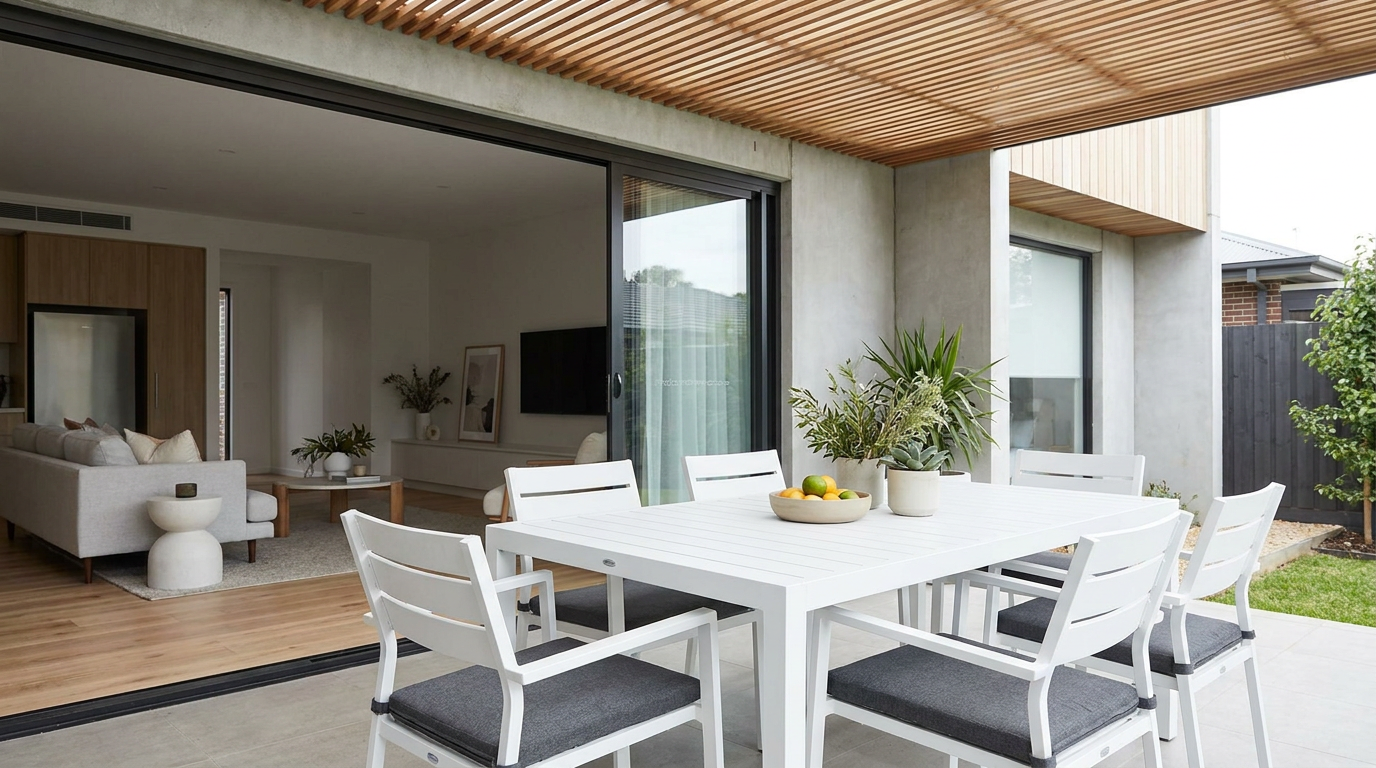
- Astra Outdoor 7 Piece Dining Set — a rectangular table and six armchairs with padded seats, all on white powder-coated aluminium.
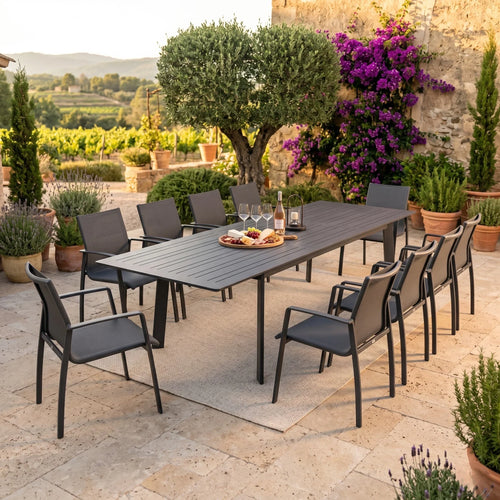
- Rapa Outdoor 11 Piece Extendable Dining Set — an aluminium table that extends from 2 to 3 metres, with ten stackable textilene chairs that drain and dry quickly after rain.

A note on colour. Aluminium conducts heat, so a black frame in full afternoon sun gets hot to touch. White frames such as the Astra and Bryde stay cooler on an unshaded deck; black and charcoal frames are happiest under a roof or pergola. You can see the full mix of frames across our outdoor lounges, outdoor dining sets and the wider outdoor furniture range.
FAQs
Does powder-coated steel rust?
Yes, wherever the coating is broken. If the steel was hot-dip galvanised before coating, the zinc layer protects it for a while and gives you time to touch the chip up. If it was not, rust can start at a chip within weeks in humid weather and spread under the surrounding coating.
Is powder-coated aluminium good for outdoor furniture?
Yes. It is light, it does not rust, it handles humidity and salt air well, and it needs little more than a wash and rinse. The trade-offs are that light pieces need securing in storms and dark frames get hot in full sun.
Powder-coated steel vs aluminium: which is better for patio furniture?
For most patios, aluminium, because a chip in the finish is cosmetic rather than the start of rust. Galvanised steel is a reasonable choice inland, on exposed patios where weight helps in the wind, or for long tables that benefit from steel's stiffness — as long as you inspect and touch up the finish each year.
Can I get old metal outdoor furniture re-powder coated?
Yes — a specialist powder coater can strip or blast off the old finish and recoat the frame. For steel, ask them to remove all rust first and to use a zinc-rich primer or galvanising if the piece will live outdoors. For small chips, a colour-matched touch-up paint is usually enough.