
Olefin is a solution-dyed polypropylene fabric that resists fading and mildew, absorbs very little water and dries quickly, which makes it a strong, good-value choice for outdoor cushions. Solution-dyed acrylic such as Sunbrella feels softer and holds colour longest; outdoor polyester varies most. None is waterproof, so drying and storage matter as much as the fabric.
- If you want value and fast drying: pick olefin, and keep it away from high heat.
- If softness and long-term colour matter most: pick solution-dyed acrylic, at a premium price.
- If you are choosing polyester: pick outdoor-grade, UV-stabilised fabric.
- If cushions get soaked: pick a breezy spot and dry them standing on edge.
In this guide
What is olefin fabric?
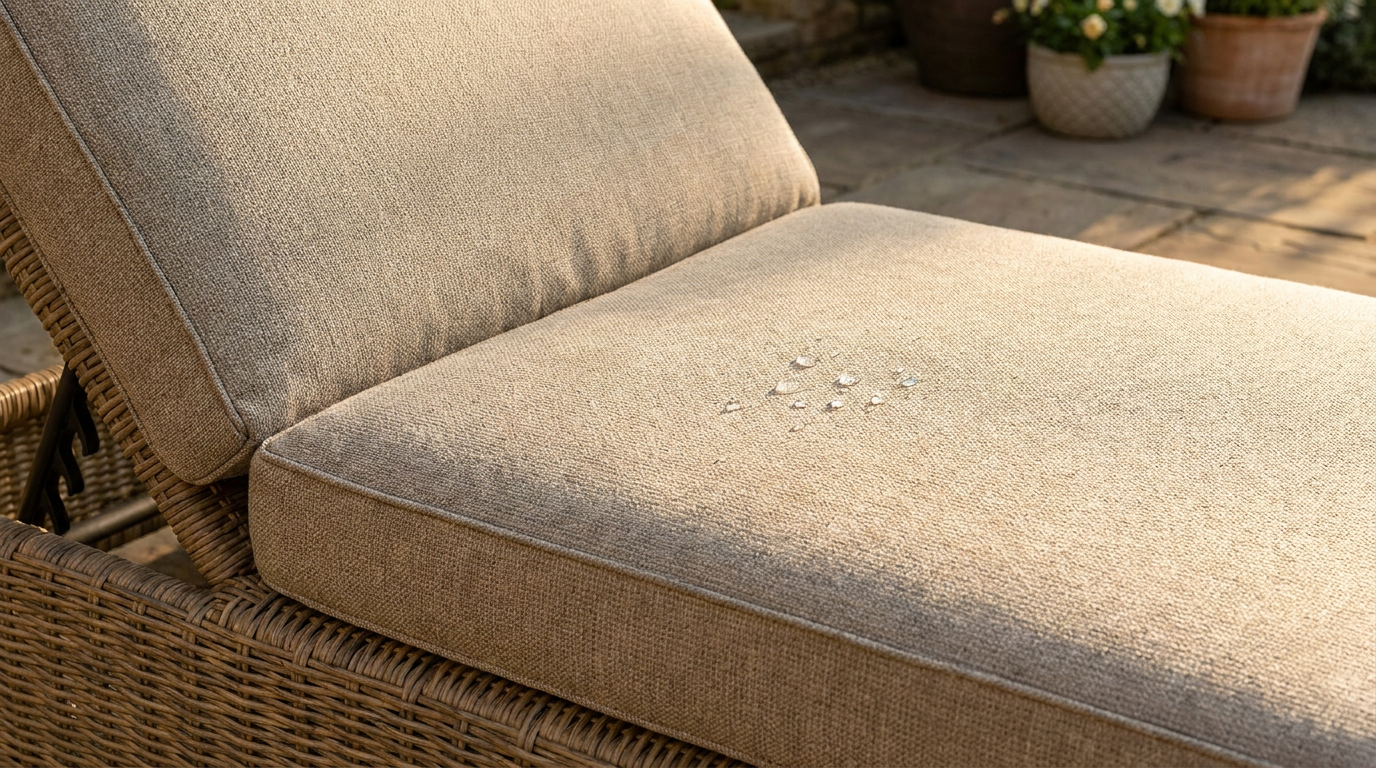
What sets outdoor olefin apart is how it is coloured. It is almost always solution-dyed: the colour pigment and UV stabilisers are added to the molten polymer before the fibre is spun, so the colour runs right through each strand rather than sitting on the surface. That is why solution-dyed fabric holds its colour so much better in sun than fabric dyed after weaving.
Polypropylene absorbs very little water, so olefin dries quickly, resists mildew and copes well with abrasion. It is light, breathable and generally less expensive than acrylic. Its main weakness is heat: it softens at a lower temperature than acrylic or polyester, so it should never be tumble-dried hot, ironed or left touching a heater or barbecue.

Pieces in this guide

Olefin vs solution-dyed acrylic (Sunbrella) vs polyester
Sunbrella is a brand of solution-dyed acrylic, not a separate fibre. Outdura is another acrylic brand, so "Outdura vs Sunbrella" is a comparison of two makers of the same kind of fabric; choose between them on colour, feel and the quality of the cushion they are sewn into. The real choice is between three fibres:
| Olefin (polypropylene) | Solution-dyed acrylic | Outdoor polyester | |
|---|---|---|---|
| How it is coloured | Solution-dyed | Solution-dyed | Solution-dyed or dyed after weaving — check |
| Fade resistance | Very good | Excellent | Good when UV-stabilised; varies most |
| Water and drying | Absorbs very little, dries fast | Water-repellent finish, dries well | Water-repellent if treated |
| Feel | Smooth, slightly crisp | Softest, most like indoor fabric | Ranges from crisp to soft |
| Watch out for | High heat when cleaning | Premium price | Cheap indoor-grade polyester sold for outdoors |
Olefin vs Sunbrella, in short: acrylic edges ahead for softness and colour retention over many seasons of hard sun; olefin is close behind on fading, dries faster and costs less. For most households, either will look good far longer than a basic polyester.
Polyester is the broadest category. Basic indoor polyester fades and weakens quickly outdoors. Outdoor-grade polyester is UV-stabilised and treated to repel water and resist mildew, and recycled polyester performs the same way as new fibre.
Is olefin waterproof?
No. Olefin is water-resistant and quick-drying, not waterproof. The fibre barely absorbs water, so beads of rain sit on the surface and a light shower brushes off. But a woven fabric has gaps, and in steady rain water passes through the weave into the foam. The same is true of acrylic and outdoor polyester.
This is the point most fabric comparisons miss: cushions rarely fail because the fabric gave up. They fail because the foam inside stayed wet for days in humid weather and grew mould. A cushion that looks dry on top can still be soaked underneath. Treat every outdoor cushion as "rain-tolerant", dry it properly after a soaking, and bring it in before long wet spells.
Choosing UV-resistant outdoor fabric: what matters beyond the label
In a climate with strong UV and long, humid summers, a few checks matter more than the fibre name:
- Solution-dyed. If the listing does not say so, ask. It is the biggest single factor in how well colour lasts.
- Position. Shade does more for any fabric than a step up in fabric grade. A cushion under a roof or pergola will hold its colour far longer than one on an open deck.
- Colour. Mid-tones such as charcoal, grey and taupe show fading and dirt less than very dark or very bright shades.
- Weight. A heavier weave holds its shape better, but weight alone does not make a fabric suitable outdoors — the fibre and dyeing method matter more.
- Construction. Strong seams, a zip that lets the cover come off, and foam that can dry out extend a cushion's life as much as the fabric does.
The outdoor fabrics in our range
Our current outdoor lounges use olefin or outdoor polyester; we do not sell solution-dyed acrylic cushions. Here is what is on each piece:
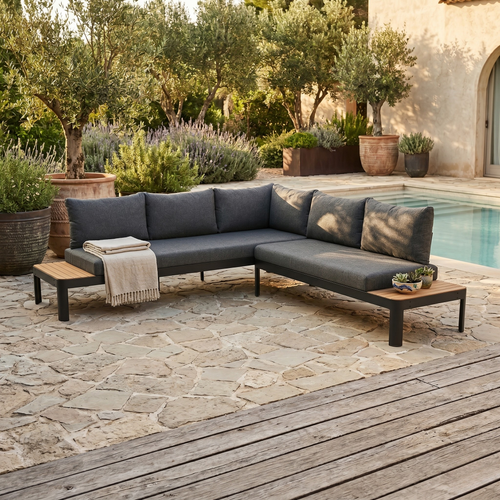
- Portals 3 Seater Outdoor Lounge and Portals Outdoor Corner Lounge — 100% olefin cushions at 190gr, described as UV fade-resistant, breathable and quick-drying, on black aluminium frames with solid teak side tables.
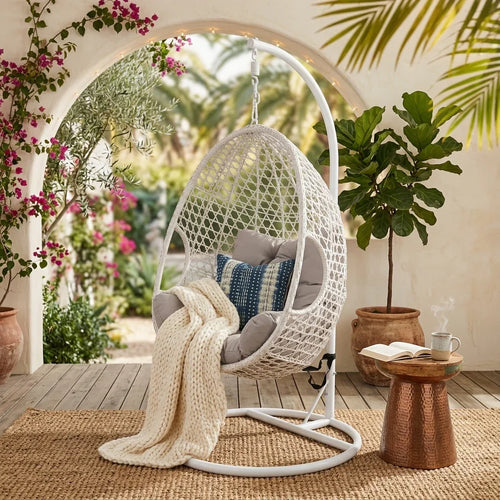
- Jimmy Outdoor Egg Pod Chair — a hanging egg chair in PE wicker on a powder-coated steel stand, with a light grey olefin seat cushion.
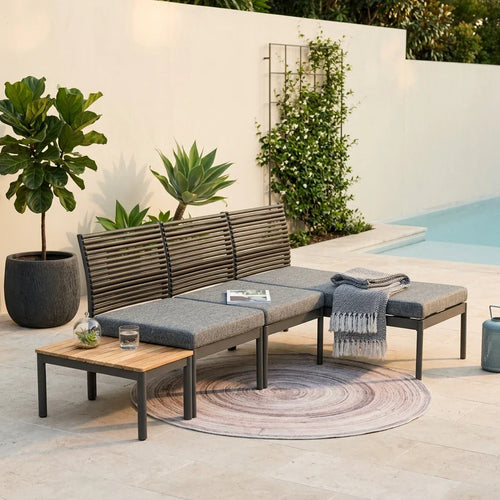
- Royan Outdoor Modular Sofa — 290gr cushions in 100% recycled polyester, UV-stabilised, on a modular black aluminium frame.
- Hydra 2 Seater Outdoor Sofa — 175gsm outdoor polyester cushions, with a eucalyptus side table built into the frame.
- Panama 4 Piece Outdoor Sofa Set — light grey polyester cushions that are fire-retardant, a useful extra under a pergola or near an outdoor heater.

For the whole picture — frame, layout and seating as well as fabric — see how to choose outdoor dining sets and lounges, or browse our outdoor lounges and the wider outdoor furniture range.
How to clean outdoor cushions
Regular light cleaning stops dirt, pollen and sunscreen from sitting in the weave, which is what mould actually feeds on. Synthetic fibres do not grow mould themselves; the grime on them does.
Routine clean
- Brush off leaves, dust and pollen with a soft brush.
- Wash with a little mild soap in warm water and a soft brush or cloth, working in sections. This is the method on the care guides for our Portals, Royan, Hydra and Panama cushions.
- Rinse thoroughly with a hose on a gentle setting. Leftover soap attracts dirt.
- Dry standing on edge in a breezy spot, turning the cushion and pressing out water now and then. Let it dry right through before it goes back on the frame.
Stains and spills
Blot, never rub. Deal with food, drink and bird droppings the same day — once organic marks dry into the fibre they are much harder to lift. For oily marks such as sunscreen, sprinkle on bicarbonate of soda or cornflour, leave it to absorb, brush it off, then spot clean.
Mould spots
Many solution-dyed olefin and acrylic fabrics tolerate a diluted bleach solution for mould, but polyester often does not, and the cushion's care label always wins. Test any cleaner on a hidden spot first, and never mix bleach with vinegar or ammonia, which releases toxic gas. If mould keeps coming back, it is living in the foam, and surface cleaning will not reach it. Our guide to removing mould and mildew from outdoor furniture goes step by step.
Covers and machine washing
The care guides for our Royan and Hydra polyester cushions say not to machine wash, so spot clean those. For other brands, only machine wash a cover if it unzips and its label allows it: cold, gentle cycle, mild detergent, no softener, and air-dry. Never put foam inserts in the machine, and never tumble-dry olefin on heat.
Protect after cleaning
Once a cushion is clean and completely dry, a fabric protector made for outdoor use, such as the Guardsman Weather Defence Fabric Protector, leaves a clear, breathable barrier that makes rain and spills bead instead of soaking in, and helps resist mould and mildew. Re-apply each season and after cleaning. You will find it with our other furniture care products.

How to store outdoor cushions
Storage does more for cushion life than any cleaner. The aim is simple: keep cushions dry, shaded and aired.
- Bring them in before storms and long wet spells. A summer storm can soak foam in an afternoon, and humid air slows drying for days. Our storm protection guide covers the rest of the setting.
- Store them dry. A cushion put away damp — even one that only feels damp inside — is the most common way mould starts.
- Choose ventilated storage. A garage shelf or a ventilated outdoor storage box is better than a sealed plastic bag, which traps humidity.
- Store on edge, not crushed. Stacking heavy items on cushions flattens the foam.
- Use breathable covers only short term. A breathable furniture cover is fine overnight or ahead of a storm, but it is not a substitute for proper storage over a wet season.
Cushions left on the frame through weeks of rain can also hold moisture against the frame itself, so lift them and let air underneath. For when to do each job across the year, use our seasonal maintenance checklist.
FAQs
Olefin vs Sunbrella: which is better?
Sunbrella is a solution-dyed acrylic. Acrylic feels softer and holds its colour slightly better over many seasons of strong sun; olefin is close on fade resistance, dries faster and usually costs less. Both outlast basic polyester outdoors.
How durable is olefin fabric?
Olefin resists abrasion, fading, moisture and mildew well, which makes it hard-wearing for outdoor cushions. Its weak point is heat: avoid hot tumble-drying, ironing and contact with heaters or barbecues.
What is the best outdoor fabric for cushions?
Any solution-dyed outdoor fabric, whether olefin, acrylic or a good outdoor polyester, will serve well. Olefin is a strong all-rounder on value and drying speed; acrylic is the premium choice for softness and colour. Shade, regular cleaning and dry storage matter as much as the fabric itself.
Can I put outdoor cushion covers in the washing machine?
Only if the cover unzips and its care label allows it, on a cold, gentle cycle with mild detergent, then air-dried. The care guides for our Royan and Hydra polyester cushions say do not machine wash, so spot clean those. Never machine wash foam inserts.