
The best outdoor furniture for a small balcony is compact, low and light enough to move, on a weather-ready frame such as powder-coated aluminium. Start with one or two good seats and a small table rather than a full set, keep a clear path to the door, and choose low pieces if your balcony catches the wind.
- If it's just for coffee or a book: pick one generous chair with a built-in side table.
- If you want to seat two: pick a two-seater pushed against the solid wall.
- If the balcony is long or L-shaped: pick modular pieces you can line up or turn.
- If your balcony catches the wind: pick low pieces and bring cushions in before storms.
In this guide
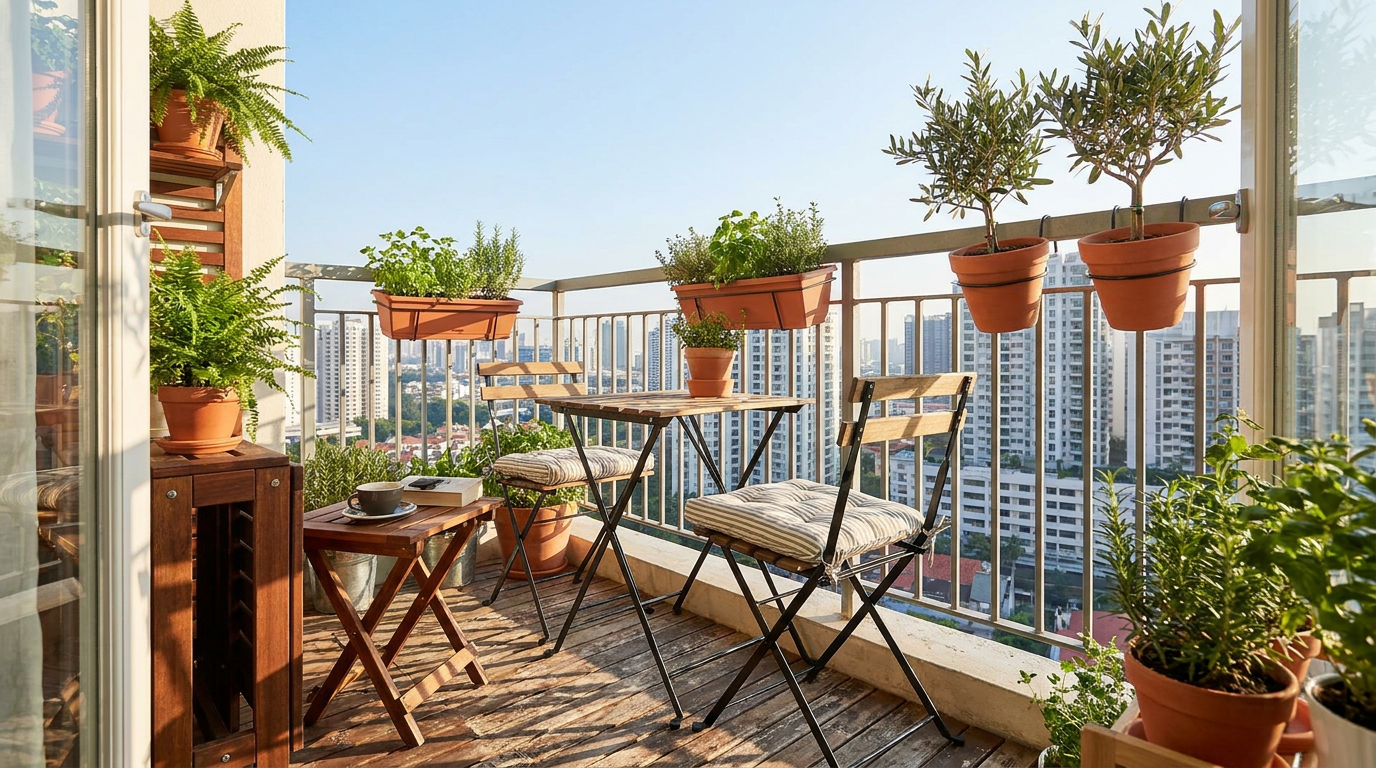
Which kind of small outdoor space do you have?
"Small outdoor space" covers three quite different situations, and the right furniture for one can be wrong for another. Work out which one you have before you shop.
| Space | Typical conditions | Main concern | What to look for |
|---|---|---|---|
| Sheltered balcony | Roof or balcony above, walls on two or three sides | Floor space and a clear path to the door | Compact lounge pieces, a small coffee table |
| Exposed high-rise balcony or rooftop | Open to wind and sun, often hard tiled floors | Gusts moving lighter pieces; strong sun on fabric | Low-profile pieces, nothing tall or sail-like, cushions you can bring in |
| Ground-floor courtyard | Walled or fenced, more private, less airflow | Humidity and mould on cushions | Quick-drying fabrics, space around furniture for air to move |
Most apartment balconies sit somewhere between the first two. If yours has a solid roof and walls, you have more freedom. If it is open on a corner of a tall building, wind becomes the main design constraint, especially during the summer storm season.
Pieces in this guide


Compact seating ideas that actually fit
The biggest mistake on a small balcony is buying a boxed setting because it looks like good value, then finding the fourth piece blocks the door. Building up from individual pieces gives you far more control.
Idea 1: one generous chair and a small table
If the balcony is mostly for a morning coffee or a book, one comfortable seat beats two cramped ones. The Hydra 1 Seater Outdoor Sofa is an armless single seat on a black powder-coated aluminium frame with polyester seat and back cushions. It has a slatted eucalyptus side table built into one end, so there is a spot for your coffee without finding floor space for a separate side table. If you want more surface, the Hydra Outdoor Coffee Table is a rectangular table with the same black aluminium frame and a slatted eucalyptus top.

Idea 2: a two-seater against the wall
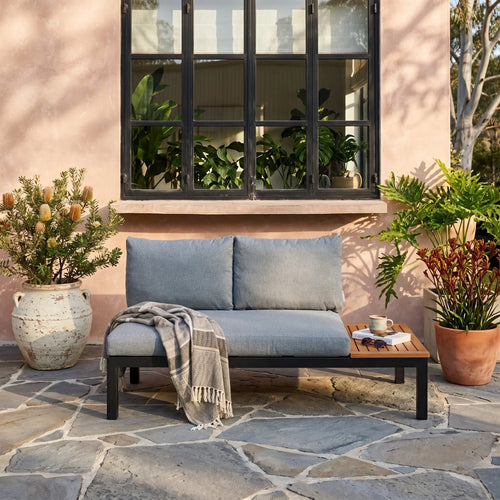
A two-seat outdoor sofa pushed against the solid wall of the balcony leaves the whole open edge free for walking and for the view. The Hydra 2 Seater Outdoor Sofa is built the same way as the single seater: black aluminium frame, polyester cushions and a built-in eucalyptus side table at one end. That means you can start with one piece and add the other later. The Portals 2 Seater Outdoor Lounge is a compact two-seater on a black powder-coated aluminium frame with Olefin fabric cushions, which are breathable and quick-drying. It also has a solid teak side table built into one end.

Idea 3: modular pieces for an awkward shape
Long, narrow balconies and L-shaped terraces are hard to furnish with a fixed sofa. Modular pieces can run in a line along one wall or turn a corner. The Royan Outdoor Modular Sofa is four pieces: two armless chairs, a chaise and a coffee table with a teak top, all on a black powder-coated aluminium frame with 290gr recycled polyester cushions. It suits a larger terrace better than a tiny balcony, but because each piece is separate you can line the chairs and chaise along one wall or turn a corner, and separate pieces are easier to carry up in a lift than one long sofa.
Idea 4: bar stools at a ledge
If your balcony has a built-in ledge or bench at bar height, or you add a narrow bar table, a pair of stools uses almost no floor space and keeps the view open. The Bendigo Outdoor Bar Stool is a backless stool with a white powder-coated aluminium frame and a contoured, slatted eucalyptus seat. Being backless, it tucks right under the ledge when not in use. Check the seat height against your ledge before you buy.
Idea 5: one statement chair
If you only want one piece, make it a good one. The Jimmy Outdoor Egg Pod Chair is a hanging egg chair that comes with its own stand, so it needs no ceiling hooks or fixings, which matters if your body corporate restricts drilling. The shell is PE wicker woven over a powder-coated steel frame, with an Olefin seat cushion, and it is rated to 120 kg. The stand takes up more room than the chair looks in photos, so check its footprint and height on the product page and put it in the most sheltered part of the balcony.

For more single seats, browse outdoor dining chairs, which often suit a small balcony table better than lounge chairs do.
Wind and weight on a balcony
Wind is the one thing that makes balcony furniture genuinely different from a backyard setting. Buildings funnel and speed up gusts, and corner balconies on higher floors can be far windier than the street below. A few rules keep things where you put them:
- Low beats tall. A low sofa and coffee table present very little surface to the wind. Tall screens, umbrellas and high-backed lightweight chairs act like sails.
- Back against the wall. Put lounge pieces against the solid wall, not along the open balustrade.
- Cushions come in. Seat cushions are the first thing to lift in a gust. When a storm warning comes through, bring them inside along with anything small and light.
- Do not rely on bolting down. Fixing furniture to the floor usually needs building approval. Choosing low, solid pieces is the easier route.
Weight cuts both ways. Heavier furniture stays put in the wind, but older buildings and rooftops can have weight limits, and every piece has to come up in the lift and through the front door. Powder-coated aluminium is a sensible middle ground: lighter than steel or solid timber to carry, sturdy once it is in place. If you are not sure about your building's limits, ask your body corporate manager before buying anything large.
Materials that suit small outdoor spaces
- Powder-coated aluminium frames. Aluminium does not rust the way bare steel does, which matters on a balcony that catches rain or salt air near the coast. It is also light to move for cleaning or storms. Most of the pieces in this guide use it.
- Timber surfaces. The eucalyptus side tables and tops on the Hydra pieces, and the teak on the Portals, add warmth to a balcony that is otherwise all glass and concrete. Both timbers turn silver-grey if left untreated. That is a cosmetic change, and a coat of outdoor hardwood oil every 6 to 12 months keeps the warm colour.
- Olefin and polyester fabrics. Both are synthetic outdoor fabrics. Olefin is breathable and quick-drying; the Hydra and Royan pieces use outdoor polyester. Whatever the fabric, cushions dry faster if you stand them on their edge after rain, and they last longer if they come inside during long wet spells.
- PE wicker. The synthetic weave on pieces like the Jimmy egg chair looks like rattan but handles sun and rain far better than the natural fibre, and it wipes clean. A big woven shell catches more wind than a slim frame, so keep it in a sheltered spot.
In a closed-in ground-floor courtyard, the bigger issue is humidity. Leave a gap between furniture and walls so air can move, and do not leave damp cushions pressed against a fence or screen.
Body corporate rules to check first
Every apartment and townhouse complex has by-laws, and some affect what you can put on a balcony. Ask your body corporate or strata manager for a copy and look for:
- Drilling and fixing. Screens, wall planters, shade sails and anything bolted to walls or floors usually need approval.
- Appearance rules. Some buildings restrict what can be seen from the street, such as screens or brightly coloured items over the balustrade.
- Barbecues. Many buildings restrict or ban certain types of barbecue on balconies.
- Weight. Large planters and heavy furniture may be limited in older buildings or on rooftops.
Free-standing furniture you can carry inside rarely causes problems, but it is worth confirming before you buy something large. If you rent, choose pieces that will move with you: individual chairs, a modular sofa and a small table fit far more future balconies than a large fixed set.
Layout tricks for a narrow balcony
- Keep one clear lane. As a rule of thumb, leave a path of at least 60 cm from the door to the far end of the balcony. Put all the furniture on one side of it.
- Measure the door zone. Sliding doors need their full opening clear, plus room to step out and turn.
- Use the wall, not the floor. Free-standing planters on stands or a tall pot in the corner add greenery and some privacy without taking up seating space.
- Choose a round or small square table if you want to eat outside. Round tables are easier to walk around in a tight space.
- Tape it out first. Mark the footprint of each piece on the floor before you buy. Our guide on how to measure your outdoor space for furniture walks through clearances and access step by step.
Browse the full outdoor furniture range with your measurements, or see the compact two-seaters and modular pieces in our outdoor lounges. To see how a piece feels at balcony scale, we have five showrooms; ask which store has it on display before you visit.
Small balcony furniture FAQs
What is the best outdoor furniture for a small balcony?
Compact, low pieces with weather-ready frames such as powder-coated aluminium. One or two good seats and a small table usually work better than a full boxed setting, and they leave a clear path to the door.
Is aluminium outdoor furniture good for apartments?
Yes. Powder-coated aluminium does not rust like bare steel, it is light enough to carry through a lift and move for storms, and it is sturdy once in place.
Can I fit an outdoor sofa on a small balcony?
Often, yes, if you choose a one or two-seater and push it against the solid wall. Measure the balcony, keep a walkway of at least 60 cm as a rule of thumb, and keep the door opening clear, then compare that with the sofa's dimensions on the product page.
How do I keep outdoor cushions from going mouldy in a courtyard?
Leave space between furniture and walls so air can move, stand cushions on their edge to dry after rain, and bring them inside during long wet spells.