Care & Maintenance · Mould & Mildew
Most generic "remove mould" advice fails because it skips the diagnosis. Mould and mildew are different things, they grow at different stages, and they need different treatments depending on the material they're growing on. This guide leads with diagnosis — what you're actually looking at, what stage it's in, what material it's on — and points you to the right cleaning protocol for your specific situation. We've covered the deep material-specific cleaning protocols in our existing care guides; this article is the diagnostic front-end that helps you find the right one. It also covers the part most other articles skip: why mould keeps coming back even after cleaning, and when to accept that a piece is past saving. Part of our broader Queensland outdoor furniture care guide.
Mould vs mildew — the diagnosis-first approach
Most outdoor furniture cleaning articles assume you already know what you're looking at. You usually don't — and the wrong diagnosis leads to the wrong treatment. The two terms get used interchangeably in everyday speech but they describe different things, and the right cleaning protocol depends on which you have.
| Mildew | Mould | |
|---|---|---|
| Colour | White, light grey, occasionally yellow | Dark green, black, blue, sometimes white |
| Texture | Flat, powdery, sometimes fluffy | Fuzzy, raised, sometimes slimy |
| Spread pattern | Patches on surface, easier to wipe off | Colonies that penetrate beneath the surface |
| Smell | Slight musty smell | Strong musty or earthy smell |
| Where it grows | Hard surfaces, fabric tops, frame surfaces | Porous materials, weave crevices, cushion interiors, beneath finishes |
| How aggressive | Slow-spreading, surface-level | Fast-spreading once established, can damage materials |
| Cleaning difficulty | Usually responds to mild solutions | Often needs stronger treatments or sanding |
The stage matters too
Within each category, the stage of development changes the right approach. Three stages worth recognising:
- Early stage (days to a couple of weeks). Surface marks, easy to wipe off, no smell yet, no visible spread. Mild cleaning solutions handle this without aggressive intervention.
- Established (weeks to a few months). Visible colonies or patches, slight discolouration of the underlying material, faint musty smell, beginning to spread to nearby surfaces. Stronger cleaning solutions and longer dwell times needed.
- Deep-set (months or longer). Stained material, strong musty smell, spread visible on multiple pieces or sections, possible structural impact (timber discoloration, fabric weakness, weave damage). Restoration-level intervention or replacement consideration.
The diagnosis lets you match treatment intensity to actual need — and crucially, it tells you when to stop trying DIY and either escalate to professional restoration or accept the piece is past saving.
The Queensland mould lifecycle
Brisbane and South East Queensland have specific climate conditions that change when and how outdoor mould develops. Understanding the QLD lifecycle helps explain both why mould appears and when to schedule preventive cleaning. The broader Queensland climate framework is covered in our complete outdoor furniture guide for Brisbane and Queensland.
The 24-hour rule
In Queensland summer conditions — 70%+ humidity, overnight temperatures above 22°C, organic matter on the surface — visible mould or mildew can develop within 24 hours of those conditions converging. This is dramatically faster than drier climates where mould development typically takes weeks. The implication: cleaning organic matter (leaves, blossoms, pollen, bird droppings) off outdoor furniture within 24 hours of any storm or extended damp period prevents most QLD mould development before it starts. This pairs with the post-storm protocol covered in our Queensland storm protection guide.
The seasonal calendar
Mould risk follows a clear QLD seasonal pattern. November–March (wet season, peak risk) brings highest humidity, highest temperatures, and most rainfall — mould can develop within days of any organic matter accumulation; visual inspection weekly during this period and address early-stage mould immediately. April–May is the post-wet-season recovery window where humidity drops and drying conditions improve — the right window for deep cleaning of any mould that developed during wet season. June–September (dry season) brings low humidity and low rainfall; mould development effectively pauses, and surface cleaning of remaining stains plus preventive sealer application work well. October is pre-storm-season prep — final clean before wet season returns.
Regional intensity gradient
Mould risk varies meaningfully across SEQ. Bayside and coastal locations (Sandgate, Wynnum, Manly, Bundall) experience higher humidity and salt-laden air, which accelerates mould development. Inner Brisbane suburbs see significant mould pressure during wet season but lower coastal-related complications. Western SEQ (Ipswich, Beenleigh, Logan) has the lowest mould risk in the region — lower humidity, less salt influence, faster drying conditions. Coastal properties typically need cleaning intervention 2–3× more frequently than equivalent inland properties.
The decision tree — which protocol for your situation
Outdoor furniture cleaning protocols vary significantly by material. Rather than repeat the deep cleaning content already in our cluster, this section helps you find the right protocol based on what you're cleaning. Follow the path that matches your situation.
Hardwood furniture (teak, acacia, eucalyptus)
The deepest hardwood cleaning protocols — including the 1:10 bleach-water solution for established mildew, the three escalation levels, and the Queensland-specific don't-oil-in-humidity rule — are covered in our Queensland teak care guide. The same protocols apply to acacia and eucalyptus outdoor furniture. The hardwood-specific consideration is that mould can penetrate beneath the timber surface; deep-set cases may require sanding to remove the affected layer. See the hardwood comparison guide for material-specific notes on acacia and eucalyptus care.
Cushions and outdoor fabric
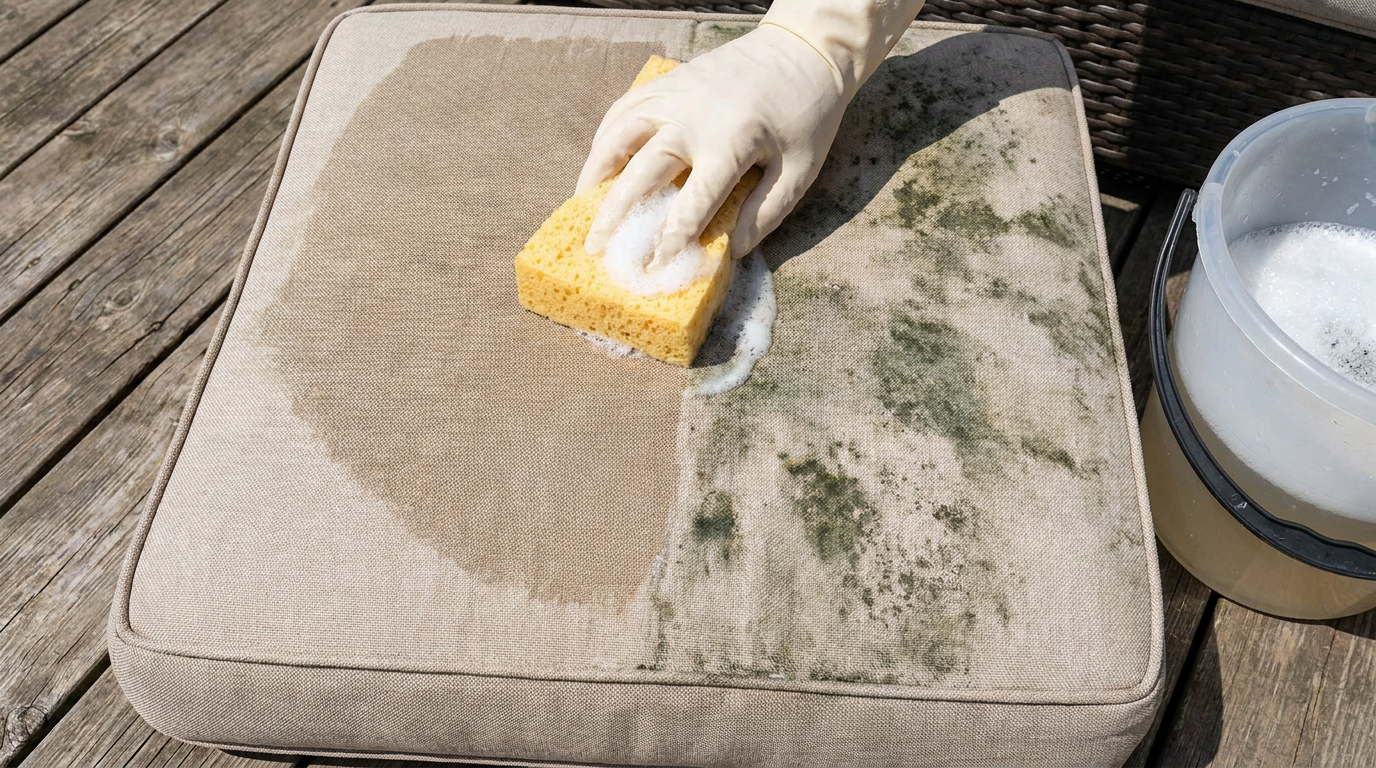
The fabric-specific protocols — including which fabrics tolerate bleach (premium solution-dyed acrylic and Olefin) and which don't (standard polyesters), the foam-saturation problem in QLD humidity, and the storm-season cushion handling — are covered in our complete outdoor fabric guide. The fabric-specific consideration is that surface mould often masks deeper foam mould; visible cushion mildew is sometimes the late-stage symptom of foam saturation that began weeks earlier.
Wicker and rattan furniture
Wicker presents a specific challenge — the weave structure provides countless surfaces for mould to colonise, and crevices can be hard to access with cleaning tools. For synthetic HDPE wicker, soft-bristle brush with mild soap solution handles most cases; for established mould, a 1:10 bleach-water solution followed by thorough rinsing works on quality HDPE without damage. Natural rattan is much harder to clean — the porous structure absorbs moisture and traps spores in the weave. Our synthetic wicker vs natural rattan guide covers the material distinctions; deep mould in natural rattan often signals the piece is past saving.
Aluminium and metal furniture
Metal frames don't grow mould directly — but the powder-coat surface can develop surface mildew where organic debris settles in joints, fastener recesses, and underside crevices. Mild soap with a soft brush handles this in almost all cases; pressure washing at low PSI (under 1,500) accelerates work on stubborn cases. Our aluminium outdoor furniture guide covers the specific care routine.
Polywood and HDPE polymer furniture
The most mould-resistant of the common outdoor materials. The non-porous HDPE surface gives mould nothing to feed on directly; surface mildew that appears is feeding on debris collected on the lumber, not the lumber itself. Soap and water with a soft brush handles this routinely; pressure washing up to 1,500 PSI is acceptable. Our polywood and recycled plastic guide covers HDPE-specific care.
The cleaning toolkit — bleach vs vinegar vs baking soda
Three common household solutions handle most outdoor furniture mould scenarios. The right choice depends on the material, the stage, and the surrounding context (pets, plants, surfaces below the furniture).
| Solution | Best for | Avoid on | Notes |
|---|---|---|---|
| 1:10 bleach-water | Established mould on hardwood, premium fabrics, HDPE wicker, polywood | Standard polyester fabrics, stained timber, surrounding plants | Most effective for deep stains. Pre-wet timber. Rinse thoroughly. Wear PPE. |
| White vinegar (50/50 with water) | Early-stage mildew, surfaces near plants, eco-conscious applications | Stone or unsealed grout (vinegar can etch) | Less aggressive than bleach. Effective on early stages. Plant-safe. |
| Baking soda paste (3:1 with water) | Stubborn surface stains where bleach is risky, gentle scrubbing application | Polished or coated finishes (mild abrasive) | Mechanical scrubbing action. Works alongside vinegar for two-stage attack on established stains. |
| Mild dish soap + warm water | Routine cleaning, prevention, gentle maintenance on all materials | Nothing — universal mild option | The starting point for most situations. Try this first before escalating. |
The escalation principle
Always start with the gentlest solution that might work. Mild soap and water handles most early-stage situations; vinegar handles mildew that resists soap; bleach-water handles established mould that resists vinegar. Skipping straight to bleach for early-stage marks risks damaging the underlying material unnecessarily. The exception is when you've already let the situation progress past early stage — in which case starting with vinegar or 1:10 bleach is appropriate.
What not to use
Pure bleach (always dilute — pure bleach damages most outdoor materials and is dangerous to handle); ammonia-based cleaners (the bleach-ammonia interaction is genuinely dangerous — see safety section below); wire brushes on any outdoor furniture (fibres scratch finishes and embed in soft materials); hydrogen peroxide above 3% without testing (higher concentrations can bleach colours unpredictably); and "magic eraser" melamine foam pads on powder-coat finishes (the mild abrasive can dull the finish).
Safety, plant protection, and the bleach-ammonia warning
Outdoor cleaning involves chemical solutions, surrounding plants, and household pets. A consolidated safety section is more useful than the scattered single-line warnings most cleaning articles include.
Personal protective equipment
Heavy-duty gloves (rubber or nitrile, not fabric — bleach and vinegar both irritate skin on extended contact); splash goggles for eye protection (bleach in eyes is a medical emergency); N95 mask or equivalent when scrubbing visibly mouldy surfaces (mould spores released during cleaning can trigger respiratory irritation and allergic reactions); and old clothes — bleach destroys fabric colour fast and permanently.
The bleach-ammonia warning
Critical safety warning: Never combine bleach with ammonia or ammonia-based cleaners. The reaction produces chloramine gas, which is genuinely dangerous and can cause severe respiratory injury. This includes household cleaners that contain ammonia (some glass cleaners, some all-purpose sprays). If you've used an ammonia-based cleaner on a surface, rinse thoroughly with water before applying any bleach solution. Read product labels — "ammonia-free" labelling on cleaning products is reliable; unlabelled or older products may contain ammonia.
Plant and lawn protection
Bleach is genuinely harmful to plants. Cleaning solutions running off outdoor furniture onto garden beds, potted plants, or lawn will kill foliage. Move furniture before cleaning if practical (onto a tarp, driveway, or pavers where runoff can be controlled). If moving isn't practical, lay a plastic drop sheet under and around the work area to catch drips. Pre-wet surrounding plants with fresh water before starting bleach work — wet foliage is less likely to absorb cleaning runoff. Rinse extensively after, both the furniture and the surrounding ground area.
Pet safety
Keep pets away from cleaning work entirely until surfaces are rinsed and dry. Bleach is toxic to pets at low doses; pet curiosity (especially dogs) makes them likely to investigate freshly-cleaned surfaces. After cleaning, ensure all surfaces are dry before allowing pet access.
Why mould comes back — root cause analysis
This is the section most cleaning articles skip. You clean the mould, it looks clean for a few weeks, then it returns — sometimes worse than before. The cleaning didn't fail; the underlying conditions weren't addressed. Quick diagnostic for why mould keeps coming back:
Drainage and pooling water
Outdoor furniture sitting in spots where water pools (sloped patios that drain toward the furniture, low spots, gutters that overflow nearby) faces constant moisture exposure. Even after cleaning, the next rain restores the wet conditions. Solution: relocate the furniture, fix the drainage issue, or add risers to lift the furniture above the wet zone.
Insufficient air flow
Furniture in tight spaces with no breeze, against walls, in corners, or surrounded by dense planting stays damp longer after rain than furniture in open positions. Slow drying is what gives mould time to establish. Solution: increase spacing from walls and dense plantings, or accept that the position needs more frequent cleaning intervention.
Year-round covers without removal
The single most common cause of recurring outdoor furniture mould in Queensland. Covers trap humidity and seal in organic matter; year-round covering creates the warm, damp, debris-rich environment where mould thrives. Solution: covered in detail in our outdoor furniture covers guide — covers need to come off during dry weeks for periodic airing.
Organic debris not being cleared
Leaves, blossoms, pollen, bird droppings, fallen fruit — anything organic on outdoor furniture surfaces is mould food. If your routine doesn't include weekly debris clearance during wet season, mould will keep returning regardless of how thoroughly you clean.
Cushion foam that's been compromised
Once cushion foam has absorbed water and grown internal mould, surface cleaning treats only the visible symptom. The foam interior remains a mould reservoir; surface mould reappears within weeks of cleaning because the foam is releasing spores. Solution: replace the cushion or, for high-value cushions with removable covers, replace the foam insert while keeping the cover.
Material at end of life
Older outdoor furniture, furniture that's been neglected for years, and budget furniture that's reached its design life all hit a point where the material itself has been compromised — finish layers have failed, timber has lost natural oils, or fabric protectants have worn through. At this stage, mould keeps coming back because the material's defences are gone. The honest answer is replacement, which is the next section.
When to accept a piece is past saving
Most cleaning articles assume the cleaning will work. Sometimes it doesn't, and continuing to fight mould on furniture that's past its useful life costs more in time, chemicals, and frustration than replacement would. Honest indicators that a piece is past saving: mould has penetrated structural timber beyond what sanding can remove (soft spots, deep grain discoloration, structural compromise); cushion foam interior has grown mould and the cushion is older than 5 years (replacement is more cost-effective than re-stuffing); wicker weave has unravelled or developed extensive mould penetration (repair work on natural rattan rarely succeeds); powder-coat finish has failed in multiple places exposing base metal with corrosion visible (cosmetic restoration cost approaches replacement cost); or you've cleaned thoroughly three or more times without lasting success despite addressing root causes (the material itself has lost its mould resistance).
The professional restoration option
For high-value pieces — premium teak heritage pieces, designer outdoor lounges, antique cast-iron settings — professional outdoor furniture restoration can sometimes save what DIY can't. Restoration services typically handle deep cleaning, sanding and refinishing of timber, powder-coat reapplication on metal, and complete cushion replacement with marine-grade materials. Costs vary widely; budget $500–$2,000+ per piece for genuine restoration work. The math works for pieces that would cost $3,000+ to replace; rarely worth it for budget pieces.
The replacement conversation
When replacement is the answer, consider whether the original purchase was sized correctly for QLD conditions. Persistent mould problems often signal that the original material choice didn't suit the climate — for example, natural rattan in coastal Brisbane, or budget polyester cushions in full-sun bayside positions. Our outdoor furniture materials guide for Queensland covers the buying-side decisions that reduce mould risk on the next piece. The Queensland-suited material defaults — quality powder-coated aluminium, solution-dyed acrylic cushions, HDPE polymer pieces, quality teak — handle SEQ conditions with dramatically less mould pressure than poorly-suited alternatives.
FAQs
-
What's the difference between mould and mildew on outdoor furniture?
Mildew appears as flat or powdery patches in white, light grey, or occasionally yellow — surface-level, easier to clean, and slow-spreading. Mould is fuzzy, raised, sometimes slimy, and shows in dark green, black, blue, or sometimes white. Mould penetrates beneath surfaces, spreads faster once established, and can damage materials. The practical implication: mildew often responds to mild soap and water or vinegar; established mould often requires 1:10 bleach-water or stronger intervention. Diagnosing which you have determines the right starting protocol.
-
What kills mould on outdoor furniture in Queensland?
The right killer depends on the material and stage. For early-stage mildew across most materials, mild soap and water with a soft-bristle brush handles it. For established mould on hardwood, premium solution-dyed acrylic or Olefin fabric, HDPE wicker, and polywood, a 1:10 bleach-water solution is most effective — pre-wet the surface, apply with a soft brush working with the grain or weave, allow 5–10 minutes, then rinse thoroughly. White vinegar (50/50 with water) is the alternative for surfaces near plants or for early-stage mildew where bleach would be overkill. Avoid bleach on standard polyester fabrics and stained timber. Always wear gloves and eye protection.
-
Why does mould keep coming back on my outdoor furniture?
Six common causes for recurring mould: water pooling around or under the furniture (drainage issue); insufficient air flow keeping the furniture damp after rain; year-round covers without periodic removal (covers trap humidity and seal in organic matter); organic debris not being cleared regularly during wet season; cushion foam that has absorbed water and grown internal mould (surface cleaning doesn't reach the interior); and material at end of life where natural defences have failed. Cleaning treats the symptom; addressing the underlying condition prevents recurrence. If mould has returned despite three or more thorough cleanings, the material is likely compromised and replacement is more cost-effective than continued treatment.
-
Can I use bleach to remove mould from outdoor furniture?
Yes for many materials, but with caveats. A 1:10 bleach-water solution works well on quality teak, premium solution-dyed acrylic or Olefin fabrics, HDPE wicker, polywood, and powder-coated metal frames. Avoid bleach on standard polyester fabrics (colour loss), stained timber (finish damage), and natural rattan (fibre damage). Always test on an inconspicuous area first, pre-wet the surface, work with the grain or weave, allow 5–10 minutes, and rinse thoroughly. Critical safety: never combine bleach with ammonia-based cleaners — the reaction produces dangerous chloramine gas. Wear gloves and eye protection, and protect surrounding plants from runoff.
-
How long does it take for mould to grow on outdoor furniture in Brisbane humidity?
Visible mould or mildew can develop within 24 hours of Queensland summer conditions converging — 70%+ humidity, overnight temperatures above 22°C, organic matter on the surface (pollen, dust, leaf fragments). This is dramatically faster than drier climates where mould development typically takes weeks. The practical implication is the QLD 24-hour rule: clear organic debris and rinse outdoor furniture within 24 hours of any storm or extended damp period. This single habit prevents most QLD outdoor furniture mould before it starts. The peak risk period is November to March (wet season); June to September is the lowest-risk window for most SEQ properties.
-
When is outdoor furniture too mouldy to clean?
Indicators a piece is past DIY saving: mould has penetrated structural timber beyond what sanding can remove (soft spots or deep grain discoloration); cushion foam interior has grown mould and the cushion is more than 5 years old; wicker weave has unravelled or has extensive mould penetration; powder-coat finish has failed in multiple places with visible base-metal corrosion; or you've cleaned thoroughly three or more times without lasting success despite addressing root causes. For high-value pieces, professional outdoor furniture restoration ($500–$2,000+ per piece) can sometimes save what DIY can't — works for pieces that would cost $3,000+ to replace, rarely worth it for budget pieces. When replacement is the answer, consider whether the original material choice suited QLD conditions in the first place.
Choose Queensland-suited materials at the next purchase
Persistent mould problems often signal that the original outdoor furniture choice wasn't suited to Queensland conditions in the first place. Quality powder-coated aluminium, solution-dyed acrylic cushions, HDPE polymer pieces, and quality teak all handle SEQ conditions with dramatically less mould pressure than poorly-suited alternatives. All five of our South East Queensland showrooms — Rocklea, North Ipswich, Sandgate, Bundall, and Beenleigh — carry quality outdoor pieces matched to QLD climate, and our team can talk through the mould-resistance characteristics of any piece in our range. Free local delivery applies across Greater Brisbane and SEQ on eligible orders.