
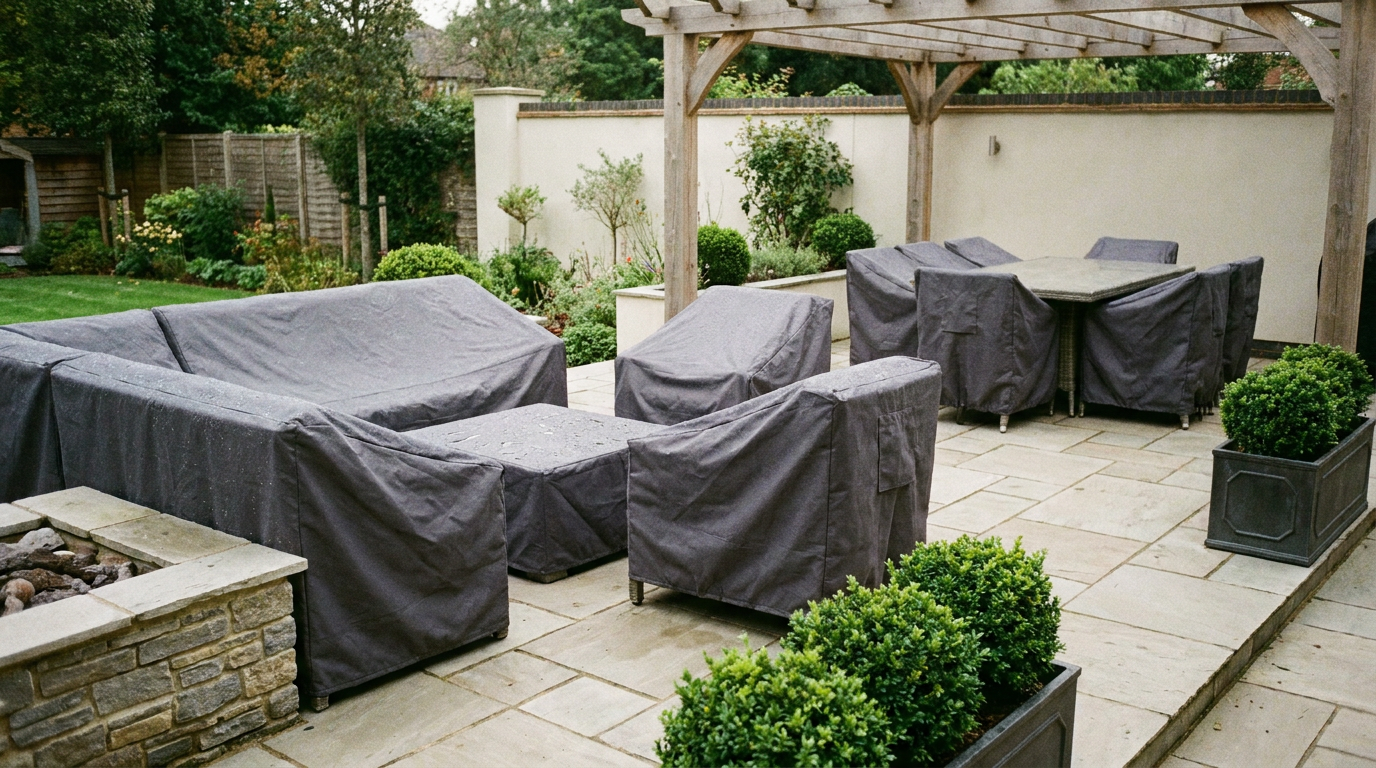
Care & Maintenance · Furniture Covers
Outdoor furniture covers are one of the rare buying decisions where Queensland conditions actually flip the answer. In drier climates, covers extend furniture life and the question is just which one to buy. In Brisbane humidity, a poorly-chosen cover or a cover used the wrong way can create the warm, damp environment where mould blooms — sometimes worse than no cover at all. Most cover-buying advice you'll find online is written by businesses that sell covers, which is why the honest "do you actually need them" question is hard to find a straight answer to. This guide is part of our broader Queensland outdoor furniture care guide; here we cover when covers genuinely help, when they cause more harm than good, what to look for if you do buy them, and the alternatives worth considering first.
The Queensland cover paradox
Outdoor furniture covers work brilliantly in dry climates. UK garden furniture stays drier under a cover than uncovered. US Northeast patio furniture survives winters better with a tarp than without. The standard advice — buy a cover, use it routinely — is correct in those environments, and that's why most online cover content reads the way it does.
Brisbane is different. Queensland summers are humid (70%+ relative humidity is normal), warm (mid-20s overnight, 30s daytime), and stormy (afternoon thunderstorms drop rain on hot surfaces). The broader Queensland climate framework that drives this paradox is covered in our complete outdoor furniture guide for Brisbane and Queensland. When you put a cover over outdoor furniture in those conditions, three things happen:
- Humid air gets trapped underneath. Once the cover is on, the air pocket between cover and furniture stays humid even when outside humidity drops. The temperature differential between sun-warmed cover top and shaded furniture below condenses moisture inside the cover.
- Organic matter trapped before covering becomes a feeding ground. Pollen, dust, leaf fragments, bird droppings — anything on the furniture when you covered it is now sealed under warm, damp conditions. Mould grows on the organic matter, not the furniture itself, but once it's there it stains and can damage finishes.
- Drying time disappears. Uncovered outdoor furniture in QLD dries in hours after rain. Covered furniture in QLD can stay damp for days — the cover prevents air circulation and slows evaporation dramatically.
The result, well-known to anyone who's experienced it but absent from most cover marketing, is that QLD furniture under year-round covers often develops more mould, more staining, and more general degradation than the same furniture left uncovered. The cover is supposed to protect; in the wrong situation, it accelerates damage.
The counter-intuitive QLD reality: A breathable cover used at the right times protects your furniture. A non-breathable cover used the wrong way damages it faster than no cover at all. The decision isn't "covers yes or no" — it's "which cover, when, and on what."
Four legitimate use cases for covers in QLD

Covers genuinely earn their place in specific Queensland scenarios. If your situation matches one of these four, a quality breathable cover is worth buying.
1. Short-term storm protection for cushion-prominent pieces
When the Bureau of Meteorology issues a severe weather warning and you don't have time to bring cushions inside, a quality cover keeps rain off cushions and reduces debris contact during the storm. The key word is "short-term" — put the cover on when the warning comes through, take it off after the storm passes and the furniture has dried. Used this way, covers are a useful extension of the storm-season rapid-response routine covered in our Queensland storm protection guide.
2. Off-season storage for second homes and holiday rentals
If you have a holiday property, second residence, or rental that sits unused for weeks at a time, covers prevent dust accumulation and reduce general weathering during periods when no one's around to do routine cleaning. The trade-off is the cover needs to be properly fitted, made from breathable material, and removed periodically (every 2–3 weeks ideally) to let furniture air out. Total off-season covered storage works best when properties are checked monthly anyway.
3. Uncovered patios with full-sun exposure
If your outdoor furniture lives on a patio with no permanent roof structure, no pergola, no shade sails — fully exposed to direct QLD sun and the elements — covers can extend furniture life meaningfully. UV exposure is the dominant degradation factor in this scenario, and a quality UV-resistant cover used during long periods of non-use slows the fade. This applies to a small portion of QLD homes but is the strongest legitimate use case when it does apply.
4. Cushion-only covers (always sensible)
Cushions are a different category from furniture frames. Cushions are the highest-risk component of any outdoor setting — they fly in storms, they soak up rainwater fast, they grow mould internally if foam stays wet, and they're expensive to replace. Storage bin covers or dedicated cushion covers used overnight or during extended wet periods are almost always worthwhile. The mould-under-cover problem doesn't apply the same way to cushions kept in storage bins because the bins themselves provide consistent enclosed protection rather than the variable exposure of furniture covers. Our outdoor fabric guide covers cushion construction and storage in detail.
Four situations where covers cause more harm than good
The flip side. These four scenarios are where covers genuinely make things worse rather than better — and where the smart QLD answer is to skip the cover entirely.
1. Under permanent covered alfresco areas
The most common QLD scenario where covers are unnecessary. If your outdoor furniture lives under a permanent Colorbond patio cover, a tiled alfresco roof, a pergola with shade sails, or any structure providing genuine UV and rain protection — adding a furniture cover on top is overkill that creates the humidity-trap problem without adding meaningful protection. The patio structure is doing the work the cover would otherwise do, except without the trapped-humidity drawback. Skip the cover.
2. Over wicker outdoor furniture in any humid area
Synthetic and natural wicker pieces are particularly vulnerable to the trapped-humidity problem. The weave provides countless surfaces for moisture and organic matter to settle, and a cover seals all of that in. Mould develops in the weave structure where it's nearly impossible to remove without damaging the wicker. Even quality HDPE wicker (which is otherwise highly humidity-resistant) develops weave-pattern mildew under poorly-used covers. Our synthetic wicker vs natural rattan guide covers wicker care; for QLD wicker, leaving it uncovered or storing in a fully-enclosed area beats covering in place.
3. Year-round application without removal during dry spells
This is the single biggest mistake people make with covers in QLD. The cover gets put on once and stays on for months. During dry winter weeks (June–September), this is when furniture would naturally dry out and air — and the cover prevents both. If you do use covers in QLD, they need to come off during dry spells; a year-round cover in Queensland conditions concentrates moisture and accelerates mould far more than uncovered furniture would experience.
4. Storm-strength wind without proper anchoring
Covers themselves become projectiles in genuine storm winds. A typical fitted outdoor furniture cover catches wind like a sail; without industrial-strength tie-downs and anchor points, severe-thunderstorm-strength gusts (90 km/h+) will pull the cover off entirely or, worse, lift the cover with the furniture inside. For pre-storm prep, the right answer is to bring cushions inside and either bring the furniture inside or anchor it directly — not to add a cover on top. Our Queensland storm protection guide covers the storm-season protocol that doesn't rely on covers as the primary defence.
The breathability requirement
If you've decided your situation matches one of the legitimate use cases, the next decision is which cover to buy — and breathability is the single most important specification. "Breathable" gets used as a marketing word; here's what it actually means and how to identify it.
What breathable actually means
A breathable cover allows water vapour to pass through the fabric while still blocking liquid water. The mechanism is microscopic — the fabric weave or coating has pores small enough to stop water droplets but large enough to let humid air diffuse through. This means humidity inside the cover equilibrates with humidity outside the cover; trapped moisture issues are dramatically reduced compared to non-breathable alternatives.
How to identify breathable covers
- Material specification: Solution-dyed polyester with PU (polyurethane) coating is the breathable standard. Avoid PVC (polyvinyl chloride) coated covers — PVC is essentially waterproof in both directions and traps humidity completely.
- Vented panels: Quality breathable covers include mesh vent panels at the top, sides, or both. These allow direct airflow even when the rest of the cover is sealed against rain. Premium covers from established Australian brands typically include vents; budget covers usually don't.
- Manufacturer claims: Look for explicit "breathable" mentions in product descriptions, plus references to vapour permeability or moisture vapour transmission rate (MVTR). Vague claims like "weatherproof" or "waterproof" without breathability mentions usually indicate non-breathable construction.
- Feel test in person: If you can handle the cover before buying, breathable fabric feels slightly softer and more textile-like; non-breathable PVC feels plastic-stiff. The visual difference is subtle but the touch difference is clear.
Cover material specifications

Cover fabrics fall into four main categories. The breathability question above largely determines which is right for QLD; here's the broader specification context.
| Material | Breathability | Durability in QLD UV | Recommended for QLD? |
|---|---|---|---|
| Solution-dyed polyester + PU coating | Good (with vents) | 5+ years | Yes — the QLD standard |
| Heavy-duty canvas (untreated) | Excellent | 3–5 years | Yes for short-term use; not waterproof enough for storm protection |
| PVC-coated polyester | Poor | Cracks under QLD UV in 1–3 years | No — both breathability and UV durability are wrong for QLD |
| Lightweight polyester (uncoated) | Excellent | 2–3 years | Limited — fine for dust protection, doesn't handle rain |
The PVC trap and the polyester standard
PVC-coated covers are the cheapest readily-available option and the worst choice for Queensland — they trap humidity completely (zero breathability), crack under sustained QLD UV exposure within 1–3 years, and feel stiff and plastic-like in use. Quality Australian cover specialists explicitly recommend against PVC for outdoor furniture in our climate; budget online retailers continue to sell PVC because it's cheap to manufacture and looks waterproof at point of sale. Avoid PVC even if it's significantly cheaper than the alternatives.
Solution-dyed polyester with a polyurethane (PU) coating is the QLD-appropriate standard. The polyester is colour-fast under UV (similar chemistry to outdoor cushion fabric), the PU coating allows moisture vapour to pass while blocking liquid water, and quality construction includes vented panels for additional airflow. Premium variants run 1000-denier weight (heavier-duty for harsher exposure); standard variants run 600-denier (adequate for protected or lower-exposure use).
Cover care and the when-on/when-off timing rule
Even quality covers need active management in QLD conditions. The single most important habit is not leaving covers on continuously.
The when-on/when-off timing rule
- Put covers on: Before storms or extended rain, before extended absences (weekend trips, holidays), before dust storms or pollen-heavy windy days.
- Take covers off: When the rain or storm passes (within 24 hours), during dry weather windows, during winter dry-season weeks (June–September), whenever furniture has been wet under the cover.
- Periodic airing during long covered periods: Every 2–3 weeks during off-season storage, remove covers for at least 24 hours of dry weather to let furniture and cushions air out fully. This single habit prevents most mould issues with covered furniture.
Cleaning and end-of-season storage
Covers accumulate dust, pollen, bird droppings, and tree sap on their outside surfaces. Routine cleaning every 2–3 months in active use keeps them functional — lay the cover flat, rinse with hose, scrub stains gently with mild soap and a soft brush, rinse thoroughly, dry completely before storing or reusing. Don't machine-wash unless the manufacturer explicitly approves it. When covers come off for extended dry periods, fold them dry rather than damp; damp covers stored folded develop mildew rapidly. Quality covers should last 5+ years in QLD conditions with proper care; budget covers may need replacement every 2–3 years.
Alternatives to covers

Before buying covers, consider whether one of these alternatives fits your situation better. For a meaningful share of QLD homes, the alternatives genuinely outperform covers.
Permanent covered patio structures
If you're planning outdoor furniture for a new home or major renovation, a permanent roof structure (Colorbond patio, tiled alfresco, pergola with shade sails) provides better protection than any cover and doesn't have the trapped-humidity drawback. The upfront cost is significantly higher but the long-term outdoor furniture maintenance reduction is substantial.
Storage bins for cushions only
Even if covers don't suit your furniture, cushion storage is almost always worthwhile. Outdoor storage bins (typically 200–600 litres) hold cushions, throws, and small accessories during weather events or extended absences. Frames stay uncovered and air freely; only the genuinely vulnerable components are protected. This split approach handles most QLD outdoor furniture protection scenarios without the cover-paradox problems.
Indoor storage for the storm-season high-risk weeks
For the few weeks of peak storm season (typically January–March in SEQ), bringing cushions inside for the duration handles the highest-risk component without needing covers at all. Lightweight aluminium furniture can also come inside or move under permanent shelter for those weeks. Heavy hardwood, polywood, and quality wicker pieces typically stay outside year-round without issue. Our Queensland outdoor furniture care guide covers the seasonal calendar that supports this approach.
Choosing weather-resilient materials at purchase
The most effective long-term alternative is buying outdoor furniture that doesn't need covers in the first place. Quality powder-coated aluminium with solution-dyed acrylic cushions handles Queensland exposure indefinitely without covers; quality teak silvers gracefully without covers; HDPE polywood is genuinely set-and-forget. Our outdoor furniture materials guide for Queensland covers the buyer-side decisions that reduce ongoing care requirements. The right material choice at purchase makes the cover decision largely irrelevant.
FAQs
-
Do outdoor furniture covers cause mould in Queensland?
Poorly-chosen or poorly-used covers absolutely can cause mould in QLD humidity. Trapped moisture under a non-breathable cover (especially PVC), combined with organic matter (pollen, dust, leaf fragments) sealed in when covering, plus warm overnight temperatures creates ideal mould-development conditions. Quality breathable covers (solution-dyed polyester with PU coating and vented panels) used with proper timing — put on before rain, taken off when rain passes, removed during dry weeks for airing — significantly reduce this risk. Year-round covered furniture in QLD without periodic airing is the single most common cause of mould-under-covers complaints.
-
Should I cover outdoor furniture in Brisbane summer?
Not routinely. Brisbane summer is the peak humidity season in Queensland; year-round summer covering is the worst-timing scenario for the trapped-moisture problem. Covers during summer should be used selectively — before storms (taken off when storms pass), during extended absences (with proper breathable specifications), or for cushion-only storage. Routine all-summer covering of furniture frames typically causes more damage than no cover. The exception is fully-exposed patios with no shade structure where UV protection from covers outweighs the humidity tradeoff — but most QLD homes have at least partial covered alfresco areas where this exception doesn't apply.
-
What kind of outdoor furniture cover works in Queensland humidity?
Solution-dyed polyester with PU (polyurethane) coating, ideally with mesh vent panels for additional airflow. Breathability is the critical specification — the cover must allow water vapour to pass through while still blocking liquid water, so humidity inside the cover equilibrates with outside humidity. Avoid PVC-coated covers entirely for QLD use — they're non-breathable, crack under QLD UV within 1–3 years, and trap moisture completely. Premium covers run 1000-denier weight for higher exposure; standard covers run 600-denier for protected or lower-exposure use. Quality Australian brands explicitly mention breathability and vented panels in product descriptions; budget retailers usually don't.
-
Are outdoor furniture covers worth the money?
It depends entirely on your situation. Covers genuinely earn their place in four QLD scenarios: short-term storm protection, off-season storage for second homes or holiday rentals, fully-exposed patios with no shade structure, and cushion-only storage. Outside these scenarios — especially under permanent covered alfresco areas, over wicker furniture, or for routine year-round use — covers often cause more damage than they prevent in QLD humidity. For most Brisbane homes with at least partial covered outdoor areas, the alternatives (storage bins for cushions, periodic indoor moves during storm season, choosing weather-resilient materials at purchase) typically deliver better outcomes than full furniture covers.
-
Can I leave covers on outdoor furniture all year?
No — and this is the single biggest mistake people make with covers in Queensland. Year-round covering concentrates moisture and traps organic matter under the cover, creating ideal mould-development conditions. Covers in QLD need to come off during dry weather windows, especially during winter dry-season weeks (June–September). The recommended pattern: covers on during storms or extended absences, off during dry spells, periodic 24-hour airing every 2–3 weeks during longer covered periods. This active management is what prevents the mould-under-covers problem that gives covers their bad reputation in humid climates.
-
How do I clean outdoor furniture covers?
Lay the cover flat on a clean surface, rinse thoroughly with a hose, scrub stains gently with mild soap (dish detergent works) and a soft-bristle brush, rinse again, then air-dry completely before reusing or storing. Don't machine-wash unless the manufacturer explicitly approves — most outdoor cover fabrics aren't designed for washing-machine agitation, which can damage the PU coating. Routine cleaning every 2–3 months during active use keeps covers functional. End-of-season storage requires the covers to be fully dry before folding — damp covers stored folded develop mildew rapidly, often becoming worse than the furniture they were supposed to protect.
The bottom line
Outdoor furniture covers are a sometimes-yes, often-no decision in Queensland. For specific situations — storm-season cushion protection, off-season storage, fully-exposed patios — quality breathable covers earn their place. For most QLD homes with covered alfresco areas, the alternatives (cushion storage bins, periodic indoor moves, choosing weather-resilient materials at purchase) typically deliver better outcomes. Whichever direction your situation points, the underlying advice is the same: invest in quality outdoor furniture that handles QLD conditions with minimal ongoing care, and the cover decision largely takes care of itself. All five of our South East Queensland showrooms — Rocklea, North Ipswich, Sandgate, Bundall, and Beenleigh — carry quality outdoor pieces matched to QLD conditions, and our team can talk through the care implications for any piece in our range. Free local delivery applies across Greater Brisbane and SEQ on eligible orders.
Shop the range
Ready to buy? Browse the matching outdoor collections: