
Polywood is outdoor furniture lumber made from high-density polyethylene (HDPE) plastic, usually recycled, extruded into solid boards that look like painted timber. It does not rot, splinter or need oiling, and the colour runs right through. The trade-offs are weight, heat in full sun, a fairly traditional look and a price that surprises people expecting cheap plastic.
- If you want a timber look with no oiling: pick solid polywood or a composite top.
- If you want polywood from our range: pick the Maderia 4 Piece Outdoor Sofa Set.
- If you prefer real timber: pick an aluminium frame with eucalyptus or teak.
- If a “polywood” piece feels light or hollow: pick something else; solid boards perform best.
In this guide
What is polywood?
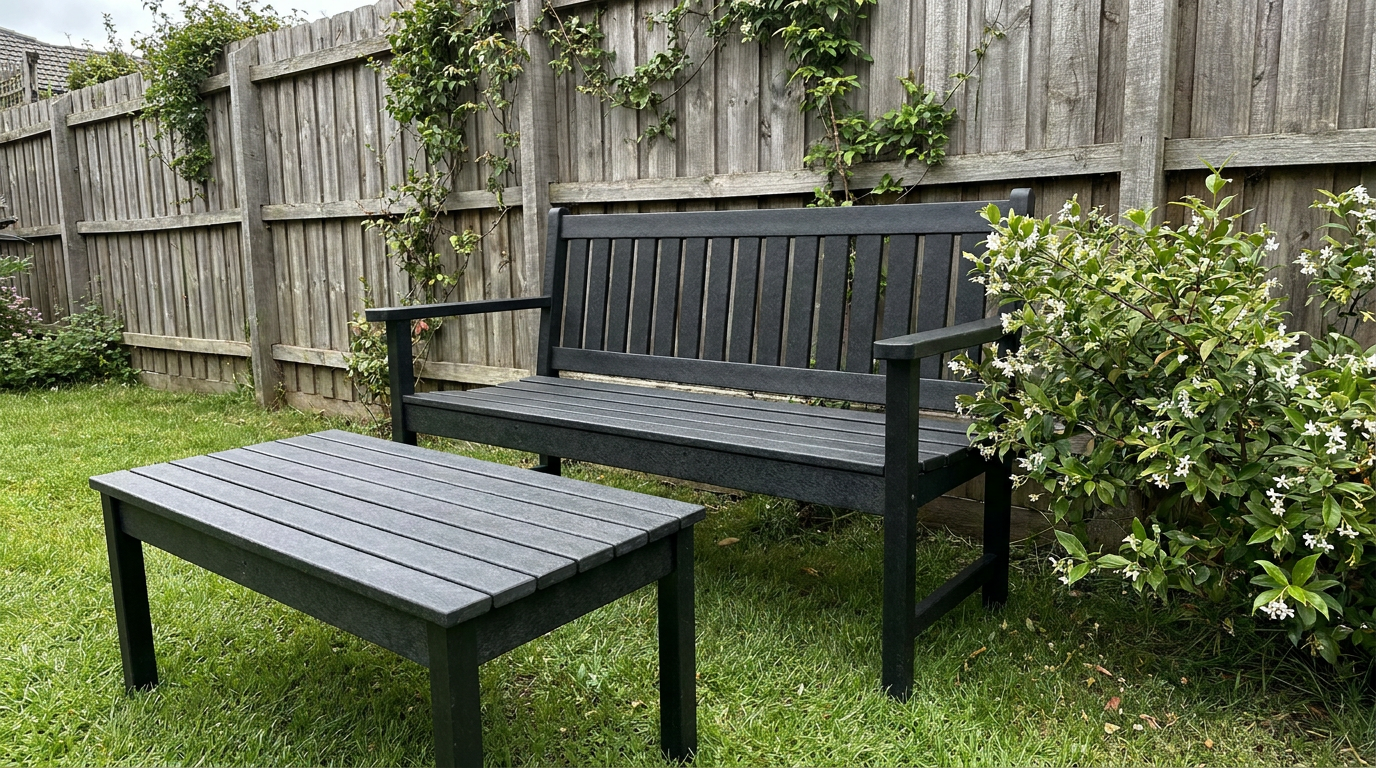
Whatever the label — polywood, poly lumber, plastic lumber or recycled plastic timber — the process is much the same. Waste plastic is cleaned, shredded, melted, mixed with pigment and UV stabilisers, and extruded into planks, slats and posts of the same sizes a furniture maker would cut from timber. Those boards are then cut, routed and screwed together into chairs, benches, tables and planter boxes, much like timber furniture.
The word gets used loosely. Some makers use it as a brand name; most retailers use it generically for any HDPE lumber. A listing that just says "polywood" tells you the material family, not how well the piece is made, so it is worth asking the questions in the construction section below.
Because the colour is mixed through the plastic rather than painted on, a scratch does not reveal a different colour underneath, and there is no surface finish to peel. That is the core of its appeal: it looks like a painted timber bench that never needs repainting.
Pieces in this guide



What is HDPE, and is it the same as poly wicker?
HDPE stands for high-density polyethylene. It is a tough, waxy, water-resistant plastic that does not absorb moisture, does not rot and resists most household chemicals. Outdoors, plain HDPE breaks down in sunlight, which is why outdoor grades have UV stabilisers added.
The same plastic family turns up in two very different forms in outdoor furniture:
- HDPE lumber (polywood): solid boards and slats that replace timber.
- PE or HDPE wicker: a thin, flat strand woven over a metal frame to look like rattan. It is a weave, not a board, so it behaves more like a woven chair than a slatted bench.
If you have been searching "HDPE outdoor furniture", you will see both. They share the weather resistance of the plastic but are bought for different reasons. Our guide to synthetic wicker vs natural rattan covers the woven side in detail.
Solid, hollow or composite: the part that decides quality
Two pieces can both be called "recycled plastic outdoor furniture" and perform completely differently. Construction matters more than the label.
- Solid HDPE lumber. Plastic all the way through. Heavy, stable and rigid, with no cavities for water to collect in. This is what people usually mean when they recommend polywood.
- Hollow plastic profiles. Thin-walled tubes or extrusions shaped to look like boards. Lighter and cheaper, but they flex under load and can trap water inside. If a "polywood" chair feels surprisingly light or sounds hollow when tapped, this is probably what it is.
- Wood-plastic composite. Plastic blended with wood fibre, closer to decking material. It gives a more timber-like surface texture. The Chalfonte table in our range uses a composite top of this kind — more on that below.
When comparing pieces, check the slat thickness (thin slats sag and bounce), look at a cut edge to confirm the colour runs right through, and check the screws and bolts. Plain steel fasteners will rust and streak even if the plastic around them is perfect.
Polywood pros and cons
Here is how solid polywood compares with the two main alternatives in our outdoor range.
| Solid polywood (HDPE lumber) | Aluminium frame + hardwood | Aluminium frame + PE wicker | |
|---|---|---|---|
| Rot, rust and moisture | Will not rot or absorb water | Frame will not rust; timber is naturally moisture-resistant | Frame will not rust; weave does not absorb water |
| Upkeep | Wash only — no oiling or sealing | Wash frame; oil timber if you want to keep its colour | Wash and brush out the weave |
| Weight | Heavy — stays put in wind | Light to moderate | Light |
| Heat in full sun | Dark colours get hot | Dark frames get hot; timber stays cooler to touch | Dark weave gets warm |
| Look | Painted-timber, often traditional styles | Contemporary frame with natural timber | Woven, resort or coastal look |
Where polywood shines
- No rot, no splinters, no oiling. Humidity, rain and mould on the surface do not get into the material.
- Salt air does not touch the plastic. Near the coast, the only thing to watch is the metal hardware.
- Weight is an advantage in storms. Solid pieces are much less likely to be blown around than light aluminium chairs.
- Recycled content. Good-quality boards use a high share of recycled plastic. Ask the maker for the actual percentage rather than accepting "made from recycled materials".
Where it falls short
- Heavy to move. The same weight that helps in a storm makes rearranging and cleaning harder.
- Hot in full sun. Dark colours absorb heat and can be uncomfortable to sit on without cushions on a summer afternoon.
- Looks like plastic up close. From across the yard it reads as painted timber; up close and to the touch, it does not.
- A narrower style range. Slatted Adirondack chairs, benches and cottage-style dining dominate. Clean, modern lines are harder to find.
- Cannot be sanded and refinished like real timber, and it softens near strong heat, so keep barbecues and heaters well clear.
Polywood in our range — and the alternatives
Our polywood option is a lounge set that combines polywood with an aluminium frame, rather than a piece built entirely from poly lumber. Alongside it, our outdoor lounges and outdoor dining sets include timber-topped and wicker pieces that give you similar low-maintenance benefits.
Our polywood option: the Maderia
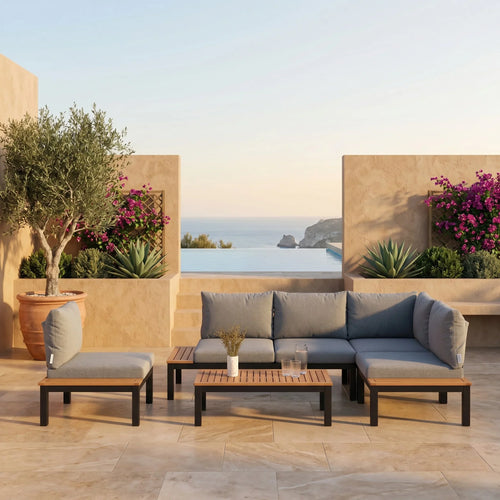
The Maderia 4 Piece Outdoor Sofa Set is the polywood option in our range. It has a charcoal powder-coated aluminium frame, with polywood — described on the product page as recycled HDPE plastic lumber — used for the slatted coffee table top and for insert panels on the armrests of the 3-seater and both armchairs. You get the timber look with no oiling, on a frame that will not rust, and the cushions are weatherproof and UV-protected.

Composite top with PE wicker chairs
The Chalfonte 7 Piece Outdoor Dining Set with Sanbria Chairs pairs a dark brown aluminium table with a Duraboard top — a composite of wood fibre and plastic that looks like slatted timber and needs no oiling — with six stackable Sanbria chairs in full PE wicker and no cushions to manage. It is about as close to "leave it outside and wipe it down" as dining furniture gets.

Aluminium with real timber
If you were drawn to polywood for the timber look, these pair a rust-free aluminium frame with genuine hardwood:
- Hydra 4 Piece Outdoor Set — black aluminium frame, with a slatted eucalyptus side table built into each sofa and a eucalyptus coffee table top.
- Tagula 4 Piece Outdoor Sofa Set — black aluminium frame, fire-retardant polyester cushions and a slatted eucalyptus coffee table top.
- Portals 2 Seater Outdoor Lounge — black aluminium frame, olefin cushions and a solid teak side table at one end.
Real timber will slowly weather to silver-grey if left untreated, which polywood will not; an outdoor hardwood oil keeps its warm tone if you prefer it. Our teak vs acacia vs eucalyptus comparison explains the difference between those timbers, and the steel vs aluminium frame guide covers what sits underneath.

Caring for polywood and other HDPE furniture
This is where polywood earns its reputation. The routine is short:
- Wash with warm water, a little mild soap and a soft brush whenever it looks dirty, then rinse.
- Deal with mould spots early. In humid weather, mould can grow on dirt and pollen sitting on the surface — not in the plastic itself. A diluted household mould cleaner and a soft brush, followed by a thorough rinse, usually shifts it. Test any new cleaner on a hidden spot first.
- Skip the abrasives. Scouring pads leave a dull, scratched patch that holds dirt.
- Check the hardware once a year, especially near the coast, and replace any screw that has started to rust.
- Keep heat away. Do not set a hot barbecue plate or pot straight onto HDPE.
The same habits apply to the polywood on the Maderia and the Duraboard top on the Chalfonte: a damp cloth and mild soap, no oiling or sealing. Cushions are the part that still needs bringing in before a run of wet weather — synthetic frames and boards shrug off rain, but foam does not dry quickly. You can compare every frame and finish across our outdoor furniture range.
FAQs
What is polywood made of?
Polywood is made from high-density polyethylene (HDPE), usually recycled from containers such as milk and detergent bottles. The plastic is melted with pigment and UV stabilisers and extruded into solid boards that are built into furniture like timber.
Is polywood the same as HDPE?
Polywood is a form of HDPE. HDPE is the plastic; polywood (or poly lumber) is that plastic made into solid boards. The same plastic family is also used as a thin woven strand in PE or HDPE wicker furniture, which is a different product.
Is recycled plastic outdoor furniture any good?
Solid recycled-HDPE furniture is very weather-resistant: it will not rot, splinter or absorb water, and it needs no oiling. Hollow or thin-walled plastic pieces are a different, weaker product, so check that the boards are solid and the hardware will not rust.
Does polywood fade or get hot in the sun?
Good polywood has UV stabilisers and colour mixed all the way through, so any fading is gradual and even. Dark colours do absorb heat and can be uncomfortable to sit on in full summer sun, so lighter colours or cushions suit unshaded spots.