
For outdoor furniture, eucalyptus is generally a better choice than acacia: it is denser and carries more natural oil, so it sheds water and resists decay in the open. Acacia is attractive and affordable but less oily, so it needs regular sealing and suits a covered spot. Teak is the most weather-resistant of the three and usually costs most.
- If the piece sits fully exposed: pick eucalyptus, or teak if the budget allows.
- If it lives on a covered patio: pick acacia, sealed regularly.
- If you want the least fuss outdoors: pick teak and let it silver.
- If you never want to oil anything: pick a composite top on an aluminium frame.
In this guide
When each timber makes sense
All three are genuine hardwoods and all three can live outdoors. What separates them is how much natural oil the timber carries, because oil is what keeps water, rot and insects out. More oil means less maintenance and a longer, easier life in the weather.
Choose teak if
- You want the lowest-maintenance natural timber and are happy to pay more for it.
- The piece will sit fully exposed to sun and rain.
- You like the idea of letting it weather to an even silver-grey.
Choose eucalyptus if
- You want most of teak's outdoor performance at a friendlier price.
- You prefer plantation-grown timber. The eucalyptus in outdoor furniture is typically grown in managed plantations.
- You're happy to oil it once or twice a year if you want to keep the warm honey tone.
Choose acacia if
- Budget comes first and you like its pronounced, variable grain.
- The piece will live on a covered patio or verandah rather than out in the open.
- You'll keep up regular sealing and check it for splits.
Pieces in this guide



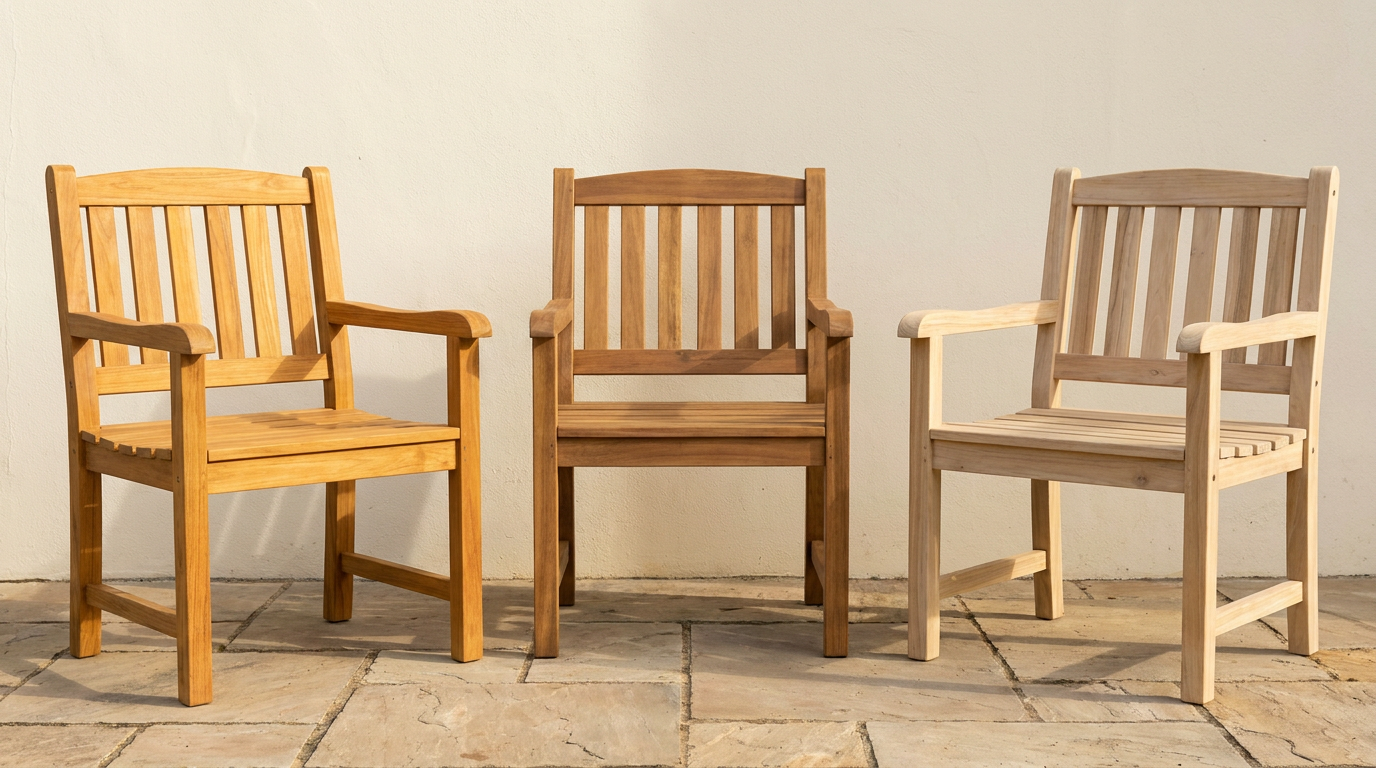
Teak vs acacia vs eucalyptus side by side
This assumes well-made pieces from a reputable maker. A poorly built teak chair will still lose to a well-built eucalyptus one, so construction matters as much as species.
| Timber | Natural oil and weather resistance | Upkeep outdoors | Look and ageing | Relative cost |
|---|---|---|---|---|
| Teak | Very high oil content; resists moisture, rot and insects well | Lowest: clean regularly, oil only if you want to keep the colour | Golden-brown, fine straight grain; silvers evenly | Highest |
| Eucalyptus | Dense with naturally high oil content; good moisture and decay resistance | Moderate: clean regularly, oil every 6–12 months to hold the colour | Warm honey to reddish-brown; weathers to silver-grey | Middle |
| Acacia | Some natural oil, less than the other two; more prone to splitting when wet-dry cycles are harsh | Highest: regular sealing, inspect edges and ends for splits | Variable warm tones, bold grain; can grey unevenly | Lowest |
| Composite (e.g. Duraboard) | Not timber; doesn't rot, warp or crack | Wipe clean; no oiling or sealing | Timber-look slats that stay the same colour | Varies by piece |
The short version: teak is the most forgiving, eucalyptus is the best value for most outdoor settings, and acacia is the budget option that rewards a sheltered spot and regular care.
Acacia vs eucalyptus for outdoor furniture
This is the comparison most people are actually weighing, because the two often sit at similar price points.
For a fully exposed spot, eucalyptus is generally the better choice. It's denser and carries more natural oil, which helps it shed water and resist decay. That matters most where furniture cops summer storms and high humidity — the conditions that open up small splits in less oily timber and let moisture in.
Acacia earns its place under cover. On a roofed patio, verandah or alfresco area, it avoids the worst of the sun and rain, and its lower price makes sense. Keep it sealed, wipe up standing water, and check the ends of legs and slats where moisture tends to get in first.
Whichever you choose, slatted tops help. Gaps between slats let rain drain off rather than pooling on the surface, which slows weathering on any timber.

Teak vs acacia, and teak vs eucalyptus
Teak vs acacia
Teak is better outdoors; acacia is cheaper. Teak's high oil content means it can sit out in the open with little more than a regular clean, while acacia needs sealing and a more sheltered position to last well. Be wary of furniture sold as "acacia teak" or "teak-look": that usually describes a colour or stain, not the species. If you're paying teak money, ask what the timber actually is.
Teak vs eucalyptus
This one is closer than many people expect. Eucalyptus is often used as a sustainable alternative to teak because it offers comparable outdoor durability from managed plantations. Teak has the edge on natural oil, so it tolerates neglect better. Eucalyptus asks for a little more attention — mainly oiling if you want to keep its colour — in return for a lower price.
Both weather the same way. Left untreated, either one gradually moves from warm brown to silver-grey. That change is cosmetic: it doesn't weaken the timber, and plenty of people prefer the silvered look.
What our outdoor timber is actually made of
Product names can mislead, so here is what the timber in our outdoor range really is. Most of it is eucalyptus. A small number of our lounges use solid teak for a built-in side table or table top. We don't currently stock acacia outdoor furniture.
- Nassau Rectangular Outdoor Table — solid eucalyptus throughout: legs, frame and slatted top. "Light teak" is the finish colour, not the species. Because it's all timber, it needs the most care of anything here: re-oil or reseal every 6–12 months to hold the colour.
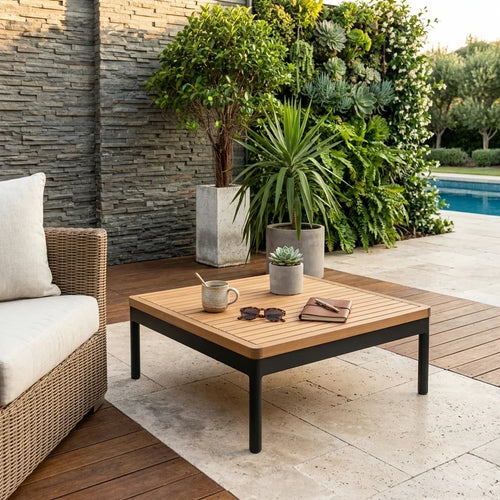
- Hydra Outdoor Coffee Table — slatted eucalyptus top on a black powder-coated aluminium frame.
- Bendigo Square Outdoor Coffee Table — a compact square table with a slatted eucalyptus top and black aluminium frame.
- Tagula 4 Piece Outdoor Sofa Set — a two-seater, two armchairs and a coffee table with a eucalyptus top, on black aluminium, with fire-retardant polyester cushions.
- Bendigo Outdoor Bar Stool — white aluminium frame with a contoured, slatted eucalyptus seat that drains after rain.
- Bryde 4 Piece Outdoor Set — a white aluminium corner lounge, the Nassau table and two Bendigo stools, so the timber across the set is all eucalyptus.

The no-oiling option
If you love the look of timber but don't want the upkeep, the Chalfonte Rectangular Outdoor Table has a slatted Duraboard top on a dark brown powder-coated aluminium frame. Duraboard is a composite that looks like timber slats but doesn't need oiling, sealing or sanding, and it's UV-stabilised to resist fading. It's not hardwood, and we'd rather say so plainly. Mixing materials like this — metal where you want no maintenance, timber or composite where you want warmth — is common across outdoor ranges. Our powder-coated steel vs aluminium comparison covers the frame side of that choice.

Browse the full range of outdoor dining tables and outdoor coffee tables, or the whole outdoor furniture range, to compare tops side by side.
Caring for outdoor hardwood
The routine is the same for teak, eucalyptus and acacia; only the frequency changes.
- Clean regularly. Wipe with a damp cloth, and for a deeper clean use mild soapy water and a soft brush, working with the grain. Rinse and let it dry fully.
- Skip the pressure washer. High pressure roughens the surface and lifts the grain.
- Oil to keep the colour. Our eucalyptus pieces are best treated with an outdoor hardwood oil every 6–12 months if you want to hold the warm tone. Apply thin coats to clean, completely dry timber on a dry day and wipe off any excess; oil over grime holds dirt and moisture against the surface.
- Or let it silver. If you like the grey look, just keep cleaning it. Nothing else is needed.
- Cover in long wet spells. A breathable cover slows weathering and means less frequent oiling.
One product to keep indoors: the Guardsman Wood Care Kit is a clean-and-polish set made for finished, sealed timber such as veneer, painted and stained surfaces. It isn't for raw, oiled or waxed wood, so use it on your indoor dining and coffee tables rather than on oiled outdoor hardwood. If your furniture has already gone grey and rough, our guide to restoring weathered teak and eucalyptus walks through cleaning, sanding and re-oiling. For a year-round routine, see the seasonal outdoor furniture maintenance checklist.

Outdoor timber FAQs
Is acacia wood good for outdoor furniture?
Yes, with realistic expectations. Acacia is a hardwood with some natural oil, but less than teak or eucalyptus, so it needs regular sealing and does best under cover. In full sun and storm rain it is more likely to grey unevenly and develop surface splits.
Does eucalyptus outdoor furniture need oiling?
Only if you want to keep its warm colour. Untreated eucalyptus weathers to silver-grey, which is cosmetic and doesn't weaken the timber. To hold the original tone, apply an outdoor hardwood oil every 6–12 months to clean, fully dry timber and wipe off the excess.
Is the Nassau outdoor table made of teak?
No. The Nassau Rectangular Outdoor Table is solid eucalyptus throughout — legs, frame and slatted top. "Light teak" is the name of its finish colour. As an all-timber table, it should be re-oiled or resealed every 6–12 months to keep that finish.
What is the lowest-maintenance alternative to timber outdoors?
A composite top on an aluminium frame. The Chalfonte Rectangular Outdoor Table, for example, has a Duraboard top that looks like timber slats but doesn't need oiling, sealing or sanding — a damp cloth is enough to keep it clean.
Timber is easier to judge in person than on a screen. We have five showrooms — Rocklea, Virginia, North Ipswich, Bundall and Beenleigh — so ask which store has the piece you want on display, and our team can tell you exactly what any top is made of.