
To protect outdoor furniture from storms, bring cushions, umbrellas, light chairs and loose items inside first, then push heavier sofas and tables against a solid wall, away from glass doors. Afterwards, clear debris, rinse off any salt spray, dry cushions fully and tighten fittings. For sun and everyday rain, shade, protectors and breathable covers do the rest.
- If a storm warning is issued: bring in cushions, umbrellas and light chairs first.
- If your setting sits in full sun: pick shade first, then rotate cushions and use protectors.
- If it has rained: stand cushions on edge to dry before storing or covering.
- If you are thinking about a cover: pick a breathable one and never leave it on for weeks.
In this guide
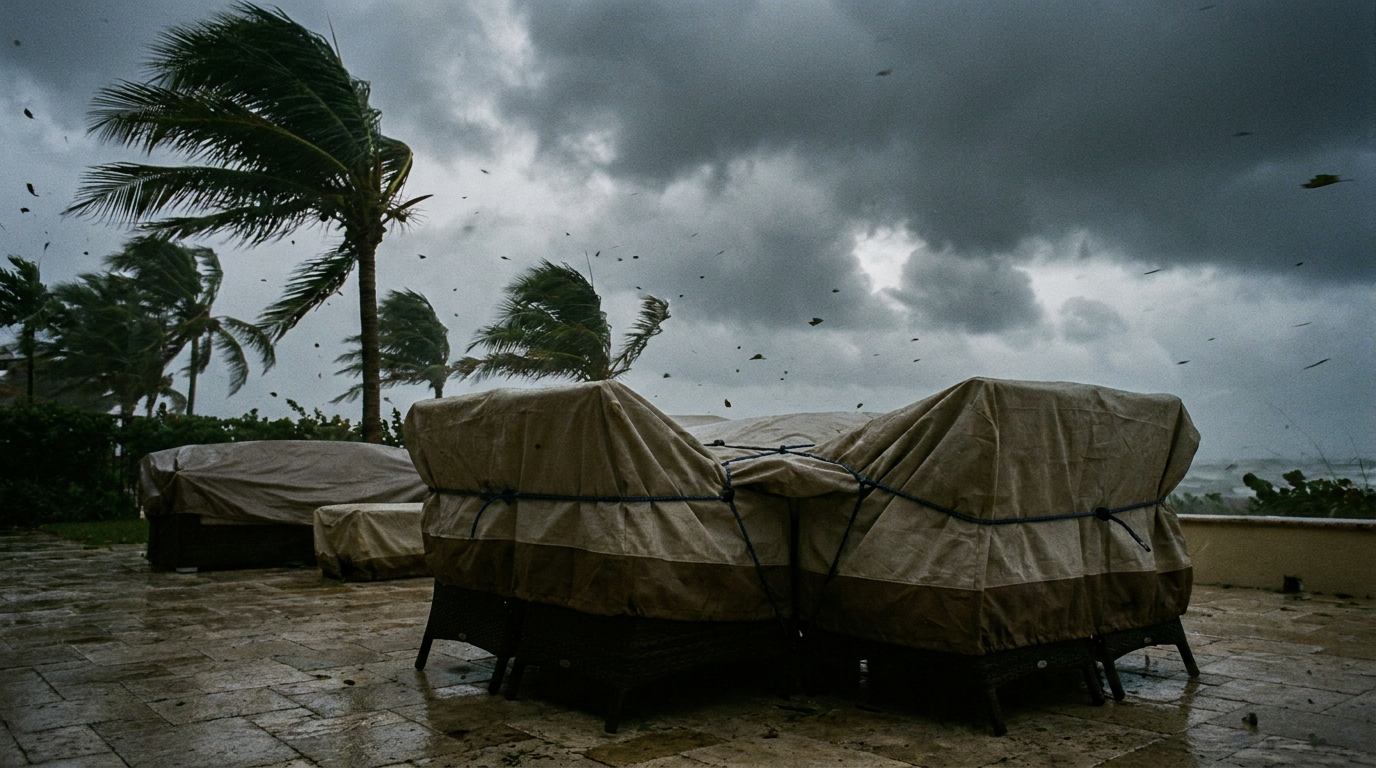
What to bring in before a storm
When a severe thunderstorm warning is issued, you usually have enough time for a quick routine, not for rearranging the whole patio. Work in this order, because the first items cause the most damage when they fly or soak through.
- Cushions. They catch the wind easily, soak up water in seconds and take days to dry. Get them inside, into the garage or behind a sliding door. Do not waste time finding the perfect spot.
- Umbrellas. Close them and lay free-standing umbrellas flat. An open umbrella is the most dangerous thing on most patios in a strong gust.
- Light chairs and side tables. Aluminium is light, which makes it easy to move but also easy for the wind to push around. Bring small pieces inside or stack them against a solid wall.
- Loose items. Pot plants in light pots, toys, tools and decorations become projectiles.
- Larger settings. Push sofas and tables together against a wall, out of the open, and away from glass doors.
A cyclone warning is different. Nothing on a patio is "cyclone proof", so follow official emergency advice and bring everything you can inside well before the weather arrives.
Coastal homes face the strongest gusts and salt-laden rain, so they need this routine more often than homes further inland. It is also worth a once-a-year check before storm season: tighten fittings, know where the cushions will go, and trim overhanging branches. Our seasonal maintenance checklist sets that out month by month.

Pieces in this guide


After the storm: the next 24 hours
- Safety first. Check for fallen power lines and unstable branches before you go near the furniture, and wait until the storm has fully passed.
- Photograph any damage before you move or clean anything.
- Clear the debris. Wet leaves, blossoms and twigs left on warm, damp furniture are how mould starts. Brush them off and hose the furniture down gently.
- Rinse off salt. Near the coast, storm rain can carry salt spray. Rinse frames with fresh water so salt does not sit on fittings and any chips in the coating.
- Dry the cushions. Stand any cushions that got wet on their edge in the sun and breeze, and do not put them back or store them until the foam is dry.
- Check the fittings. Tighten anything that has worked loose.
If dark spots appear anyway, our guide to removing mould and mildew from outdoor furniture covers each material step by step.
How to stop outdoor furniture blowing away
An ordinary gusty afternoon, not just a storm, can tip a light chair, lift cushions or catch an open umbrella. Everyday habits prevent most of it:
- Know what moves. Weight and material decide it. Heavier, lower pieces such as solid timber tables and large lounges move less; light resin and aluminium chairs, small side tables and loose cushions move more.
- Group pieces in a sheltered spot. Push the lounge and table together against a solid wall or into a corner so they shield each other. Leave a small gap behind them so they dry after rain.
- Put cushions and light chairs away. Cushions are the first thing to lift, so keep them in a storage box, the garage or inside when the setting is not in use, and stack light chairs against a solid wall or in the garage or shed.
- Keep umbrellas down and closed. Close the umbrella whenever you leave the area and lay a free-standing one flat in wind: an open umbrella acts like a sail.
- Strap or anchor what stays out. For a large setting that lives outside, straps or anchors fixed to something solid help keep it in place.
- Take extra care on a balcony. See our guide to wind and weight on a balcony.
Stacking chairs make this routine quick. The Sanbria Outdoor Stacking Dining Chair is a PE wicker armchair with no cushions, and its legs are shaped to stack. Six of them come with the Chalfonte table in the Chalfonte 7 Piece Outdoor Dining Set with Sanbria Chairs, and the ten padded chairs in the Rapa Outdoor 11 Piece Extendable Dining Set stack as well. Compare them in our outdoor dining range.
None of this makes furniture wind proof. When a severe thunderstorm warning is issued, switch to the storm routine above.
Protecting outdoor furniture from sun and UV
No outdoor material is completely UV-proof. Sun fades fabric, dries out timber and slowly dulls powder coat. Strong summer UV is the main reason outdoor furniture ages faster in full sun than under a roof. You cannot stop it, but you can slow it a lot.
- Shade comes first. A roofed patio or alfresco area protects better than anything you apply. Shade sails and pergolas with shade cloth help too.
- Put the vulnerable pieces under cover. If your setting is part covered and part open, keep the cushioned lounge under the roof and put the hardest-wearing pieces in the open.
- Flip and rotate cushions. Turning cushions regularly through summer spreads the fading evenly, so one side does not end up much paler than the other.
- Know what each material does. Powder-coated aluminium frames resist rust and need only a wash. Teak and eucalyptus turn silver-grey in the sun, which is cosmetic, and an outdoor hardwood oil keeps the warm tone if you prefer it. Outdoor fabrics are made to resist fading, but they still fade more slowly under shade.
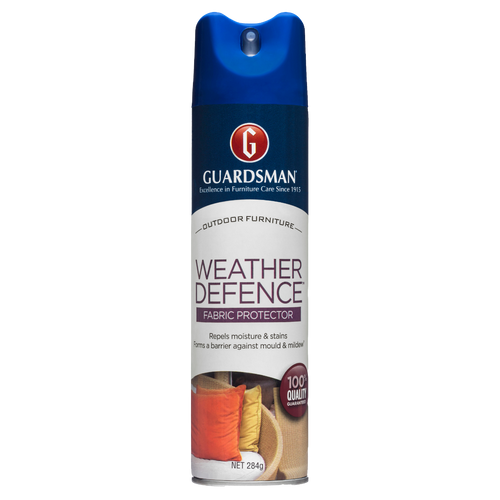
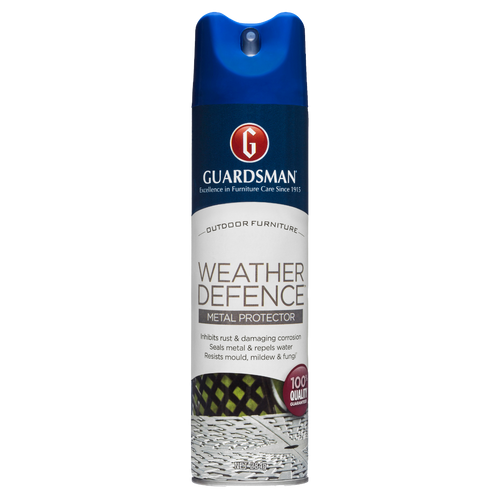
- Use the right protector for each part. Guardsman Weather Defence Fabric Protector is for outdoor cushions, fabric and resin wicker. It leaves an invisible, breathable barrier that repels rain and helps resist mould and mildew. Guardsman Weather Defence Metal Protector is for aluminium, steel and powder-coated frames. It seals the surface against moisture and salt air to slow weathering and help prevent rust. Apply both to clean, dry surfaces and reapply each season or after heavy rain.
What the furniture is made of also shapes how much protection it needs. The Portals 2 Seater Outdoor Lounge pairs a black powder-coated aluminium frame with 190gr Olefin cushions, a fabric chosen for its resistance to UV, moisture and mildew, plus a solid teak side table that will silver naturally over time. The Tagula 4 Piece Outdoor Sofa Set has a black aluminium frame, fire-retardant polyester cushions and a slatted eucalyptus coffee table top, and its product page suggests an outdoor hardwood oil every 6 to 12 months if you want to keep the timber's warm colour.
Olefin's main drawbacks are worth knowing: it handles sun and damp well, but it is sensitive to heat, so keep cushions away from heaters and fire pits, and oily marks such as sunscreen are best cleaned off promptly. Our outdoor fabric guide compares Olefin, polyester and acrylic fabrics in detail.

Rain and everyday wet weather
Rain itself rarely harms well-made outdoor furniture. The damage comes from staying wet. The Panama 4 Piece Outdoor Sofa Set, for example, has a rust-resistant charcoal aluminium frame that can stay out in wet weather, and its care instructions ask only that the cushions dry fully after rain before they are stored or covered. That is the pattern for most settings.
- Stand wet cushions on their edge to drain and dry, or bring them in when rain is forecast.
- Do not stack chairs or cover furniture while it is wet.
- Make sure water does not pool where the furniture sits. If it does, move the setting.
- Wipe frames down now and then so dirt does not hold moisture against the finish.
If you are still choosing a frame, our comparison of powder-coated steel vs aluminium explains how each handles wet weather.
Are outdoor furniture covers worth it?
Sometimes. In a humid climate, a cover used the wrong way can do more harm than no cover at all: it traps warm, damp air and whatever pollen and leaf litter was on the furniture, and mould grows underneath. We do not sell covers, so this is the honest version.
When a cover helps
- For short spells of bad weather when the cushions cannot come inside. Put the cover on, then take it off once the furniture has dried.
- While you are away for a while, as long as you air the furniture out regularly.
- On a fully exposed patio with no roof or shade, during long periods when the setting is not being used.
When to skip it
- Under a solid patio roof, where the roof is already doing the job.
- Over wicker in humid weather, because moisture gets trapped in the weave.
- All year round. Covers need to come off in dry weather.
- In storm-strength wind without tie-downs, because a cover catches wind like a sail.
If you buy one, choose a breathable fabric with vents, not a plastic-feeling PVC cover that traps moisture, and only put it on clean, dry furniture.
Store, shelter, cover or treat: which one when
| Option | Best for | Protects against | Watch out for |
|---|---|---|---|
| Bring it inside | Cushions, umbrellas, light chairs and side tables | Wind, rain, hail and mould in the foam | Needs space and a few minutes before each storm |
| Permanent shade or roof | Cushioned lounges and dining settings in daily use | UV fading and most rain | Wind-blown rain still reaches the edges |
| Breathable cover | Short bad spells, time away, fully exposed patios | UV, dust and rain | Traps moisture if left on or put over damp furniture |
| Fabric or metal protector | Outdoor cushions (fabric) and aluminium frames (metal) | Rain soaking into fabric; moisture and salt air on metal | Apply to clean, dry surfaces; reapply each season or after heavy rain |
Browse weather-ready pieces in our outdoor furniture range and outdoor lounges, and find both Weather Defence protectors in furniture care. Our team at any of our five showrooms can talk you through how each material handles the weather.
Weather protection FAQs
Will outdoor furniture blow away in a storm?
Light pieces can. Aluminium chairs, small side tables, cushions and open umbrellas are the items most likely to move or become airborne in strong gusts. Stack or bring them in when a severe thunderstorm warning is issued. No patio furniture should be treated as cyclone proof.
What type of outdoor furniture is best for high winds?
Heavier, lower pieces such as a solid timber table or a large lounge tend to move least, and light chairs that stack are the easiest to put away. No outdoor furniture is wind proof, so follow the habits in how to stop outdoor furniture blowing away.
Is any outdoor furniture cyclone rated?
No patio furniture should be treated as cyclone proof. When a cyclone warning is issued, follow official emergency advice and bring everything you can inside well before the weather arrives.
Can I leave covers on outdoor furniture all year?
No. In humid weather a cover left on traps moisture and the pollen and leaf litter on the furniture underneath, which is how mould starts. Take covers off in dry weather, air the furniture regularly and only cover clean, dry pieces.
What are the disadvantages of olefin fabric?
Olefin handles sun, moisture and mildew well, but it is sensitive to heat, so keep cushions away from heaters and fire pits, and oily marks such as sunscreen are best cleaned off promptly. Like every outdoor fabric, it still fades more slowly in shade than in full sun.