
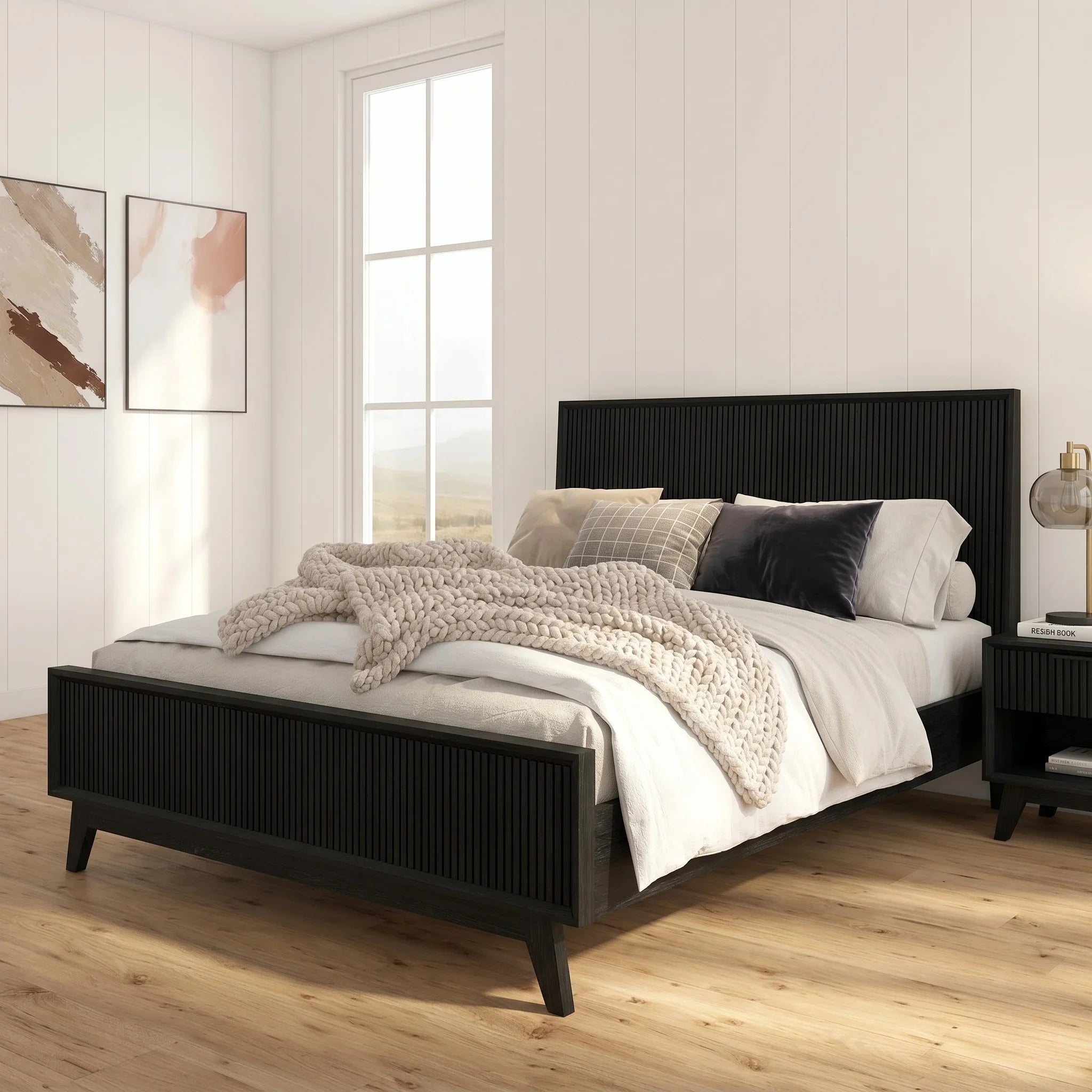
Wooden or fabric — it's the single question our showroom team gets asked more than any other when a customer is buying their first bed or upgrading from a basic frame. The short answer: both are excellent choices, and neither is objectively better. The right one depends on three things — the look you're after, how much maintenance you're prepared to do, and what the room needs to feel like. This guide walks through every meaningful difference so you can make the call quickly and with confidence.
What each type actually is
Wooden bed frames are built from timber — either solid hardwood, engineered wood panels (MDF, particleboard, or bamboo composite), or a combination of the two. Exposed timber or timber-veneer panels form the headboard, footboard, and side rails. The visible surface is the wood itself: grain, colour, texture.
Fabric bed frames have those same structural surfaces covered in a soft material — woven fabric, velvet, linen, or PU leather — stretched over a foam or fibre padding layer. The frame underneath is still usually timber or metal, but you never see it. The visible surface is the upholstery.
Neither type is structurally superior. Both carry the same weight and use slat systems for mattress support. The difference is entirely about surface finish — what it looks like, how it feels to touch, and how you clean it.


Side-by-side comparison
| Factor | Wooden | Fabric | Winner |
|---|---|---|---|
| Durability | Very high — timber and veneer panels don't wear in normal use. May scratch if dragged. | High frame, moderate upholstery — the timber core lasts; fabric shows wear in high-touch areas over years. | Wooden |
| Cleaning | Wipe with damp cloth; occasional polish or wax for solid timber. | Weekly vacuum; spot-clean spills; fabric protector spray recommended. | Wooden |
| Comfort to lean on | Firm — timber headboards are not cushioned. | Cushioned — foam padding behind the fabric makes the headboard comfortable for reading in bed. | Fabric |
| Warmth in room | Warm, natural — timber grain reads as organic and grounding. | Soft and cosy — upholstery adds visual softness and texture. | Tie |
| Kids & pets | Easiest — wipe spills clean; no pile to trap hair. | Moderate — fabric attracts pet hair; spills require prompt treatment. | Wooden |
| QLD humidity | Solid timber can expand/contract slightly. Engineered panels are more stable. | Fabric can retain moisture in low-airflow rooms; legs (not plinths) help with airflow. | Wooden |
| Style range | Dark timber (contemporary), light oak (coastal/Hamptons), natural (rustic/scandi). | Glam (velvet), coastal (linen), contemporary (woven), traditional (button-tufted). | Tie |
| Price range | $299–$999+ (entry metal/timber to premium solid) | $399–$899 (broad mid-range) | Tie |
5 reasons to choose a wooden bed frame
- You want the lowest maintenance option. A quick wipe with a damp cloth handles spills, dust, and most marks. No vacuuming, no fabric protector, no pile direction to worry about.
- You have young children or pets. Timber wipes clean in seconds. There's no upholstery to soak up a spilt drink or trap pet hair in.
- You prefer the look of natural materials. Timber grain — whether dark walnut, light oak, or jet black — adds an organic warmth that fabric upholstery can't replicate. If your bedroom has timber floors or wooden furniture, a wooden bed frame reads as part of a cohesive scheme.
- You want the frame to outlast multiple mattresses. A solid timber or high-quality engineered-wood frame will typically last 15–20+ years with normal use. The surface doesn't degrade the way upholstery can.
- Your climate is challenging. In Queensland's humid coastal conditions, a timber frame (especially engineered wood) is less susceptible to moisture issues than fabric upholstery — particularly if the bedroom has limited ventilation.

5 reasons to choose a fabric bed frame
- You sit up to read, watch TV, or work in bed. A cushioned headboard is a meaningful daily comfort upgrade. Timber headboards are firm; fabric headboards are padded. If you spend 30+ minutes leaning against the headboard every day, this matters.
- You want the bed to be the room's statement piece. A full-height velvet headboard in deep blue or charcoal commands the room in a way most timber frames don't. Fabric beds — especially channel-tufted or button-tufted styles — are inherently more decorative.
- You prefer a softer, quieter aesthetic. Timber and metal frames have hard edges and sharp contrasts. Fabric headboards absorb light and sound slightly, giving the room a softer, more hushed feel.
- You're building a glam, coastal, or Hamptons interior. Linen and woven-fabric headboards anchor these styles authentically. A timber frame can work in coastal spaces, but the textural quality of upholstery suits it more naturally.
- Your budget is mid-range and you want generous coverage. Good-quality fabric beds exist from $399 — slightly more accessible than equivalent quality solid timber frames, which tend to start higher for the same size.

A2Z wooden bed frames
A2Z Furniture carries a wide range of wooden bed frames across styles from dark contemporary to light Hamptons. Two popular picks:
- Tennyson Bed Frame — Solid black-finish timber with a tall, slatted-panel headboard and matching footboard. Contemporary with strong vertical lines. Queen $899, King $999.
- Canyon Bed Frame — Engineered timber in grey or black, clean mid-height headboard. A practical, versatile everyday wooden frame. Queen $699, King $849.
A2Z fabric bed frames
A2Z Furniture stocks a broad fabric bed frame range plus a dedicated upholstered collection. Two well-stocked picks:
- Aurora Bed Frame — Fabric upholstered with a traditional-style curved headboard. Grey or Oatmeal. Double $399, Queen $449.
- Finch Bed Frame — Clean contemporary fabric headboard in black or white. Double $449, Queen $549, King $599.
For a deeper look at what makes an upholstered bed frame different — fabric types, headboard styles, care by material — see our Upholstered Bed Frames: The Complete Guide.
Choose wooden if…
- You want the lowest-maintenance option
- You have young children or pets
- Your bedroom has timber floors/furniture
- You live in a humid coastal location
- You don't lean against the headboard
Choose fabric if…
- You read or work in bed regularly
- You want the bed to anchor the room
- You're doing a glam, coastal, or Hamptons style
- You prefer a softer, quieter aesthetic
- Budget is mid-range and you want choice
Queensland climate note
Both frame types work well in SE Queensland, but each has a specific consideration in subtropical conditions:
Wooden frames: Solid timber naturally expands and contracts with humidity changes. Over years of extreme humidity swings, thin solid-timber panels can warp. Engineered wood panels (MDF core, veneer surface) are more dimensionally stable and handle Queensland's humidity better than solid timber in most cases. Look for the product description to clarify whether you're buying solid timber or engineered panels.
Fabric frames: Upholstery can retain moisture in rooms with poor airflow — this can eventually cause mould spotting inside the padding. Minimise this by choosing a frame on legs (not a solid plinth base) for underbed airflow, applying a fabric protector spray, and ensuring the room has adequate ventilation or air conditioning. For more detail, see our upholstered bed frame guide.
For more help deciding the right bed frame for your room — including size, storage, and slat guidance — see our Complete Australian Bed Frame Buying Guide.
Frequently asked questions
Which lasts longer — wooden or fabric bed frames?
The structural frame of both types lasts similarly — 10–20+ years under normal use. The difference is in the surface. Timber surfaces don't meaningfully degrade; the wood itself stays intact. Fabric upholstery can show wear in high-contact areas (where pillows rub the headboard, where people sit on the side rails) over time. A well-maintained fabric bed can still last 10–15 years, but the surface will eventually look more used than an equivalent timber frame.
Are wooden bed frames easier to clean than fabric?
Yes — notably so. Timber wipes clean with a damp cloth. Fabric requires vacuuming, spot-cleaning for spills, and a fabric protector spray for ongoing protection. If you have children, pets, or a strong preference for low maintenance, wooden is the easier choice. PU leather upholstery (a fabric bed variant) is nearly as easy to clean as timber — just wipe with a damp cloth — and is a good middle ground.
Can you get a wooden bed frame with storage?
Yes — storage and material type are independent. You can get wooden beds with drawer storage, gas lift storage, and bookcase headboards. Similarly, fabric beds come with and without storage. Our storage bed types guide covers drawer vs gas lift vs bookcase options across both material types.
Is a fabric bed frame better for someone who reads in bed?
Yes, clearly. A cushioned fabric headboard is meaningfully more comfortable to lean against for extended periods than bare timber. If you regularly read, use a laptop, or watch TV with the headboard as a backrest, a padded upholstered headboard is worth prioritising over a timber one for that reason alone. Timber headboards are fine for sitting upright briefly, but not for 30–60 minutes of sustained reading.
Which is better for a small bedroom?
Lighter-coloured options in either category help a small room feel more open. A light-timber or natural-oak wooden frame reads as airy; a linen or oatmeal fabric headboard does the same. Dark timber or deep-coloured velvet both make a small room feel smaller. The bigger impact in a small bedroom is headboard height — a floor-to-ceiling headboard creates an illusion of height; a low-profile headboard keeps the room feeling proportioned. Material choice is secondary to colour and height in a small space.
Can I mix wooden and fabric elements in the same bedroom?
Yes, and it often looks better than matching everything. A common combination: fabric headboard (soft, cushioned centrepiece) paired with timber bedside tables and a timber dresser. The contrast between the soft upholstered bed and the hard-edged timber furniture creates visual interest. Matching the timber tone in the bed legs (many fabric frames have timber or timber-finish legs) ties the two elements together.
References
- CHOICE Australia — bedroom furniture buying guide, 2023.
- Sleep Health Foundation Australia — bedroom environment and sleep quality, 2024.