
Recliner Health & Ergonomics · The Comfort Zone
One of the genuine, non-marketing benefits of a recliner is what it does for tired legs. After a day on your feet — a shift at work, a long day in the garden, a Brisbane summer that leaves your ankles a little puffy — raising your legs takes pressure off them and lets gravity help blood and fluid drain back toward the heart. But a recliner only delivers that benefit if the footrest is set at the right height and the chair fits your body, and there are a few situations where leg elevation should be cleared with a doctor first. Here's how to get the position right and who it helps most.

The short version. Raising your legs helps gravity move blood and fluid back toward the heart, easing the heavy, swollen feeling after a long day standing. For mild swelling, getting the feet near or just above heart height — a deep recline or "zero-gravity" setting — is the position people find most relieving. The footrest should support the whole leg so there's no hard pressure point behind the knee, and hip comfort comes down to a seat depth and width that match your body. If you have a known circulation condition, significant or one-sided swelling, a clot risk, or diabetes-related foot issues, check with a doctor first.
How leg elevation helps
When you stand or sit with your feet on the floor all day, blood and tissue fluid have to travel uphill against gravity to get back from your feet to your heart. Your calf muscles normally pump it along, but when you're still — standing at a counter, sitting at a desk — that pump isn't working much, and fluid tends to pool around the ankles and lower legs. That's the heavy, tight, sometimes puffy feeling at the end of the day.
Reclining and raising your legs flips the slope. With your feet elevated, gravity now works with the return flow instead of against it, helping fluid drain away from the lower legs. It's the same simple principle behind "put your feet up." A recliner just makes it comfortable to hold the position for a while. This is one piece of the wider picture in our recliner health overview.
The legs-above-heart position
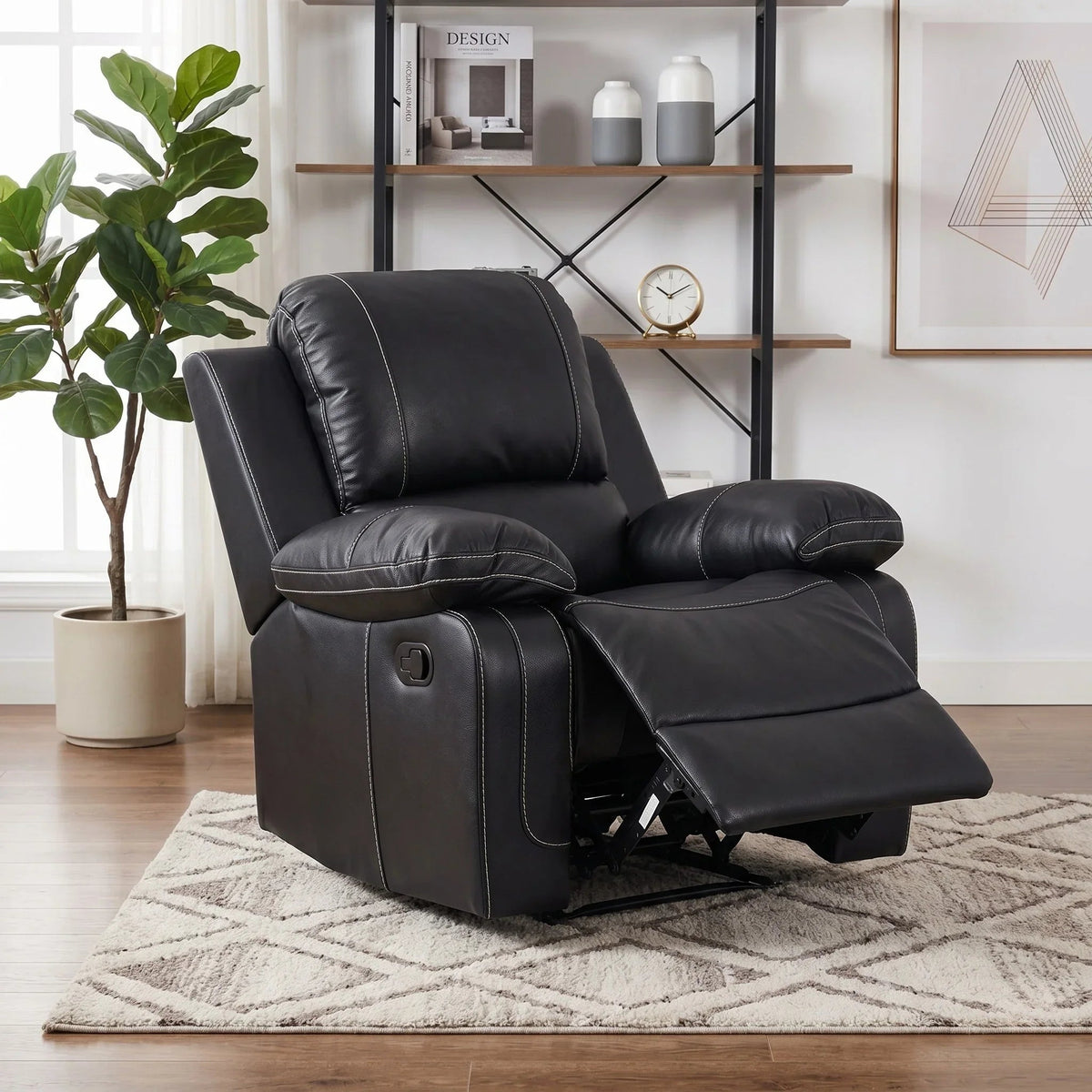
For easing mild end-of-day swelling, the position most people find best is a deep recline where the feet come up to around the level of the heart, or just above. Many electric recliners offer a near-flat or "zero-gravity" recline that does this naturally — the torso tilts back and the legs lift so the knees end up roughly level with, or higher than, the hips.
You don't have to be flat to benefit. Even a moderate elevation — feet up, legs supported, ankles higher than the knees — helps. Start comfortable and adjust upward if you want more. Twenty minutes to half an hour of genuine elevation does more than an hour of half-hearted footrest.
Why electric helps here. A powered recliner lets you stop at any angle and fine-tune how high the legs sit, rather than being limited to a manual chair's fixed recline stops. If you're choosing between the two, our electric versus manual comparison covers the trade-offs.
Mind the back of the knee

The most common set-up mistake works directly against circulation: letting the chair press into the soft area behind the knee. If the footrest is too short, or you're perched so your calves dangle over a hard edge, that edge digs into the back of the knee — right where blood vessels run close to the surface — and partly defeats the point of elevating in the first place.
The fix is full-length support. The footrest and seat together should carry the leg from hip to ankle, with no single hard line pressing into the back of the knee or the calf. This is why seat depth and footrest length matter as much as recline angle — a chair that fits your leg length supports the whole limb evenly.
Hips and seat geometry
Hip comfort in a recliner is mostly about seat depth and width matching your body. Too deep, and you either slide forward (collapsing your back) or your lower legs are left unsupported. Too shallow, and your thighs hang off the front edge. Too narrow, and your hips are squeezed against the armrests; a little width to spare lets you shift and settle. When the seat fits, your hips sit level and supported, weight spread across the seat rather than concentrated on one spot — which is what keeps a long sit comfortable. Getting hips, back and legs supported together is the heart of our posture rules guide.
Who benefits most

Leg elevation in a recliner tends to help most for:
- People on their feet all day — hospitality, retail, trades, nursing, teaching — who get end-of-day heaviness and mild ankle swelling.
- Older adults, who often experience more fluid pooling and find a comfortable elevated rest genuinely restorative.
- During pregnancy, when mild lower-leg swelling is common — a recliner offers a comfortable way to put the feet up (always following your own care provider's advice).
- Anyone recovering from time on their feet — a big day out, travel, or standing events.
If lower-back ache is part of the picture too, pair this with our back pain breakdown, since back and leg comfort are closely linked in how you set the chair.
When to check with a doctor first. Leg elevation is generally gentle and helpful, but it isn't a treatment. Speak to your GP before relying on it if you have a diagnosed circulatory or heart condition, significant or sudden swelling, swelling in only one leg, a history of blood clots (DVT), or diabetes-related foot problems. Sudden, painful, one-sided leg swelling needs prompt medical attention. A2Z's recliners are comfort and lifestyle furniture — we don't stock medical lift or mobility-aid chairs, so any prescribed seating should be sourced through your care provider.
Shop the range
Looking for a recliner with comfortable, adjustable leg support?
Setting your recliner up for circulation
- Sit fully back so your hips are supported and your back meets the backrest.
- Recline to a comfortable deep angle — aim to bring your feet up toward heart height for swelling relief.
- Check the back of your knees — no hard edge pressing in; the leg should be supported full-length.
- Relax your feet and ankles rather than holding them flexed.
- Hold it for 20–30 minutes, then move — a gentle ankle pump or a short walk afterward keeps things flowing.
Recliners and circulation FAQs
Are recliners good for circulation?
Raising your legs in a recliner can help with the mild, end-of-day leg heaviness and ankle swelling that comes from fluid pooling when you've been on your feet. Elevating the legs lets gravity assist the return of blood and fluid toward the heart. It's a comfort benefit, not a medical treatment — if you have a circulation condition, check with your doctor.
How high should I raise my legs to help swelling?
For mild swelling, the position most people find relieving is a deep recline that brings the feet up to around heart height or just above, with the legs fully supported. Many electric recliners offer a near-flat or zero-gravity setting that achieves this. Even a moderate elevation with the ankles above the knees helps.
Can sitting in a recliner be bad for circulation?
It can if the chair presses into the back of your knees or you stay in one position for hours. A footrest that's too short leaves a hard edge digging into the soft tissue behind the knee, which works against the blood flow you're trying to help. Use a chair that supports the whole leg, and get up and move regularly.
Is a recliner good during pregnancy for swollen legs?
Many people find a recliner a comfortable way to put their feet up and ease the mild lower-leg swelling that's common in pregnancy. Keep the legs supported full-length and change position regularly, and always follow the advice of your own midwife or doctor — sudden or one-sided swelling should be checked promptly.
Does A2Z sell medical lift recliners?
No — our recliners are comfort and lifestyle furniture, not medical or mobility-aid seating. If you need a prescribed lift or mobility chair, that's a category we don't stock, so it's best sourced through your care provider.
Written by Rahul Sharma for The A2Z Furniture — five South-East Queensland showrooms, family-owned and operated since 2013. Last updated July 2026. This article is general comfort information and is not medical advice.