
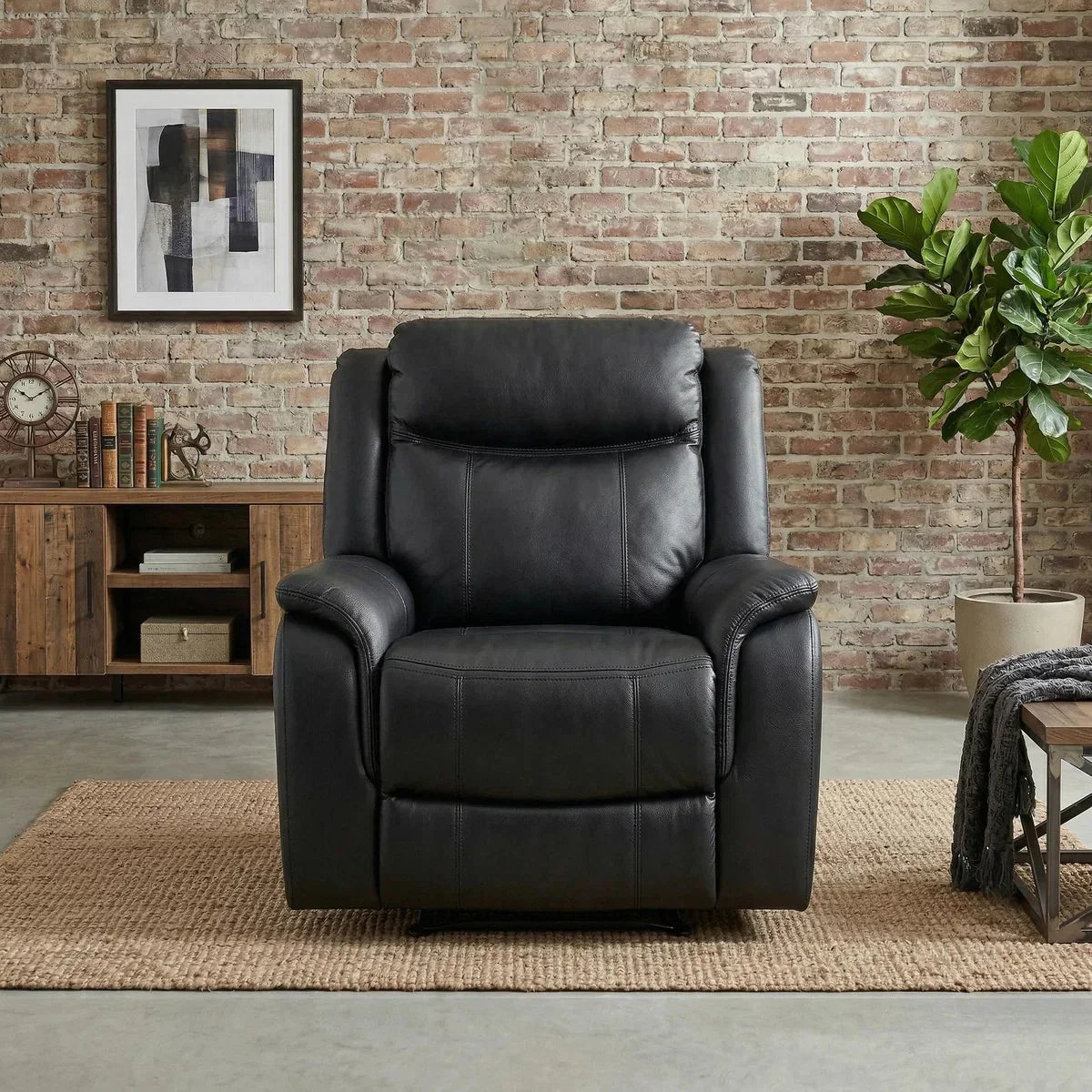
Recliner Health & Posture · The Comfort Zone
A recliner can be the most supportive seat in the house or the one that leaves you stiff and sore — and the difference is usually how you sit in it, not the chair itself. Most people drop into a recliner, slide their hips forward and let the chair catch them somewhere around their shoulder blades. That collapses the lower back into a long C-curve and pushes the head forward, which is exactly the position that aggravates backs and necks over a long evening. Sitting well in a recliner takes a few small adjustments. Here's what good posture actually looks like, and the habits worth building.

The short version. Hips all the way back first, then recline to a torso-to-thigh angle of around 100–110°. Fill any lumbar gap so the lower back stays supported. Let the headrest meet your head rather than push it forward. Let the footrest carry your legs, not just your heels. And change position regularly — no single posture is good for hours.
In this guide
What a good recliner position looks like
The goal isn't to sit rigidly upright — the whole point of a recliner is to offload your spine by tilting back. The goal is a supported recline, where the chair holds the natural curves of your spine instead of letting them flatten out. In practice that means a torso-to-thigh angle of roughly 100–110 degrees: leaning back enough that some of your weight transfers to the backrest, but not so far that you're staring at the ceiling.
This matters because sitting bolt upright at 90 degrees actually loads the lower spine more than a slight recline does — reclining transfers part of your upper-body weight onto the backrest. The catch is that the recline only helps if your back is in contact with the support the whole way up. Slide your hips forward and you lose that contact, and the recline works against you. The fuller picture of how recline angle affects the body is in our health and ergonomics guide.
Step one: hips back, then recline
Almost every posture problem in a recliner traces back to the same starting error — sitting down on the front half of the seat and then leaning back into space. Do it in the right order instead:
- Sit fully back. Push your hips right into the angle where the seat meets the backrest before you do anything else.
- Check your lower back. Your lumbar curve should feel supported, not arched into empty space. If there's a gap, add a small cushion.
- Recline gradually. Ease back to a comfortable angle where your weight shares between seat and backrest.
- Raise the footrest. Bring your legs up so the thighs are supported along their length.
- Set the headrest last. Adjust it (or tuck a cushion) so your head rests back without being pushed forward.
Lower back: fill the gap

The lumbar spine has a natural inward curve. When you recline, that curve wants support behind it or it flattens, which is what people feel as a dull ache after a long sit. A well-designed recliner builds lumbar support into the backrest; if yours doesn't quite meet your back, a small cushion or rolled towel in the lumbar gap does the same job. The test is simple — if you can slide a flat hand into a hollow behind your lower back, fill it. If you're sitting specifically to manage an existing sore back, our recliners and back pain guide goes deeper on setup and chair choice.
Head and neck: meet it, don't push it
When you recline, your head naturally wants to fall back. A headrest set too far forward forces your chin toward your chest — a common cause of neck and upper-shoulder tightness after watching TV in a chair. The headrest (or a cushion) should make gentle contact and let your head rest in line with your spine, neither dropping back nor craning forward. Recliners with an adjustable or dual-motor powered headrest make this easy to fine-tune; why that adjustment matters so much is covered in why your headrest matters.
Legs, knees and feet
The footrest is there to support your legs, not just hold your heels up. When it's set well:
- Your thighs are supported along most of their length, so the weight isn't all on the backs of your knees.
- Your knees sit roughly level with, or just below, your hips — not forced up high.
- The back of your knees isn't jammed against a hard edge, which can press on the soft tissue behind the joint.
- Your feet are relaxed, supported rather than dangling off the end.
Elevation tip: raising the legs to around heart height for a while can feel genuinely good after a day on your feet, and it's one of the quiet benefits of a recliner. How leg position affects circulation and hip pressure — and how to get it right — is covered in recliners and leg circulation.
Shop the range
Looking for a recliner with proper lumbar and headrest support?
Common mistakes to avoid
- The slide-and-slump. Hips forward, back collapsed — the single most common recliner posture and the one that causes the most aches. Reset by sitting fully back.
- Sleeping in it all night, every night. An occasional nap is fine; making a recliner your permanent bed can leave you stiff and isn't a substitute for a proper mattress unless a health professional has advised it.
- Chin-to-chest TV watching. Headrest too far forward or screen too low. Adjust the headrest and raise your eye-line.
- Twisting to reach. Reaching repeatedly to a side table that's too far back twists the spine. Keep what you need within easy reach.
- Staying put for hours. Even perfect posture held too long stiffens up. Move.
Getting in and out safely

For older users or anyone with knee, hip or balance issues, getting in and out matters as much as sitting. Lower yourself with a hand on each armrest rather than dropping in, and make sure the footrest is fully closed before standing. To rise, bring your hips to the front of the seat first, plant both feet, then push up through the armrests — don't pull yourself up by furniture beside the chair. Electric recliners help here because you can close the chair smoothly to a stable upright position before standing, without wrestling a manual lever.
How long should you sit?
There's no magic number, but the principle is movement. A reclined position is restful precisely because it changes the load on your spine — but any one position held for hours becomes the new strain. Shift between upright and reclined through the evening, and stand up and walk around every 45–60 minutes. The recliner is a tool for comfortable rest, not a place to stay frozen all night. For the broader relationship between recliners, posture and the body, see our full guide to recliners.
A note on pain: this guide is general comfort and posture advice, not medical advice. If you have persistent back, neck, hip or circulation problems, check with your GP or physiotherapist about the seating position that's right for you.
Recliner posture FAQs
What is the correct way to sit in a recliner?
Sit fully back so your hips meet the join between seat and backrest, make sure your lower back is supported, then recline to a comfortable angle of around 100–110 degrees. Raise the footrest so your thighs are supported, and set the headrest so your head rests in line with your spine rather than being pushed forward.
Is reclining better for your back than sitting upright?
A slight recline can be easier on the lower spine than sitting bolt upright, because leaning back transfers some of your upper-body weight onto the backrest and reduces the load on the lumbar discs. The key is that your back stays supported throughout — if you slide your hips forward and let your back collapse, the benefit is lost.
Why does my back hurt after sitting in a recliner?
The usual cause is sliding the hips forward so the lower back loses contact with the support and flattens into a C-curve. Other causes are a lumbar gap that isn't filled, or simply staying in one position too long. Sit fully back, support the lumbar curve, and change position regularly. If pain persists, see a health professional.
Is it bad to sleep in a recliner every night?
An occasional nap in a recliner is fine, and some people sleep in one short-term on medical advice (for reflux or after certain surgeries, for example). But making a recliner your permanent bed every night isn't a substitute for a proper mattress for most people and can leave you stiff. If you're sleeping in one for health reasons, follow your health professional's guidance.
How often should I change position in a recliner?
Shift between upright and reclined through the evening rather than holding one position, and stand up and move around every 45–60 minutes. Movement is what keeps you comfortable — even a good posture held for hours will eventually stiffen up.
Written by the A2Z Furniture team — five South-East Queensland showrooms, family-owned and operated since 2013. Last updated July 2026.