
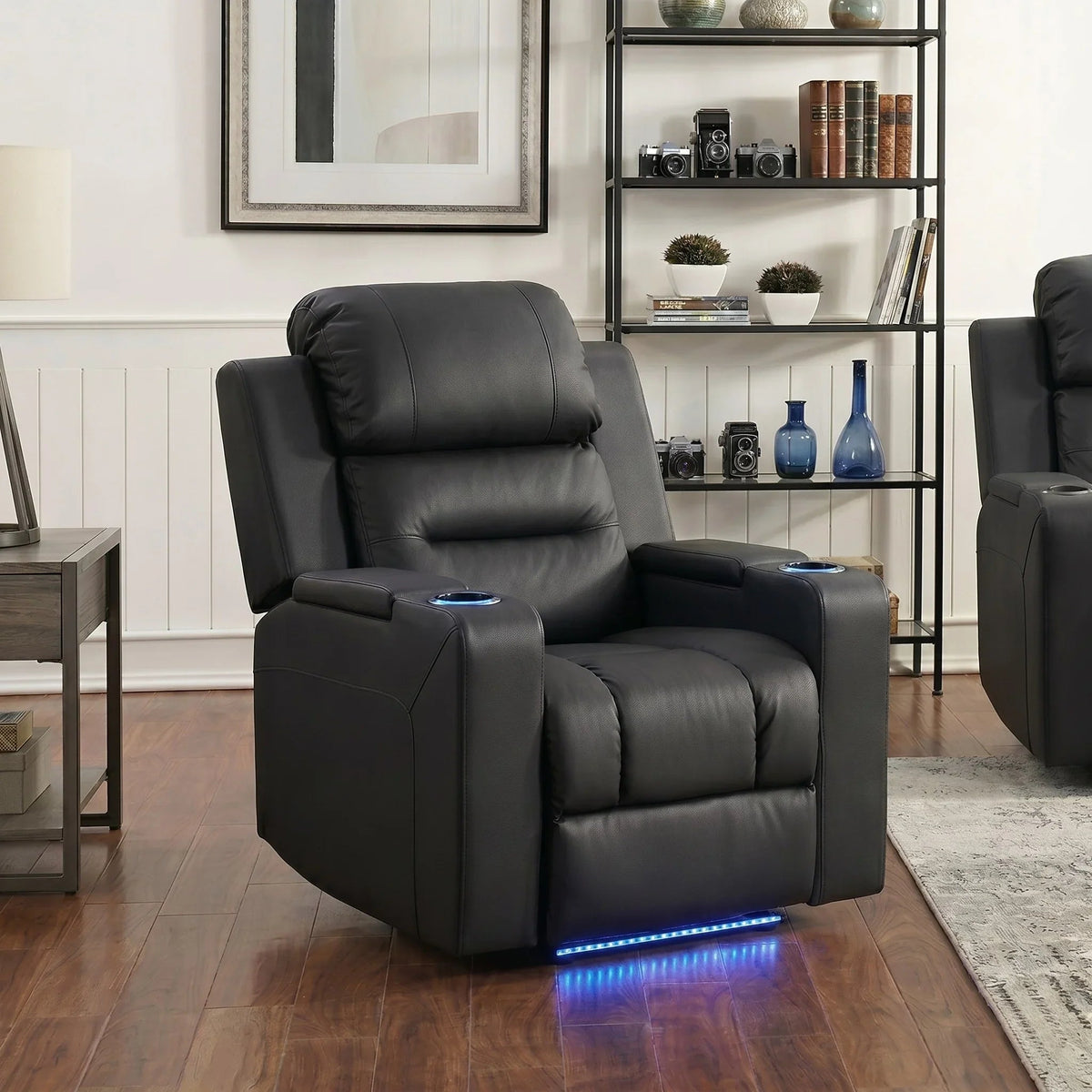
Recliner Health & Ergonomics · The Comfort Zone
If a recliner leaves your neck and upper shoulders aching after an evening's TV, the headrest is almost always the culprit. A recliner can hold your head in beautiful, supported alignment — or it can shove your chin toward your chest and lock your neck into a forward bend for two hours. The seat and the recline get all the attention when people shop, but for the neck specifically, the headrest is the single most important feature on the chair. Here's why it matters so much, and how to choose and set one that actually supports you.

The short version. The headrest decides whether a recliner helps or hurts your neck — a fixed headrest set too far forward pushes your chin down, while a good one keeps your head aligned with your spine. Reclining changes where your head wants to sit, which is why adjustability matters. An adjustable or powered headrest is the neck-comfort upgrade, and A2Z dual-motor recliners add a separate headrest motor so you can fine-tune it independently of the recline. Set it to meet your head, not push it — gentle contact, head in line with the spine, eyes able to reach the screen without craning.
In this guide
Why the headrest is make-or-break for the neck
Your neck is happiest when your head sits balanced on top of your spine, ears roughly over shoulders. The muscles at the back of the neck and across the upper shoulders only have to work hard when your head drifts forward of that line — and the further forward it goes, the harder they work. Hold the head forward for an evening and those muscles fatigue, which is the tight, achy feeling many people blame on "a bad chair."
A headrest that's correctly positioned does that balancing work for you — it supports the weight of the head so the neck muscles can switch off. A headrest in the wrong place does the opposite: a cushiony top that bulges too far forward acts like a hand pushing your forehead down, forcing a permanent chin-tuck. That's why two recliners with identical seats can feel completely different for your neck. Where the headrest sits within the wider story of recliner support is covered in the recliner ergonomics overview.
The recline trap
Here's the part people miss. When you sit upright, your head balances one way. When you recline, gravity pulls your head back — and the angle your neck wants changes completely. A fixed headrest can't follow that change. So a chair that felt fine when you tested it sitting up can press your chin down once you actually lean back to watch TV, because the headrest is now in the wrong spot for the reclined angle.
This is the core argument for an adjustable headrest: it lets you correct the head angle separately from the recline, so your neck stays neutral whether you're sitting up reading or leaned right back watching a film. Setting head, back and legs together is part of how to sit in a recliner properly.

Fixed, adjustable or powered?
| Headrest type | How it works | Best for |
|---|---|---|
| Fixed | Built into the backrest at one angle; moves only as the whole back reclines | Fine if its fixed angle happens to suit you — test it reclined, not just upright |
| Manually adjustable | A ratchet or hinge lets you tilt the headrest section forward or back by hand | Tailoring the angle on a manual recliner without paying for a motor |
| Powered (motorised) | A dedicated motor tilts the headrest independently at the touch of a button | The most precise neck support; effortless to fine-tune at any recline angle |
If neck comfort is a priority, an adjustable or powered headrest is worth the step up. It's the feature that lets you keep your eye-line on the screen while your head stays supported — the combination a fixed headrest often can't deliver.
How A2Z dual-motor chairs handle the headrest
It's worth being precise about what "dual motor" means at A2Z, because the term is used differently across the market. On A2Z dual-motor recliners, the two motors are:
- A main recline motor that moves the backrest and footrest together through the recline.
- A separate headrest motor that adjusts the headrest angle on its own.
That second motor is exactly what solves the recline trap — you can lean the chair back as far as you like and then bring the headrest forward independently until your head is supported and your gaze is level. (Some other brands use "dual motor" to mean independent back and footrest motors instead, which is a different thing.) USB charging is standard on most A2Z dual-motor models. The full motor comparison is in single motor vs dual motor recliners.
Shopping tip: when you test a recliner for neck comfort, recline it fully first, then judge the headrest. A headrest only ever tested in the upright position tells you almost nothing about how your neck will feel two hours into a movie.
Shop the range
Looking for a recliner with an adjustable headrest?
Setting the headrest correctly
- Sit fully back and recline to the angle you'll actually use — don't set the headrest upright then lean back.
- Bring the headrest forward (or adjust the cushion) until it makes gentle contact with the back of your head.
- Check your chin: it should be neutral, not tucked down toward your chest or tipped back.
- Check your eye-line: you should be able to see the screen comfortably without lifting your head off the support.
- If a fixed headrest pushes your head forward, a thin pillow lower down (behind the neck or upper back) can rebalance the angle.
Choosing a recliner for neck comfort
If your neck is the deciding factor, prioritise in this order: an adjustable or powered headrest first, then a backrest that supports your upper back without rounding it, then the recline range you'll use. A recliner that nails the headrest but is average elsewhere will treat your neck better than a luxurious chair with a fixed, forward-bulging headrest. If back and neck issues come together, read this alongside our back pain guide — spine and neck support are set up together.

A note on pain: this is general comfort guidance, not medical advice. Persistent or severe neck pain, pain with pins and needles down an arm, or pain after an injury should be assessed by your GP or physiotherapist.
Recliners and neck pain FAQs
Why does my neck hurt after sitting in a recliner?
Usually because the headrest pushes your head forward, forcing a chin-tuck that makes the muscles at the back of your neck work the whole time. It's especially common when a fixed headrest that felt fine upright ends up in the wrong position once you recline. An adjustable headrest, set to support your head in line with your spine, is the fix.
What kind of recliner is best for neck pain?
One with an adjustable or powered headrest, so you can set the head angle independently of the recline and keep your head supported in line with your spine. On A2Z dual-motor recliners a separate headrest motor does exactly this. Pair that with a backrest that supports your upper back and the recline range you'll actually use.
What does "dual motor" mean on an A2Z recliner?
On A2Z dual-motor recliners, one motor reclines the backrest and footrest together, and a second, separate motor adjusts the headrest on its own. That independent headrest control is what lets you keep your neck supported at any recline angle. USB charging is standard on most dual-motor models.
Is a fixed headrest bad for your neck?
Not necessarily — a fixed headrest is fine if its angle happens to suit you when you're reclined. The risk is that it can't adjust, so if it sits too far forward for your reclined position it forces a chin-tuck. Always test a fixed headrest in the fully reclined position before buying, not just sitting upright.
How should the headrest be positioned?
Recline to the angle you'll use, then set the headrest to make gentle contact with the back of your head while your chin stays neutral — not tucked down or tipped back — and you can see the screen without craning. If a fixed headrest pushes your head forward, a thin cushion lower down can rebalance the angle.
Written by the A2Z Furniture team — five South-East Queensland showrooms, family-owned and operated since 2013. Last updated July 2026. This article is general comfort information and is not medical advice.