
Materials Guide · The Furniture Canvas
"Engineered wood" covers a whole family of materials — MDF, particleboard, plywood and more — and each one is built for a different job inside a piece of furniture. Understanding what's actually under the surface finish helps you buy furniture that suits how you'll use it, rather than furniture that just looks right in a photo. Here's the working guide from our showroom team on the main types of engineered wood, how each one is made, and where you'll typically find them in furniture.

The short version. Engineered wood is created by binding wood fibres, particles or veneers together with adhesive and heat, rather than cutting a piece straight from a solid log. It's generally more stable, more affordable and more consistent than solid timber, which is why it turns up in coffee tables, dining tables, tallboys, console tables and TV units across the furniture industry. The right type depends on the job — a tabletop needs different properties to a drawer bottom or a cabinet back panel.
In this guide
What is engineered wood?
Engineered wood — sometimes called composite wood or man-made board — is made by binding together wood fibres, particles or thin veneers with adhesive, heat and pressure to form a stable, uniform sheet or panel. Instead of relying on a single solid piece of timber (which can vary in strength, moisture behaviour and appearance from board to board), engineered wood is manufactured to a consistent standard, which makes it easier to work with at scale and generally more budget-friendly than equivalent solid timber. It's used across the furniture industry — not just at the budget end — because different engineered wood products are genuinely well suited to different structural and cosmetic jobs.
The main types of engineered wood
Medium Density Fibreboard (MDF)
MDF is made from fine wood fibres combined with wax and resin, then compressed into dense, smooth sheets. Its uniform, grain-free surface makes it an excellent base for paint and smooth furniture finishes, and it's commonly used for cabinet doors, shelving and decorative panels where a crisp, even finish matters more than visible timber grain.

Particleboard
Particleboard (also called chipboard) is made from wood particles, adhesive and pressure, producing a dense and affordable core material. It's a common choice for the internal structure of furniture — tabletop cores, drawer bottoms and cabinet carcasses — with a smooth surface that takes laminate or veneer finishes well.

Plywood
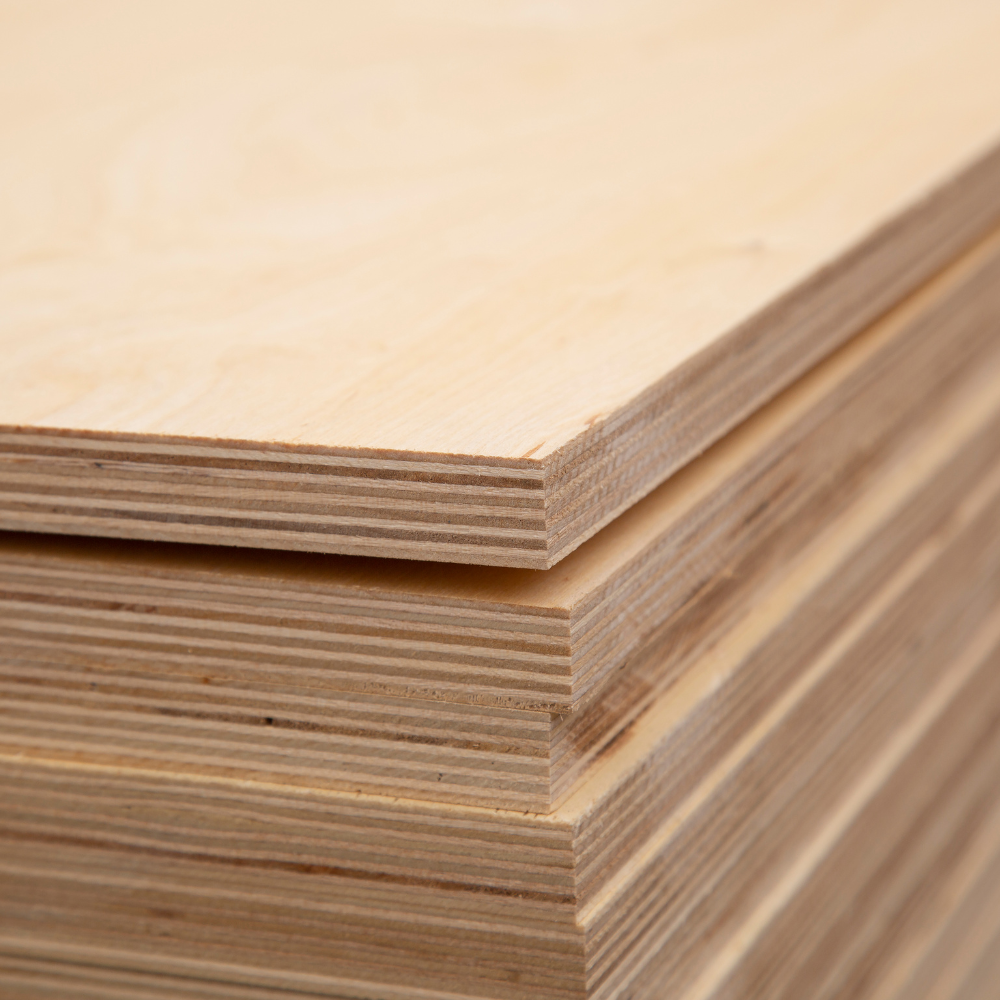
Plywood is built by layering thin sheets of timber veneer and gluing them together with each layer's grain running at an angle to the next. This cross-layered construction gives plywood strength, stability and good resistance to warping, which is why it's often chosen for structural furniture components such as chair frames, table legs and cabinet carcasses.

Oriented Strand Board (OSB)
OSB is made from compressed wood strands bonded with adhesive, giving it a robust, textured surface. It's more commonly seen in construction than in mainstream furniture, but it does turn up in furniture with an industrial or rustic look, where its visible strand texture becomes a deliberate design feature rather than something to hide.
Hardboard (High-Density Fibreboard)
Hardboard, sometimes called high-density fibreboard (HDF), is similar to MDF but denser and tougher. It's typically used for back panels on cabinets and the backing of pieces like dressers and tallboys, where strength and a smooth surface matter more than visible finish.
Shop the range
Browse engineered and solid timber furniture across our range:
Where you'll find engineered wood in furniture
Most furniture — including much of what's in our own range — combines engineered wood with solid timber, veneers or timber-look finishes, choosing each material for the job it does best. A coffee table might pair a solid timber leg frame with an engineered wood top for a stable, even surface; a tallboy might use particleboard drawer boxes inside a timber-veneered carcass for strength and a consistent finish.

Coffee tables and dining tables
Tabletops need to stay flat and stable over time, which is exactly what engineered wood is good at — it's far less prone to the warping and seasonal movement that can affect a single solid slab. See our wooden coffee table range and wooden dining tables for pieces that combine engineered and solid timber construction.
Chests of drawers, tallboys and console tables
Drawer boxes, cabinet backs and internal shelving are classic engineered wood applications, since strength and dimensional consistency matter more here than visible timber grain. Browse our chest of drawers & tallboys and console & hall tables to see this construction in practice.
TV units and entertainment units
TV units carry real weight and need flat, stable surfaces and reliable cabinet joinery, which is why engineered wood is a common choice for shelving and carcass panels in this category. Our TV & entertainment unit range spans both timber-veneer and engineered wood finishes.
Engineered wood vs solid timber
Neither option is simply "better" — they suit different priorities. Solid timber offers a natural grain that develops character over time and can typically be repaired or refinished, but it can be heavier, pricier and more prone to expanding or contracting with humidity. Engineered wood is generally more dimensionally stable, lighter, more consistent from piece to piece, and more budget-friendly, though it can't be sanded back and refinished in the same way solid timber can. Many well-made furniture pieces — including much of our own range — deliberately combine both, using each material where it performs best.
Choosing engineered wood furniture
- Match the material to the job. A tabletop that needs to stay flat, a drawer box that needs strength, and a cabinet back that just needs to be rigid can all reasonably use different types of engineered wood.
- Check the finish, not just the core. A well-finished engineered wood surface can look and perform very well day-to-day — the surface laminate, veneer or paint finish matters as much as what's underneath.
- Think about how the piece will be used. High-moisture areas or pieces that will be moved often generally suit more moisture-resistant, dimensionally stable engineered wood construction.
- See it in person. Weight, surface feel and joinery quality are easiest to judge in one of our showrooms rather than from a product photo alone.
Caring for engineered wood furniture
Wipe engineered wood furniture with a soft, dry or slightly damp cloth and avoid abrasive cleaners or excess moisture, which can affect the surface finish and, over time, the board itself at exposed edges or joins. Use coasters, placemats and felt pads to protect tabletops from heat, scratches and spills, and keep pieces out of prolonged direct sun and away from constant high humidity where possible — both can affect surface finishes over time, a relevant consideration in Queensland's climate.
Engineered wood FAQs
What is engineered wood?
Engineered wood is made by binding wood fibres, particles or veneers together with adhesive, heat and pressure to create a stable, uniform panel — rather than being cut directly from a solid log. Common types include MDF, particleboard, plywood, OSB and hardboard.
What's the difference between MDF and particleboard?
MDF is made from fine wood fibres compressed into a very smooth, dense, grain-free sheet, making it ideal for painted finishes and detailed profiles. Particleboard is made from coarser wood particles and is generally used as a strong, affordable core material for tabletops, drawer bottoms and cabinet carcasses, usually finished with laminate or veneer.
Is engineered wood as durable as solid timber?
It depends on the application. Engineered wood is generally more dimensionally stable than solid timber — less prone to warping, cupping or cracking with humidity changes — which makes it well suited to tabletops and flat panels. Solid timber can typically be sanded back and refinished, which engineered wood usually can't, but it can be more prone to movement over time.
Why do furniture makers use engineered wood instead of solid timber?
Engineered wood offers a consistent, predictable material that's generally lighter, more stable and more affordable than an equivalent solid timber piece, while still allowing a wide range of finishes. Many pieces combine engineered wood with solid timber or veneers, using each material where it performs best.
How do I care for engineered wood furniture?
Wipe with a soft, dry or slightly damp cloth, avoid abrasive cleaners and excess moisture, use coasters and placemats to protect surfaces from heat and spills, and keep pieces out of prolonged direct sun and constant high humidity where possible.
Does A2Z Furniture use engineered wood in its range?
Yes — like most furniture retailers, our range includes pieces that combine engineered wood with solid timber, veneers and timber-look finishes, choosing each material for the job it performs best within that piece. Ask which of our five showrooms has a specific piece on display to see its construction in person.
Written by the A2Z Furniture team — five South-East Queensland showrooms, family-owned and operated since 2013. Last updated July 2026.