
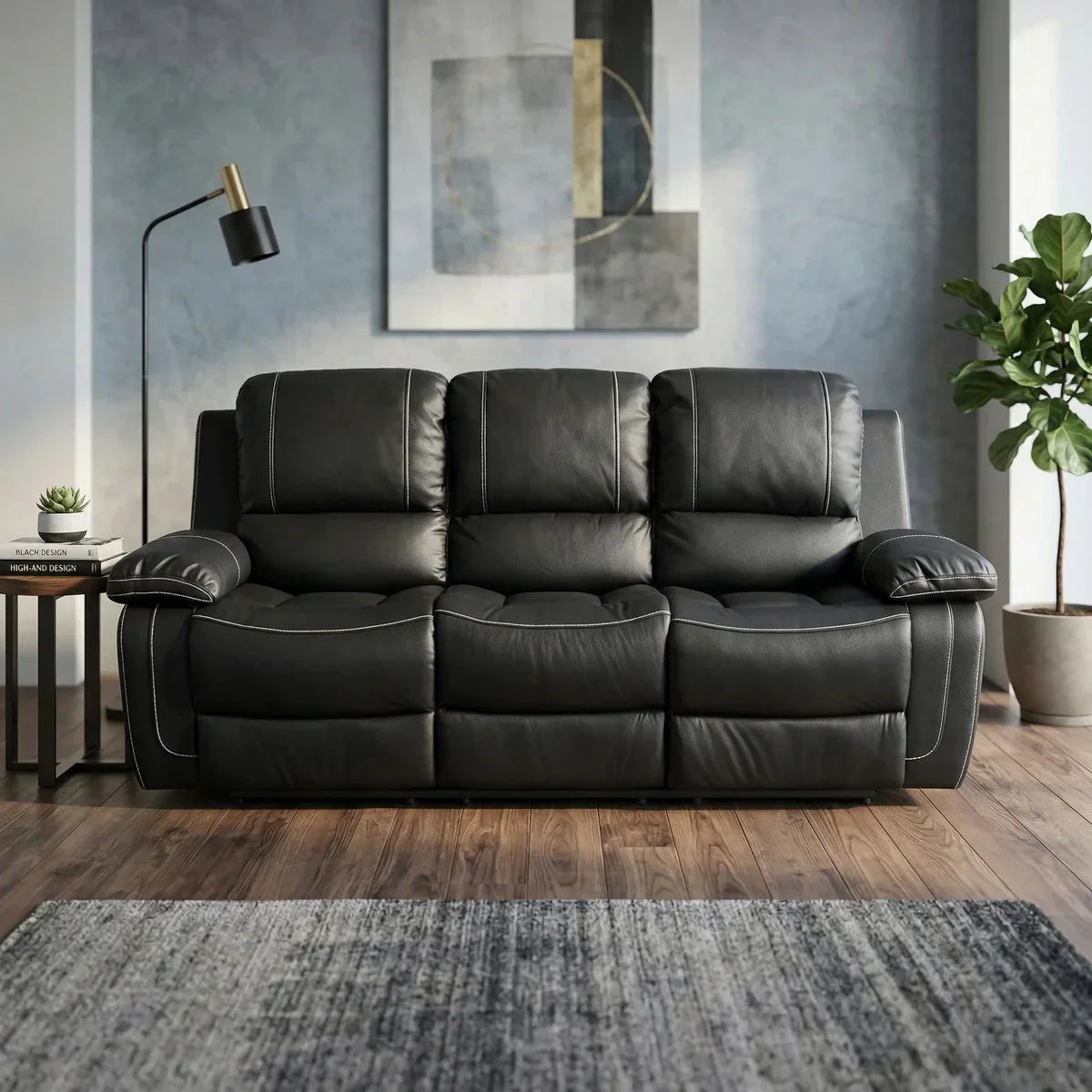
Recliner Care Guide · The Comfort Zone
A recliner in Brisbane lives a harder life than a recliner in Melbourne. Sub-tropical humidity, some of the highest UV exposure in the world, salt air drifting in off the Gold Coast, and air-conditioning cycles that swing a room between 35°C and 22°C every summer day all put more stress on upholstery and mechanisms than cooler southern climates. This is the care routine built for South-East Queensland conditions — what keeps each material category looking and working well for a decade, the climate-specific risks worth knowing about, and what to do (and not do) when something goes wrong.

The short version. Match the routine to the material: genuine leather needs conditioning every six months in QLD, Air Leather needs wiping monthly, fabric needs weekly vacuuming. UV exposure is the biggest hidden killer — direct afternoon sun fades and dries any upholstery over years. Use the right care kit (Guardsman Leather Care Kit for genuine leather, Guardsman ProGuard Care Kit for Air Leather) — they aren't interchangeable. And don't open the mechanism yourself; contact us first for anything beyond visible bolt-tightening.
In this guide
The Queensland climate challenge
Four environmental factors define how recliners age in South-East Queensland, and each has a specific impact on either the upholstery, the mechanism, or both.
Humidity
Brisbane averages 70%+ relative humidity in summer, and the wet season pushes it higher. Humidity affects genuine leather (which absorbs moisture and can develop mould in poorly-ventilated rooms), fabric (which dries more slowly after spills), and the metal components of mechanisms (which can develop surface oxidation over years). Good ventilation is the fix: keep rooms with leather recliners airing through the day, run ceiling fans during wet weather, and address any visible damp promptly.
UV exposure
Queensland's UV index regularly hits 11-13 in summer — among the highest in the world. Direct sun fades dyes in every upholstery type, dries out genuine leather to the point of cracking, and weakens fabric fibres over years of exposure. The most common cause of premature recliner ageing in QLD homes is positioning the chair where afternoon sun lands on it for hours every day. Block the sun or move the chair.
Salt air (Gold Coast and bay-side suburbs)
Homes within a few kilometres of the coast experience low-level salt accumulation on all surfaces. For recliners, the impact is mostly on the mechanism — exposed metal components can develop corrosion faster than they would inland. The fix is occasional inspection of the visible mechanism components every 6-12 months, checking for surface oxidation and addressing any rust spots before they spread.
Air-conditioning cycles
Australian summer air-conditioning pushes rooms from 35°C down to 22°C and back several times a day. The temperature swing isn't directly damaging, but the moisture cycling — warm humid air condensing inside cooler rooms — can affect long-term upholstery condition, particularly for genuine leather. Air conditioning also dries out air over months, which can accelerate leather drying. Conditioning more frequently in heavily air-conditioned rooms helps.
Weekly care basics
Before the material-specific routines, these basics apply to every recliner regardless of upholstery type. They take less than five minutes a week and prevent most of the issues that show up over years.
- Dust the recliner with a soft microfibre cloth — headrest, armrests, seat front edge, footrest. Dust holds humidity against the surface, which accelerates ageing on leather and staining on fabric.
- Vacuum the seat and back crevices with a soft brush attachment. Crumbs and debris fall into the gaps where the seat meets the backrest and stay there permanently unless vacuumed.
- Address spills immediately. Within five minutes of a spill, blot (don't rub) with a clean dry cloth. Most permanent stains happen because a spill was left to soak.
- Check the mechanism action. Open and close the recliner once, listening for new noises or hesitation. Catching mechanism issues early is the difference between a quick fix and a longer repair.
- Look for fading, particularly on the side exposed to most sun. Early fading is fixable through repositioning; late fading isn't.
Keeping a small care kit near the recliner — a soft microfibre cloth, a soft vacuum brush attachment and the appropriate care kit for your upholstery — makes this weekly routine far more likely to actually happen.
Genuine leather care

Genuine leather is the most rewarding upholstery in the range when cared for properly, and the most expensive to neglect. Pieces in our genuine leather recliner range — including the Lemington and Milano ranges — can last well over a decade in Queensland conditions with the right routine, or show cracking and fading much sooner without it.
The conditioning schedule
| Frequency | Task | Why it matters |
|---|---|---|
| Weekly | Dust with soft microfibre cloth | Removes dust before it holds humidity against the leather surface |
| Monthly | Wipe with a slightly damp cloth (water only) | Removes oils and skin-contact residue without saturating the leather |
| Every 6 months | Apply leather conditioner (Guardsman Leather Care Kit) | Replenishes natural oils that QLD humidity and air-conditioning strip out |
| As needed | Spot-clean spills within minutes | Prevents permanent staining and stops the spill from drying the leather |
The right care kit
Use the Guardsman Leather Care Kit for genuine leather only. It contains a leather cleaner that lifts surface contamination without stripping the protective finish, and a conditioner that replenishes the natural oils lost to humidity and air conditioning. Apply with the soft applicator included — never a paper towel or rough cloth, which damages the leather's finish over repeated applications.
What not to use on leather: household surface cleaners (designed for hard surfaces, they damage leather's finish), baby wipes (the moisture and chemistry strip leather over months), kitchen oils (clog the leather's pores and go rancid), and saddle soap (designed for thick saddle leather — too aggressive for upholstery-weight hides).
UV protection
Position leather recliners out of direct afternoon sun where possible. If the room layout doesn't allow it, use blinds or curtains during the worst UV hours (10am-3pm in QLD summer). Even with the best care routine, leather exposed to direct sun for years will fade and crack faster than leather kept out of UV. See best recliner materials for Queensland's climate for the full materials breakdown.
Air Leather care

Air Leather is a different material to genuine leather and needs different care. It's a high-grade synthetic, finely perforated to breathe like leather while offering a different chemistry — applying real leather conditioner to Air Leather does nothing useful and can leave a residue. Conversely, applying ProGuard (formulated for synthetic surfaces) to genuine leather doesn't deliver the natural-oil replenishment that real leather needs to stay supple.
The Air Leather routine
Air Leather is the easier of the two to maintain — wipe-clean by design, doesn't absorb water, and doesn't need the conditioning genuine leather does.
- Weekly: dust with a microfibre cloth.
- Monthly: wipe down with a slightly damp cloth — water alone is fine for routine cleaning.
- Every 3-4 months: apply the Guardsman ProGuard Care Kit to clean and protect the surface at high-contact points (headrest, armrest fronts).
- Spills: wipe up immediately. Air Leather doesn't absorb water, but standing liquid at seams can wick into the foam underneath.
Two-kit reality: A2Z stocks both Guardsman care kits because they're not interchangeable. If your recliner has genuine leather (Lemington, Milano, Latrobe, Concord, Swan, Armdale), the Leather Care Kit is what you need. If it has Air Leather (Sunshine, Stanhill, Sutton, Bradley, Bunbury), the ProGuard Care Kit is what you need. If you're unsure which your model has, ask the showroom team.
Fabric care

Performance fabric — including the Rhino fabric used on the Boston range, plus microfibre and chenille elsewhere in the lineup — is the easiest material in this guide to live with day-to-day, but the trickiest to deep-clean when things go wrong. The routine that prevents problems is more useful than the routine that fixes them.
The fabric routine
- Weekly: vacuum the entire surface with a soft upholstery brush, paying attention to the crevices where seat meets backrest and armrests meet seat.
- Monthly: rotate any loose cushions (where the design supports it) to spread wear evenly.
- Spills: blot immediately with a clean dry cloth, working from the outside of the spill toward the centre. Never rub. For stubborn marks, follow with a damp cloth and a little mild soap, then blot dry.
- Annual: deep clean with a fabric-specific upholstery shampoo or a professional cleaning service. Avoid steam cleaners on most fabric — heat and moisture can damage stain-resistant finishes.
The stain test
Before applying any cleaning product (even mild soap) to a visible area of fabric, test it on a hidden patch first — the underside of the seat cushion or the back of the chair. The test patch tells you in 30 minutes whether the product is safe before you commit it to the front of the seat.
UV and fading
Fabric fades with UV exposure the same as every other upholstery. Premium fabrics include UV inhibitors in the finish, but no fabric is fully UV-resistant over a decade. The position-out-of-direct-sun rule applies to fabric recliners just as much as leather ones.
Shop by material
Choosing the right upholstery for your climate:
Mechanism maintenance
The recline mechanism is the working part of the chair, and like any mechanical assembly it benefits from light, regular attention. The goals: catch problems early, keep moving parts working smoothly, and know what's within DIY scope and what requires a service visit.
What to do regularly
- Listen for changes. A new noise during reclining — grinding, clicking, sticking — is almost always the early warning sign of a developing problem. Don't ignore it.
- Operate the mechanism through its full range at least weekly, even if you don't fully recline normally. Mechanisms left at the same partial-recline angle for weeks can develop uneven joint wear.
- Check the under-seat area annually for loose bolts, fabric snags caught in the mechanism, or signs of oxidation (more relevant for coastal homes).
- Keep the mechanism dry. Spills that reach the metal components accelerate oxidation — towel the under-seat area as well as the visible upholstery after a major spill.
What to lubricate (and what not to)
Manual recliner mechanisms benefit from a light application of silicone spray lubricant at the visible hinge points every 12-18 months, particularly if the action has become noisy. Use silicone-based products only — avoid WD-40 (designed for displacing moisture, not long-term lubrication), avoid grease (attracts dust which increases friction over time), and avoid oils, which can transfer to and stain the upholstery. Electric recliner motors don't need owner-applied lubrication — they're sealed assemblies — and adding any lubricant to a motor can damage it.
What not to do: never remove the recliner's back panel, never attempt to repair the motor on an electric model, and never force the mechanism if it sticks. All three void the warranty on every recliner we sell. If anything beyond visible-bolt-tightening is needed, contact the A2Z showroom team for service options.
When something goes wrong
A handful of recliner problems account for most of the service questions we see. Each has its own dedicated guide elsewhere in the cluster; the high-level picture is useful here.
Electric recliner won't power up or operate
For electric models, work through the sequence: check the power point, check the cable connection from chair to power, check the control's connection to the chair, then check the chair's connection to the motor. Each of these is owner-checkable. If all four are fine and the chair still won't operate, the fault is likely in the motor or control board — that needs service. Full walkthrough at our electric recliner troubleshooting guide.
Cleaning a serious stain or spill
For cleaning routines across every material category, see our step-by-step recliner cleaning guide. The general rule: act fast, blot don't rub, test cleaning products on a hidden patch first, and never use hard-surface cleaners on upholstery.
How long the mechanism and upholstery should last
If a mechanism or material seems to be wearing faster than expected, it helps to know the realistic benchmarks first — see how long recliners last for typical lifespans by material and mechanism type.
Long-term storage and moving
Recliners need slightly more care than fixed-back sofas when being moved or stored — the mechanism is delicate to impact, and the upholstery is visible from more angles.
For short-term storage (under a month, while renovating or rearranging), keep the recliner in an upright, climate-controlled space — not a garage, shed, or anywhere subject to humidity swings or extreme temperatures. For storage longer than a month, clean the recliner lightly first (so spills don't have time to set), wrap it in a breathable cotton cover (not plastic, which traps moisture), and keep it on a level surface to avoid mechanism stress.
Warranty considerations
A2Z's warranty coverage protects against manufacturing defects, not damage from improper care. Cracking from missed conditioning, fading from sustained UV exposure, mechanism damage from forcing a stuck recline, or fabric stains from misapplied cleaning products are all owner responsibility. The full terms are at our warranty policy.
Keep your purchase receipt and any care-kit instructions in a safe place — if a warranty claim comes up, documentation of your purchase and care routine speeds the process significantly. Photographs of the issue, taken when it first appears, also help.
Care & maintenance FAQs
How often should I condition my leather recliner in Queensland?
Every six months for genuine leather in Queensland's climate. The combination of humidity, UV exposure and air conditioning strips natural oils from leather faster than in cooler climates, so the annual schedule that suits Melbourne isn't enough here. If your room is heavily air-conditioned year-round, consider every four months instead.
Can I use the Guardsman Leather Care Kit on my Air Leather recliner?
No. The Guardsman Leather Care Kit is formulated for genuine leather only. For Air Leather, the right product is the Guardsman ProGuard Care Kit. Using the leather kit on Air Leather doesn't damage it but doesn't help either — the chemistry is designed to replenish natural oils that synthetic leather doesn't have.
What's the best way to clean a spill on a fabric recliner?
Act fast — within five minutes if possible. Blot (don't rub) with a clean dry cloth, working from the outside of the spill toward the centre. For stubborn marks, follow with a damp cloth and a few drops of mild soap, then blot dry. Test any cleaning product on a hidden patch first. Never use hard-surface cleaners on fabric upholstery.
Why does my recliner make a grinding noise?
A new grinding noise during recline almost always signals a developing mechanism issue — something caught in the mechanism, or a lubrication issue in the moving joints. For manual mechanisms, a light application of silicone spray lubricant at the visible hinge points often resolves it. For electric mechanisms, don't attempt internal repair — contact us for service options.
Will leaving my recliner in direct sun damage it?
Yes, over time. Queensland UV is among the most intense in the world, and direct afternoon sun on any upholstery causes fading and, for leather, accelerated drying that leads to cracking. Position recliners out of direct sun where possible, or use blinds during peak UV hours (10am-3pm in summer). Even premium UV-treated fabrics fade over years of direct exposure.
Does normal wear and tear affect my warranty?
Normal wear and tear is excluded from warranty coverage, as is standard across the furniture industry. What's covered is manufacturing defects — faulty stitching, mechanism failures within the warranty period, frame issues. What's not covered is damage from improper care, accidents, UV fading, and general ageing of upholstery. Full terms at our warranty policy.
Written by the A2Z Furniture team — five South-East Queensland showrooms, family-owned and operated since 2013. Last updated July 2026.