
A marble dining table is a good choice if you want a cool, striking surface and will wipe spills fast, because natural marble is porous, heavy and etches when acids like lemon or wine sit on it. A wooden table is warmer, more forgiving of knocks and easier to repair. Most busy households find timber the easier everyday table.
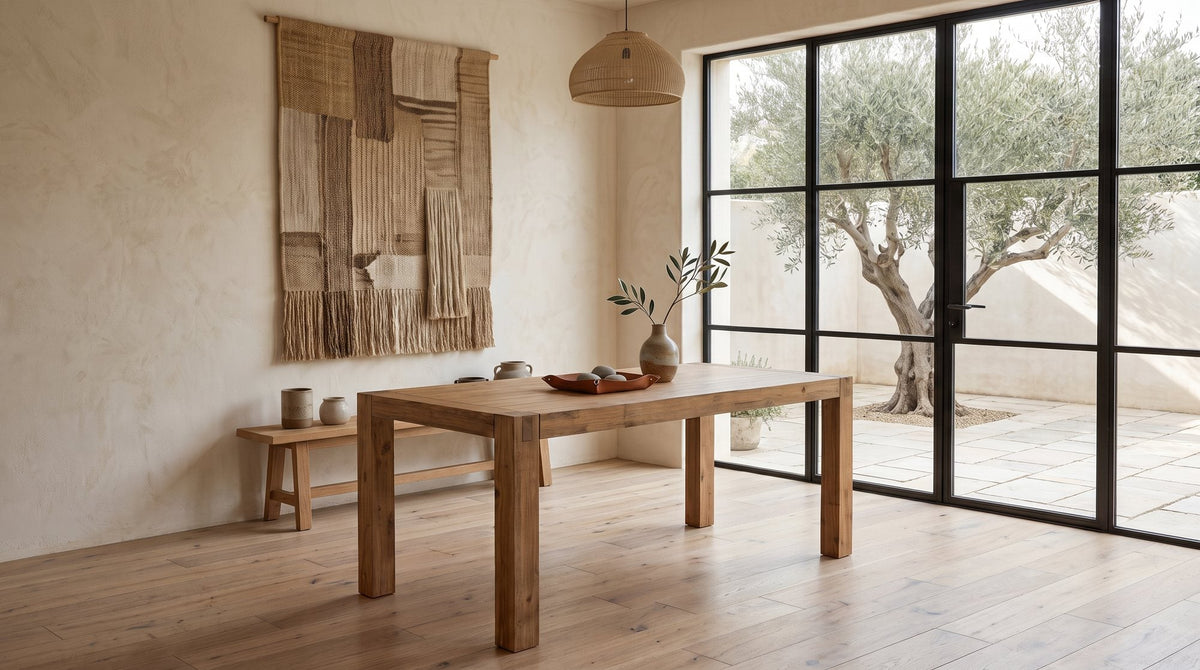
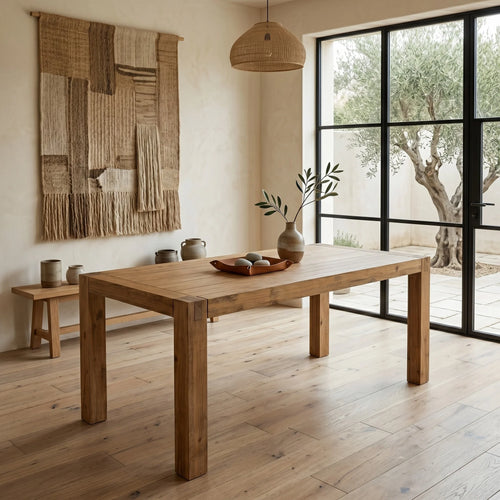
- If you want real timber that copes with family life: pick a solid acacia table like the Jayden Dining Table.
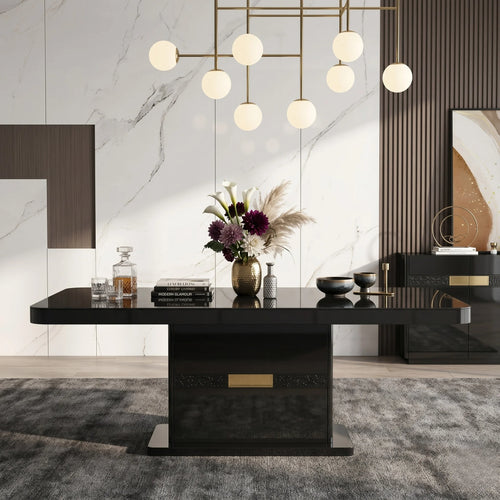
- If you love the dark, glossy look of stone but not the sealing: consider a black tempered glass top like the Drome Dining Table, which is glass, not stone.
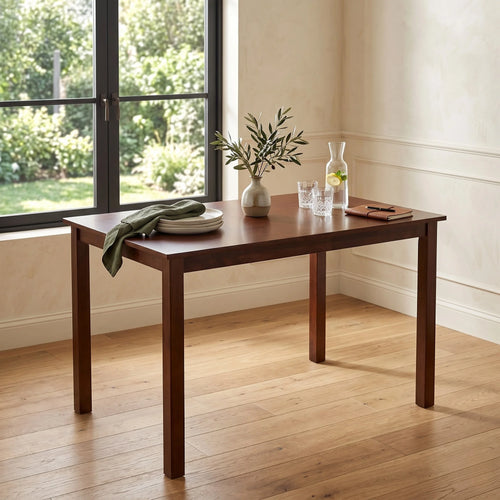
- If you want a timber look on a top that stays flat: the Dell II Dining Table, a hardwood frame with an MDF top in a Dirty Oak finish.
In this guide
What "marble" actually means on a dining table
Before you compare marble with wood, check what the listing really says, because "marble" on a dining table covers four quite different surfaces:
- Natural marble. A real stone slab. Every piece is veined differently, it is very heavy, and it is porous, so it needs sealing.
- Sintered stone. An engineered stone made by pressing and firing minerals at high heat. It can be printed with a marble pattern and is far less porous than natural marble.
- Ceramic. A thinner fired surface, usually bonded to a backing board. It also carries a printed marble pattern and resists stains well, though a hard knock on an edge can still chip it.
- Marble-look. A printed or laminated finish on engineered board. It gives you the veining without any stone at all.
So the honest answer to "is a marble dining table good?" depends on which one you mean. This guide compares natural marble with timber, the trade-off most people are weighing up. One thing to know up front: the tables we name below have tops in solid acacia, MDF and tempered glass. None of them has a natural marble or stone top, and we would rather say so than let a photo suggest otherwise.
Pieces in this guide

Marble vs wood dining table, side by side
Here is how a natural marble top and a solid timber top compare on the things that matter at a family table.
| Feature | Natural marble | Solid timber |
|---|---|---|
| Look | Cool, bright and dramatic, with veining unique to each slab | Warm and natural, with grain and knots that vary piece to piece |
| Weight | Very heavy and hard to move once placed | Heavy, but two people can reposition it |
| Spills and stains | Porous; acids such as citrus, vinegar and wine can etch dull marks | Wipe spills promptly; water left sitting can leave rings |
| Heat | Copes with warm plates; very hot pots can mark the sealer | Use trivets; direct heat can leave a permanent mark |
| Knocks | Hard surface, but edges can chip under impact | Dents and scratches, which tend to read as character |
| Repair | Chips and etching usually need a stone specialist | Can usually be sanded back and refinished |
| Upkeep | Regular resealing and a pH-neutral cleaner | Dust, wipe, and refresh with a timber polish now and then |
Neither is better across the board. Marble gives you a sense of occasion; timber gives you a table you can stop worrying about.
Where marble falls down
- Etching is not the same as staining. A sealer slows down stains, but acids react with the stone itself. A squeeze of lemon or a splash of wine left through dinner can leave a dull patch that sealing does not stop.
- It is unforgiving with small children. Cutlery banged on the top, toys dragged across it and juice left for an hour are all real risks to a marble top. Many families with older children manage marble well with good habits; with toddlers it is genuinely harder work.
- The weight is serious. A natural slab can take several people to move, which matters if you rearrange often or live upstairs.
- It defines the room. A marble table is a statement, and the chairs, lighting and walls tend to work around it. A timber table is easier to restyle when your taste changes.
If two or more of those made you wince, a wooden or glass top will be the calmer choice.
Wooden tables: solid timber or a timber-look top
"Wooden dining table" can also mean two different things, and it is worth knowing which one you are buying.

Solid timber
The Jayden Dining Table is solid acacia hardwood, top and base, in a 160 cm or 180 cm length. The finish is deliberately honest: visible grain, visible knots, and tone that varies from one table to the next. That variation is the material, not a flaw. Solid timber takes the knocks a family table collects, and a top like this can usually be refinished down the track rather than replaced. Keep it out of long periods of direct sun, wipe spills promptly and use trivets under hot dishes.
Hardwood frame with an MDF top
The Dell Dining Table, the Dell II Dining Table and the Daliya Round Dining Table all pair a hardwood frame with an MDF top. The hardwood carries the load, and the MDF top stays flat; the product pages describe it as resisting the warping a solid slab can develop. The Dell comes in black, brown or a Dirty Oak finish; the Dell II in black or Dirty Oak; the Daliya in black. The trade-off is that an MDF top cannot be sanded back the way solid timber can, so coasters and placemats matter more.
A table with a marble top on a timber base sits between the two camps: you get timber warmth below, but the top still needs marble care. The top decides your upkeep, not the legs.
The glossy alternative: tempered glass
Some people who think they want marble really want a cool, smooth, glossy surface that makes a dining room feel finished. Tempered glass gives you that without any sealing.

- The Drome Dining Table has a black tempered glass top over satin black base panels carved with a geometric weave pattern and a brushed-gold accent.
- The Delta Dining Table Black & Gold has a black tempered glass top on a high-gloss black lacquer base broken by vertical gold-finish trim columns. It suits a formal dining room or a dark, high-contrast space.
- The Danna Tempered Glass 200cm Dining Table has a tempered glass top over a high-gloss plinth, in Black & Silver or Beige & Gold.
Glass wipes clean easily and black glass hides fingerprints better than clear, but a high-gloss lacquer base shows dust, so plan on a quick weekly pass with a dry microfibre cloth. Browse every top and base in our dining tables range.
Sizing: how many it seats and the room it needs
Material is only half the decision. The other half is fit, and a dining table is the piece people most often buy too big for the room. Two rules settle it:
- Allow 60 cm of table edge per person. A 160 cm table gives two comfortable settings down each side, and a 200 cm table gives three.
- Leave 90 cm clear on every side. Add 180 cm to each of the table's dimensions to find the smallest room it suits. Next to a kitchen walkway, allow 105 to 120 cm instead.
Here is how five of the tables in this guide measure up, using the sizes printed on each product page.
| Table | Top | Size | Seats |
|---|---|---|---|
| Dell | MDF on a hardwood frame | 110 × 70 cm or 150 × 90 cm | 4, or 4 to 6 |
| Dell II | MDF on a hardwood frame | 160 × 80 cm | 4 to 6 |
| Jayden | Solid acacia | 160 cm or 180 cm long | 4 to 6, or 6 |
| Danna | Tempered glass | 200 × 100 cm | 6 to 8 |
| Drome | Black tempered glass | 200 × 100 cm | 6 to 8 |

Shape matters as much as size. Round tables ease the flow in a small or square room, and 90 to 100 cm across seats four. The slim 80 cm width of the Dell II buys back walking space in a narrow dining area. Mark the footprint on the floor with masking tape before you buy, and plan any sideboard or buffet alongside the table from our dining room furniture range.
Timber grain and glass look different in person. We have five showrooms, at Rocklea, Virginia, North Ipswich, Bundall and Beenleigh, so ask which store has the table you like on display before you visit.
Marble and wooden dining table FAQs
Is a marble dining table a good idea?
It can be, if you want a striking statement table and you are happy to reseal it, use a pH-neutral cleaner and wipe acidic spills straight away. For households with young children or lots of casual meals, a solid timber or tempered glass top is usually less stressful.
What are the disadvantages of marble dining tables?
Natural marble is porous, so acids like citrus, vinegar and wine can etch dull marks into it. Edges can chip under impact, the slab is very heavy to move, and repairs usually need a stone specialist rather than a weekend at home.
What is the difference between a marble and a ceramic dining table?
Natural marble is a solid, porous stone slab that needs sealing. A ceramic top is a thinner fired surface, usually printed with a marble pattern and bonded to a backing board, so it resists stains well but can still chip on a hard knock to the edge.
Is a marble top on a wooden base a good compromise?
It gives you timber warmth below and stone on top, but the top decides the upkeep. You will still need to seal the marble and wipe acidic spills quickly, exactly as you would with an all-marble table.
How do I choose the right size dining table?
Allow about 60 cm of table edge per person, then add 180 cm to the table's length and width to find the smallest room it suits. A round table 90 to 100 cm across seats four; a 200 × 100 cm rectangle seats six, or eight with the ends.
How much space do you need around a dining table?
Leave about 90 cm clear on every side so chairs can pull out and people can walk behind them. Next to a kitchen walkway, allow 105 to 120 cm.