
Choose a study desk by your child's height and workload rather than their age. A teenager needs room for a laptop beside an open textbook, a standard-height desk with an adjustable chair, and a drawer or cupboard so the top stays clear. Younger children need less width, plus a chair or footrest that gets their feet flat.
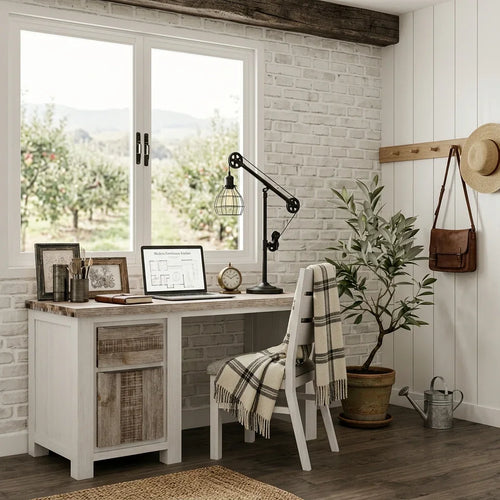
- If the desk lives in a bedroom: pick one that looks like bedroom furniture, like the acacia and white Homestead Study Desk with a drawer and cupboard.
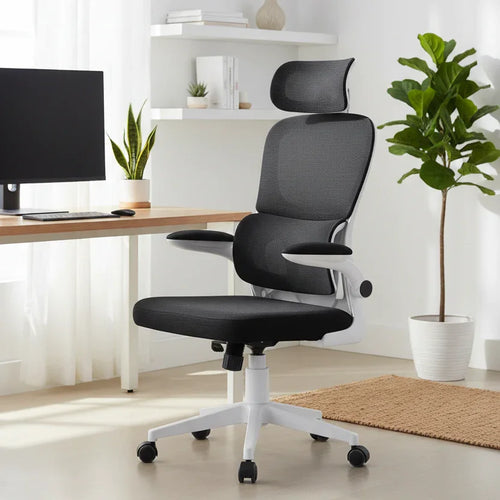
- If your teen is close to adult height: pair the desk with a mesh task chair whose seat drops to 45 cm, like the Cloud Ergonomic Mesh Office Chair.
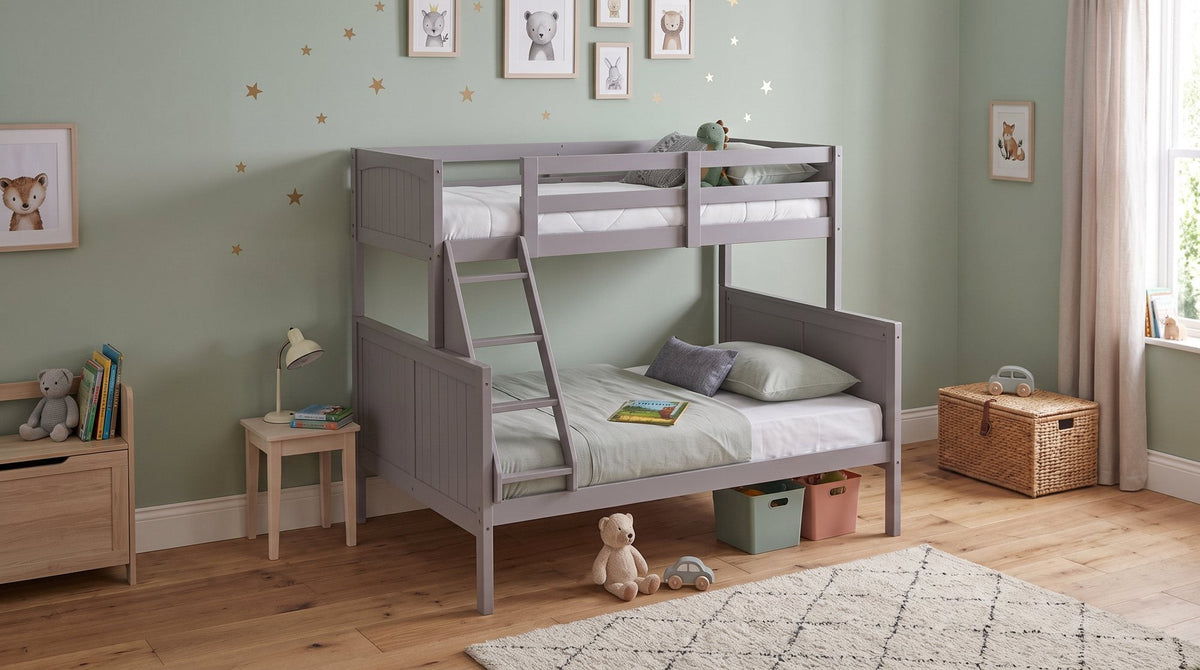
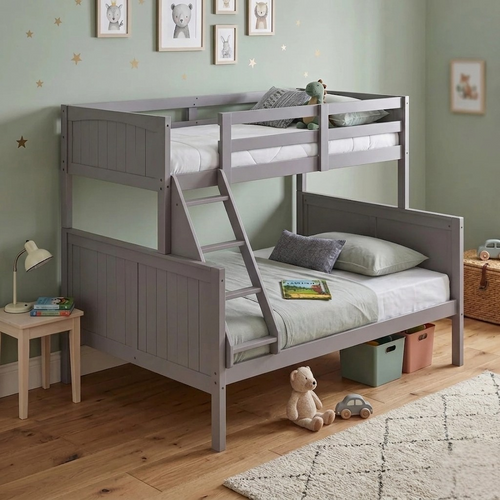
- If two kids share the room: free up floor for a desk by stacking the beds, as the Neves Single Over Double Bunk Bed does.
In this guide
Study desk size for kids and teens
The desk has to fit everything your child uses at once. For a primary schooler that is usually a workbook, a pencil case and a lamp. For a teenager it is a laptop or monitor, an open textbook, a notebook and space to write, often all at the same time. As a rough guide, younger children manage with a desk around 100–120 cm wide, while teenagers are better served by 120 cm or more.
Height is the decision people overlook. Standard desks sit around 72–75 cm high, which suits most teenagers and adults. Rather than buying a desk for a younger child's height today, it is usually simpler to buy a standard desk and fit the child to it with an adjustable chair and, if their feet dangle, a footrest. As they grow, you adjust the chair rather than replace the desk.
| Feature | Primary school | Teenager |
|---|---|---|
| Desk width | Around 100–120 cm | 120 cm or more |
| Desk height | Standard desk, with the chair raised and a footrest | Standard desk, around 72–75 cm |
| Storage | One or two drawers | Drawers plus a cupboard or shelves for textbooks |
| Chair | Height-adjustable, feet supported | Adjustable task chair for longer sessions |
| Lighting | A desk lamp for evening homework | A desk lamp, and screen glare kept off the monitor |
Measure the room before you buy anything. A desk that is too big dominates a small bedroom and leaves no room for the chair to pull out; you need clear floor behind the desk for the chair as well as the desk's own depth.
Pieces in this guide
Storage: drawers, cupboards and shelves
A desk only stays a working surface if the clutter has somewhere else to go. Look for:
- A drawer for pens, chargers, calculators and the small things that otherwise spread across the top.
- A cupboard or shelf for the bulky things: folders, textbooks, a laptop bag, spare paper.
- Somewhere for cables. A laptop charger, a lamp and a phone charger all need power, so check where the nearest power point is before you place the desk.
- Wall shelves above the desk if the room is small. They add storage without adding floor space.
Material matters in a teenager's room too. Most study desks combine engineered wood with a timber or painted finish, and that is fine for everyday use. Wipe spills promptly, use a mat under drinks, and keep the desk out of long spells of direct sun.

The chair matters as much as the desk
The chair decides how long your child can sit comfortably, so budget for it alongside the desk. For a child or teenager, look for a seat that adjusts in height so their feet rest flat on the floor, a backrest with some shape in the lower back, and breathable mesh if the room gets warm in summer.
The key number is how low the seat goes. You want roughly 25–30 cm between the seat and the underside of the desk. The Cloud Ergonomic Mesh Office Chair adjusts from 45 to 55 cm, which suits most adults from around 165 cm tall at a standard desk. It has mesh on both the back and the seat, a shaped lumbar curve built into the backrest, an adjustable headrest and armrests that flip up so it tucks under the desk. A shorter child will still need a footrest.
The Copenhagen Executive Office Chair is a different kind of chair: deeply quilted, with a reclining tilt lever and a footrest that pulls out from under the seat. Its seat sits high, 52 cm at its lowest, so it wants a desk of about 76 cm or taller. For most teenagers at a standard desk the Cloud is the better fit; the Copenhagen suits an older teen at a tall desk who wants somewhere to lean back between tasks. You will find both in our office chairs range.

Fitting a desk into a teenager's bedroom
Where the desk goes changes how much it gets used. A few layout rules work in almost every bedroom:
- Light from the side. A desk beside a window gets natural light across the top without the screen glare you get from sitting with the window behind the monitor.
- Face a wall, not the bed. A desk that faces a wall or window keeps the bed out of sight while working.
- Clear the pull-out zone. Leave room behind the desk for the chair to move and for someone to walk past.
- Add a lamp. A dedicated desk lamp matters for evening homework, whatever the ceiling light is like.
When two children share a room, floor space is the problem, and the beds take most of it. Stacking them frees a wall for a desk. The Neves Single Over Double Bunk Bed puts a single above a full double on a solid rubberwood frame, with a full-length guard rail and a built-in ladder, in a footprint of 225 × 150 cm. Two children working at once need a long desk or two small ones side by side, each with its own chair and its own drawer.
For younger children, the bed and bedside table can share the room with a small desk. The Echo Kids Bed Frame is fully upholstered with no hard edges, in Single or King Single. The Hamilton Kids Race Car Bed pairs with the matching Hamilton Bedside Table, a velvet-upholstered table with two drawers. See more in our kids bedroom furniture range.

What we sell for a study corner
To be straightforward: our desk range is small, and this guide is not a list of dozens of kids' desks. The desk we currently offer for a bedroom study corner is the Homestead Study Desk. It has acacia timber panels on a soft white painted frame, with some structural parts in engineered wood, and a single side pedestal with a drawer above and a cupboard below. The other side is open legroom, so it is easy to place against a wall. The chair in the photos is for styling only and is not included.
The Homestead's exact dimensions are still being confirmed with the supplier. If the desk has to fit a particular space or monitor, call the showroom team on 07 3161 5415 and they will measure a floor piece for you. If a child's room is the destination, anchor the desk to the wall and keep heavier items in the lower cupboard. Check our desks and study tables for anything new before you decide. For the rest of the room, the beds, bunks and bedside tables in this guide are all in our kids bedroom furniture range.
Study desk questions
What is the best desk for a teenager?
There is no single best desk. A good teenage desk is wide enough for a laptop beside an open textbook, around 120 cm or more, sits at a standard height of about 72–75 cm, and has a drawer or cupboard so the top stays clear. Pair it with a height-adjustable chair.
Can two kids share one study desk?
They can if the desk is long enough for both to work side by side, with a chair and a drawer each. In a shared bedroom, a bunk bed such as the Neves Single Over Double frees floor space for a longer desk or two small ones.
What height should a study desk be for a child?
Most desks are around 72–75 cm high. For a younger child, raise an adjustable chair so their elbows are near desk height and add a footrest so their feet are flat. That way the same desk still works as they grow.
What chair suits a teenager's study desk?
A height-adjustable task chair whose seat goes low enough for their feet to rest flat. The Cloud Ergonomic Mesh Office Chair adjusts from 45 to 55 cm and suits most adults from around 165 cm tall at a standard desk; a shorter teen will need a footrest. The Copenhagen sits higher and needs a desk of about 76 cm or taller.
Should a teenager's desk go in their bedroom?
Usually, yes. It gives them a dedicated place to work. Face the desk towards a wall or window rather than the bed, put it beside a window for side light, and choose a desk that looks like bedroom furniture rather than office equipment.
What desk suits a teenage boy or girl?
The same rules apply to both: enough width for a laptop and an open book, a standard height of about 72–75 cm, and a drawer or cupboard for the clutter. Choose the desk on size and storage, then let your teen pick the finish and the accessories so it feels like their own space.