
Choose PU leather if you want a smooth, polished leather look; choose fabric if you want a softer, homelier look that blends into the room. Our PU and technology-fabric chairs both wipe down with a damp cloth, and neither breathes like mesh. Our Camp chair comes in both, so you can compare side by side.
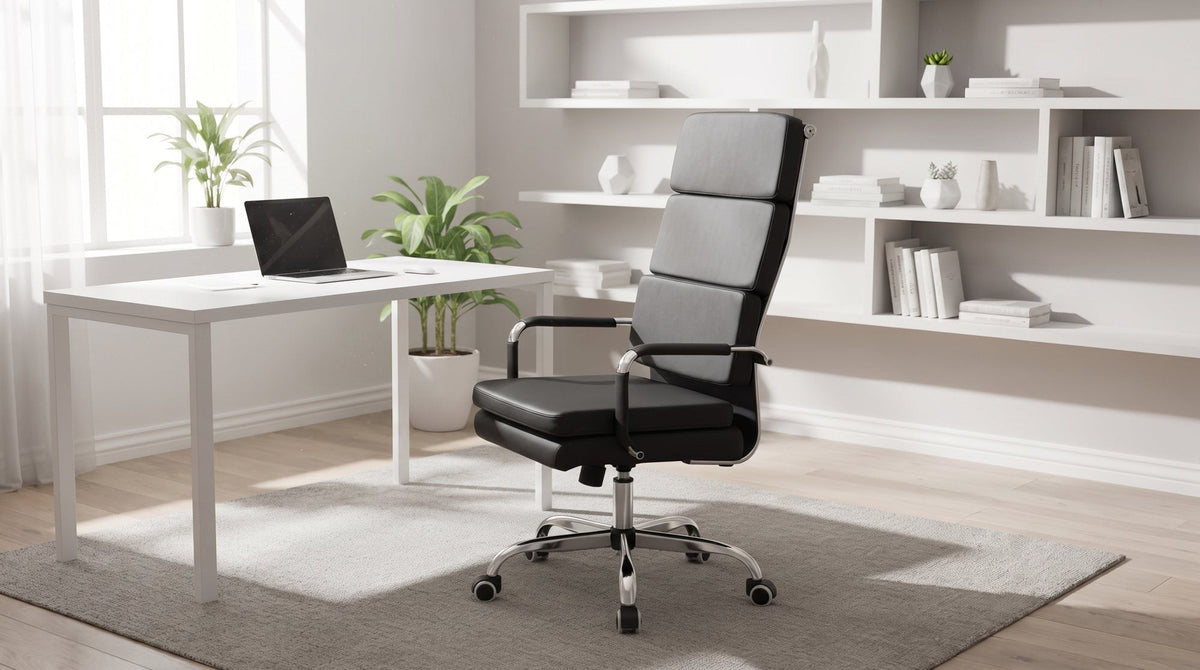
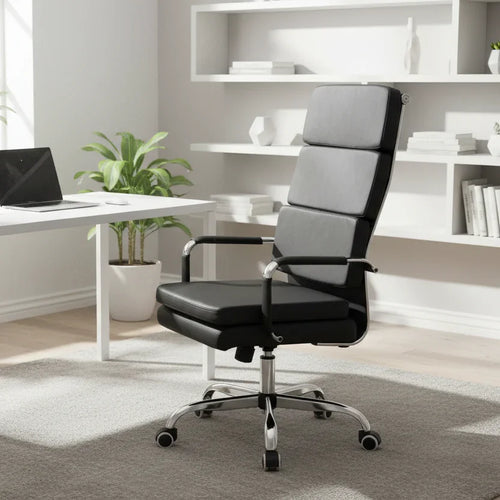
- If you want a polished, office look: pick PU leather, like the Camp PU Leather.
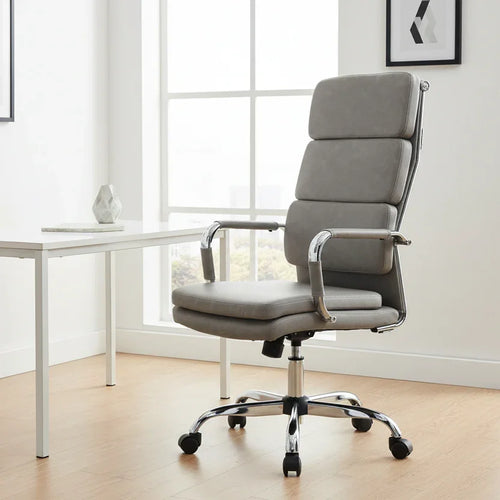
- If you want a softer look at home: pick fabric, like the grey Camp Fabric.
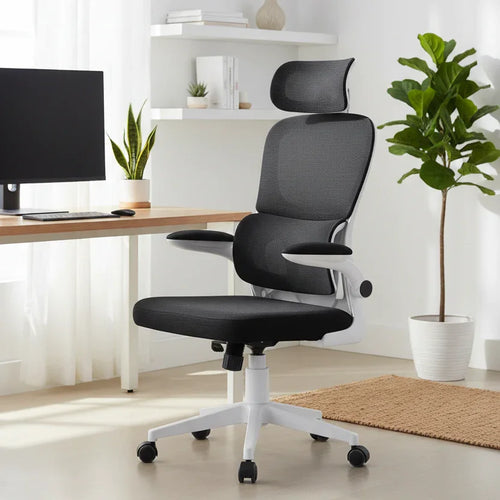
- If you sit for long, warm days: pick mesh, like the Cloud.
In this guide
What PU means on a chair
PU is short for polyurethane. A PU leather chair is upholstered in a synthetic material: a thin polyurethane coating on a fabric backing, finished to look and feel like leather. You will also see it sold as faux leather or leather-look. It is not real leather, so it won't develop a patina or smell like a leather lounge, but it gives you the same smooth, polished look on a desk chair.
The practical upside is the surface. Because the coating sits on top, spills and marks tend to stay on the surface rather than soaking in, and a soft, slightly damp cloth handles most everyday cleaning. The trade-off is that the coating doesn't let air through. On a warm afternoon, a PU seat can feel warm against your back and legs in a way an open weave or a mesh back does not.
PU also has one known weakness worth planning around: prolonged sun and heat can dry the surface out and lead to cracking. The care notes for our PU chairs say to keep them away from sunny windows and heat sources, and that's the single biggest thing you can do to keep one looking good.
Pieces in this guide
Two kinds of fabric chair
"Fabric" on an office chair can mean two quite different things, and it changes the comparison.
- Woven upholstery fabric. A textile stretched over foam. It feels soft and lets some air move through, but spills can soak in, so stains need prompt attention.
- Technology fabric. A smooth, coated upholstery with a soft hand-feel. It wipes down with a damp cloth like PU, but it has a matte, textile look rather than a leather shine.
The fabric chairs in our office chair range use technology fabric. The Camp Fabric Office Chair is upholstered in grey technology fabric with a subtle vintage finish, and the Clontarf Fabric Office Chair and Copenhagen Executive Office Chair both use black technology fabric. That matters: you get a softer, homelier look than PU and similar easy cleaning, but a coated surface is still a coated surface. If airflow is your main reason for avoiding PU, look at mesh rather than a coated fabric.
PU leather vs fabric, side by side
Here is how the two compare on the things people actually notice once the chair is at their desk. The fabric column covers both types, and the table says where they differ.
| What you notice | PU leather | Fabric |
|---|---|---|
| Look | Smooth, leather-look sheen; reads formal and polished | Matte and textile; reads softer and more like home furniture |
| Feel | Smooth and cool at first touch, warmer as you sit | Softer hand-feel; woven fabric feels the softest |
| Heat | Coated surface, no airflow through the upholstery | Woven lets some air through; technology fabric is coated, like PU |
| Spills | Sit on the surface; wipe with a damp cloth | Technology fabric wipes down; woven fabric can absorb spills |
| Biggest enemy | Sun and heat, which can dry out and crack the coating | Sun, which can gradually fade the colour |
| Cleaning products | A stain protector made for PU; no bleach or solvents | A mild fabric cleaner and fabric protector; no harsh cleaners |
| Suits | Busy shared rooms, kids, a formal or client-facing desk | Spare rooms and living areas where the chair should blend in |
Notice what's missing: neither material is automatically more supportive. Support comes from the frame, the cushioning and the adjustments, not from the cover. Two chairs with identical padding and mechanisms will support you the same way whether they're wrapped in PU or fabric, which is exactly why the Camp is such a useful test.
One chair, two materials: the Camp
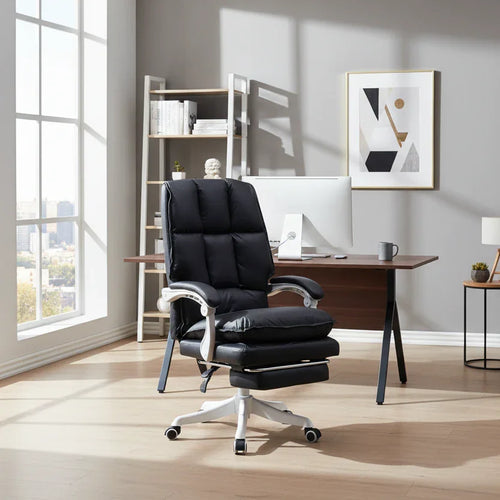
Most PU vs fabric comparisons pit two different chairs against each other, so you can never tell whether you're reacting to the material or to the shape. The Camp removes that problem. Both versions share the same mid-century-inspired silhouette: three horizontal cushioned back panels, a single seat cushion, a polished chrome frame with curved chrome armrests, a reclining backrest with adjustable tilt tension, a gas-lift seat and a chrome five-star castor base.

The differences are all in the cover. The Camp PU Leather Office Chair is black PU leather with padded PU leather armrests, so the whole chair has that smooth, executive look against the chrome. The Camp Fabric is grey technology fabric with small leather-look pads on the arms. Black-on-chrome anchors a darker, more traditional office; grey-on-chrome suits lighter rooms with white or oak desks, and sits comfortably alongside darker timber too.

So the Camp question becomes a simple one. Do you want the look and wipe-clean ease of black PU, or the softer, lighter look of grey fabric? Sit in both on the same visit, at a desk, and you'll usually know within a minute. Ask which store has both on display before you head in.
Where mesh fits in
A lot of people searching PU leather vs fabric are really trying to solve one problem: a hot chair. If that's you, the honest answer is that neither upholstered option is built for airflow. Mesh is.
The Cloud Ergonomic Mesh Office Chair uses a tightly woven mesh on both the back and seat, so warm air escapes rather than being trapped against you. It also adds a built-in lumbar curve, an adjustable headrest and flip-up armrests that fold up so the chair slides under the desk. It's a different look, more modern and technical, and it comes in Black or Grey with a white frame.
The same logic applies if you've been comparing PU leather and fabric gaming chairs. Those are usually padded, high-sided designs, and the material question plays out exactly as it does here: PU for a polished look, fabric for a softer one, mesh for airflow. We don't sell gaming chairs, but the chairs in our home office furniture range cover the same choice for a desk you work at.
For the full mesh-versus-padded comparison, see our guide to mesh vs executive office chairs.
Looking after each material
Both materials last longest with the same three habits: regular light cleaning, the right products, and keeping the chair out of strong direct sun. The details differ a little.
- PU leather. Wipe with a soft, slightly damp cloth before dust and marks build up. Use a stain protector made for PU, not one made for real leather. Skip bleach, solvents and abrasive products, which can damage the coating and dull the finish. Keep it away from sunny windows and heaters.
- Technology fabric. Wipe down regularly with a soft, slightly damp cloth. For stubborn spots, use a mild fabric cleaner with a soft cloth, and consider a fabric protector spray. Avoid harsh cleaners, which can dull the coated finish.
- Woven fabric. Vacuum regularly and blot spills straight away rather than rubbing them in.
- Mesh. Vacuum with a soft brush attachment to lift dust and crumbs from the weave, and spot clean with a mild fabric cleaner.
Questions we get asked
Is PU leather real leather?
No. PU leather is a synthetic material: a polyurethane coating on a fabric backing, finished to look like leather. It gives a smooth, leather-look surface that wipes clean easily, but it doesn't age or develop a patina the way real leather does.
Is faux leather the same as PU leather?
Faux leather is the general name for leather-look synthetics, and PU leather is one common type. If a chair is described as faux leather, check the listing for the actual material so you know how to care for it.
What is the best material for an office chair?
It depends on what matters most to you. Mesh is the pick for airflow during long sessions, PU leather for a polished look that wipes clean, and fabric for a softer look that blends into a home. Support comes from the chair's frame, cushioning and adjustments rather than the cover.
Does a PU leather chair get hot?
It can feel warm on a hot day, because the coated surface doesn't let air through. Coated technology fabric behaves in a similar way. If heat is your main concern, a mesh chair such as the Cloud lets warm air escape through the back and seat.
Is a PU leather or fabric gaming chair better?
The same trade-off applies as for office chairs: PU leather looks sleek, fabric looks softer, both wipe down, and neither breathes like mesh. We don't stock gaming chairs, but our office chairs cover the same material choices for a desk setup.
Can I try the Camp chair in both materials?
Yes. The Camp comes in black PU leather and grey technology fabric with the same frame and mechanism. We have five showrooms: Rocklea, Virginia, North Ipswich, Bundall and Beenleigh. Ask which store has both versions on display before you visit.