
A mesh chair is the better pick if you sit for long stretches in a warm room, because air moves through the back and seat. An executive chair suits you if you want a padded, cushioned feel and a more formal look for calls and client meetings. Both types can recline and adjust in height.
- If you sit most of the day in a warm room: pick mesh, like the Cloud.
- If you want a footrest for breaks: pick the Copenhagen Executive.
- If you love leather-look and chrome: pick the Camp PU Leather.
In this guide
Why mesh and padding feel so different
The two chair types support you in different ways, and that's what you feel when you sit down.
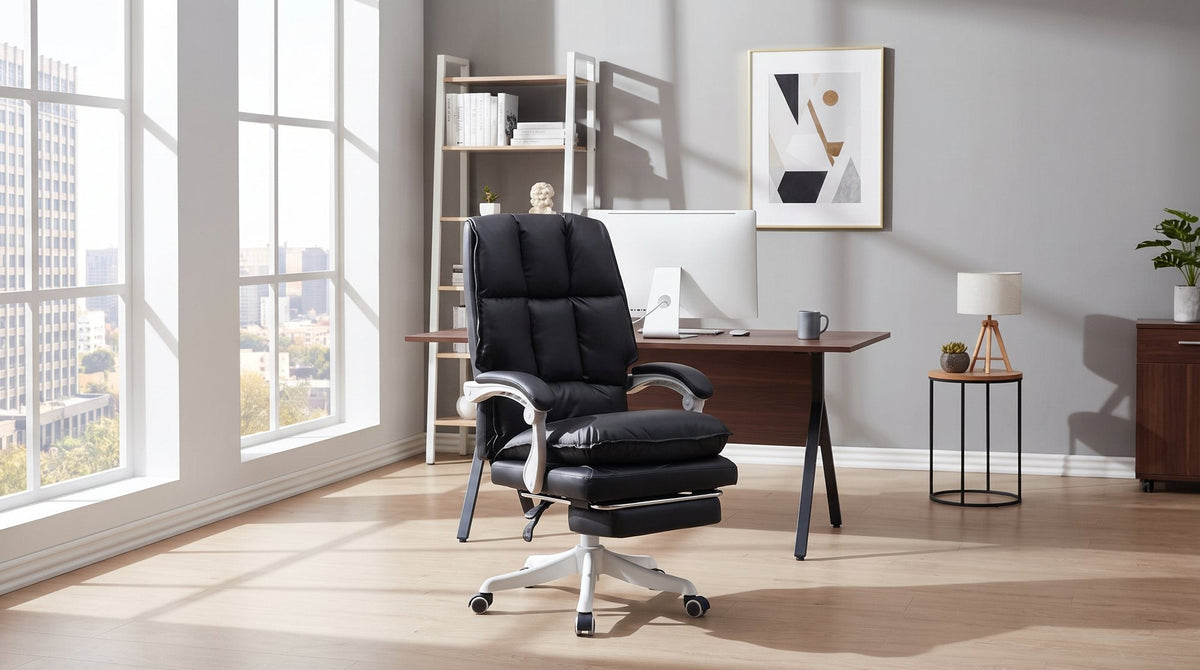
A mesh chair stretches a tightly woven mesh across the frame of the back and, on the chairs we sell, the seat as well. You sit on the mesh itself, so the support comes from the tension in the weave rather than from foam. Because it's an open weave, warm air escapes instead of building up between you and the chair. The first sit can feel firmer and more "springy" than you expect.
An executive chair wraps foam cushioning in upholstery, usually PU leather or a coated technology fabric. You sink in a little, and the chair feels plush and enclosing straight away. The trade-off is airflow: solid cushioning and a coated cover hold warmth, which you notice most on a hot afternoon.
"Executive" describes the look and build, not one material. A high, padded back and a formal silhouette are the signature. In our range, the executive-style chairs come in both black PU leather and black technology fabric.
Pieces in this guide

Mesh vs executive, side by side
This table compares the two types using the four chairs in our office chair range that best represent each one.
| What you notice | Ergonomic mesh (Cloud, Casino) | Executive (Copenhagen, Camp PU) |
|---|---|---|
| Seat and back | Mesh on both back and seat, supported by the weave's tension | Foam cushioning in quilted or panelled upholstery |
| Airflow | Warm air escapes through the mesh | Solid padding and coated covers hold warmth |
| First feel | Firmer, springy, open | Plush and enclosing |
| Headrest | Adjustable headrest on both | High back; no separate headrest listed |
| Armrests | Flip up so the chair slides under the desk | Padded armrests |
| Recline and height | Reclining tilt and gas lift | Reclining tilt and gas lift |
| Look | Modern and technical, with a white or black frame | Formal and substantial, with chrome or a white base |
| Cleaning | Vacuum the weave with a soft brush; spot clean | Wipe with a soft, slightly damp cloth |
The mechanics are closer than most people expect. All four chairs recline, all four have gas-lift seat height and all four roll on a five-star castor base. The real differences are the feel of the seat, the airflow, the headrest and the look.
Cloud vs Casino: our two mesh chairs
Both are high-back task chairs with mesh on the back and seat, flip-up armrests, a reclining tilt mechanism, gas-lift height and a five-star castor base with 360-degree swivel. The differences are in the details.

The Cloud Ergonomic Mesh Office Chair has a built-in lumbar curve shaped into the back, a headrest that tilts and pivots, and adjustable tilt tension. It comes in Black or Grey mesh, both on a white frame and base.
The Casino Ergonomic Mesh Office Chair has a headrest that slides up and down its track, which helps if a fixed-height headrest sits in the wrong place for you. It comes in Grey mesh with a white frame, or Black mesh with a matching black frame for a more uniform, low-key look.

If you've been searching for an "executive mesh chair", these are the closest match in our range: a high back and headrest, with mesh instead of padding.
Copenhagen vs Camp: two takes on executive
Our two executive-style chairs share a high, padded back and a formal silhouette, but they look and work quite differently.

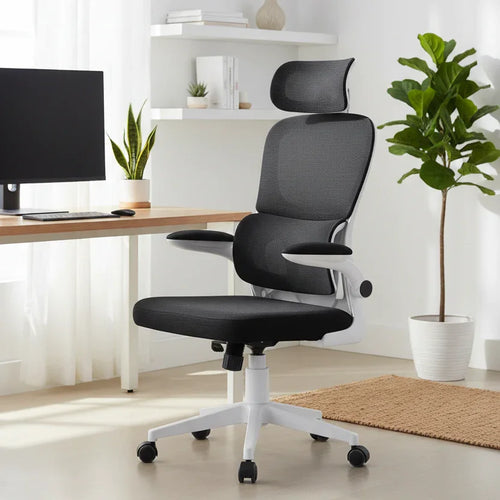
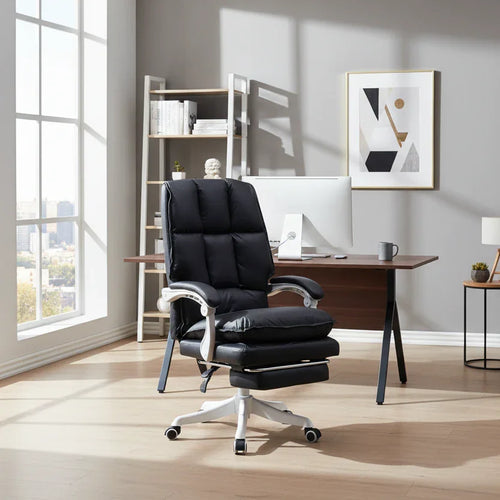
The Copenhagen Executive Office Chair is upholstered in black technology fabric, a smooth coated upholstery, with quilted channel padding on the back and seat and padded armrests. Its stand-out feature is a footrest that pulls out from under the seat for breaks and slides back when you're done. The black upholstery sits on a white five-star base with white armrest supports, which lifts the look in lighter rooms.
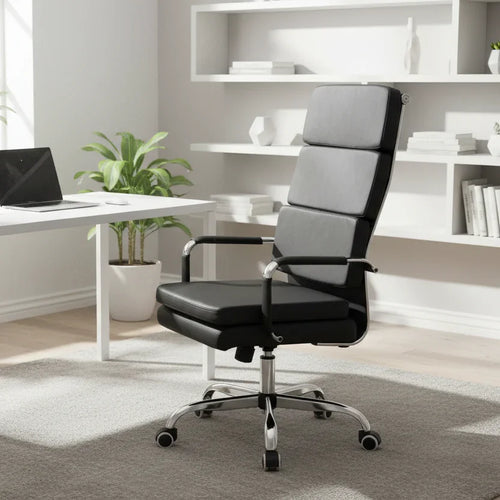
The Camp PU Leather Office Chair takes a mid-century-inspired line: three horizontal cushioned panels on the back, a single seat cushion, black PU leather, and padded armrests on a polished chrome frame that runs down to a chrome base. It reclines with adjustable tilt tension. If you like the shape but would rather have fabric, the Camp also comes in grey technology fabric; our PU leather vs fabric comparison covers that choice.
Who each type suits
Choose mesh if you:
- sit for most of the working day and want a chair you stop noticing;
- work in a room that gets warm in the afternoon;
- want a headrest you can position, and arms that flip up out of the way;
- like a modern, technical look that suits white desks and pale floors.
Choose executive if you:
- prefer a plush, cushioned seat to a firmer, springy one;
- take a lot of calls or video meetings and want a formal look behind you;
- like to put your feet up between tasks (the Copenhagen's footrest);
- are furnishing a study with darker timber or a more traditional feel.
Plenty of people fall into both lists. If that's you, sit in one of each on the same visit, at a desk, for a few minutes each. Our guide to how to choose an office chair has a five-minute sit test, and our home office furniture range covers the desk side of the setup. We have five showrooms, at Rocklea, Virginia, North Ipswich, Bundall and Beenleigh; ask which store has the chairs you want to compare on display.
Mesh and executive chair questions
Are mesh chairs good for long hours?
They suit long sessions well because the open weave lets warm air escape instead of trapping it against you. Fit still matters most: the seat height and backrest need to suit your body and desk, so sit-test before you buy.
Is mesh better than fabric for an office chair?
For airflow, yes. Mesh is an open weave, while padded fabric chairs hold more warmth, and coated technology fabric behaves more like PU leather. Fabric wins if you prefer a cushioned seat and a softer, homelier look.
Is a mesh office chair comfortable to sit on?
Comfort is personal, so judge it at a desk. The first sit can feel firmer than a padded chair because the support comes from the tension in the mesh, not foam. Try one for a few minutes rather than a few seconds.
What is an executive mesh office chair?
It usually means a high-back mesh chair with a headrest, combining an executive-style height with mesh instead of padding. In our range, the Cloud and Casino are high-back mesh chairs with adjustable headrests.
How do you clean a mesh office chair?
Vacuum the mesh regularly with a soft brush attachment to lift dust and crumbs from the weave. For minor marks, use a mild fabric cleaner with a soft cloth, and avoid bleach, solvents and abrasive products.
Can I compare mesh and executive chairs in a showroom?
Yes. We have five showrooms: Rocklea, Virginia, North Ipswich, Bundall and Beenleigh. Ask which store has the mesh and executive chairs you'd like to compare on display before you visit.