
To clean a mattress, strip the bed, vacuum the top and sides, blot any stains with cold water and a little mild detergent, then sprinkle bicarb soda over the surface and leave it for a few hours. Vacuum it up, let the mattress dry in a well-ventilated room, and never soak it.
- If your mattress has a memory foam top: spot clean only, with a damp cloth and a mild cleaner, and never soak it, as the care notes for the Supreme Care 5 Zone Memory Foam Mattress say.
- If you are wondering whether to flip it: a single-sided mattress like the Posture Delight Pocket Spring Mattress is rotated head-to-foot every few months, not flipped.
- If the pillows need a wash too: a fibre-filled pillow like the Bamboo Cooling Pillow goes in the machine; a memory foam pillow never does.
In this guide

How often should you clean a mattress?
Mattress care works best in layers: small jobs often, and a proper clean a couple of times a year. Most of the work is done by the bedding on top, which is why a washable protector matters more than any cleaning product.
| Job | How often | Why |
|---|---|---|
| Wash sheets and pillowcases | Weekly | Stops sweat and body oils building up and passing through to the mattress. |
| Wash the mattress protector | Every few weeks, and after any spill | The protector takes the spills so the mattress does not have to. |
| Vacuum the mattress | Monthly | Lifts dust and skin flakes out of the seams and quilting. |
| Rotate head-to-foot | Every few months | Spreads wear evenly so one spot does not take all the weight. |
| Full clean with bicarb | Twice a year | Freshens the whole surface and lifts any lingering smell. |
| Spot clean | Straight away | A fresh spill blots out; a dried one may not. |
Pieces in this guide



How to clean a mattress step by step
Set aside a morning, ideally on a dry day when you can open the windows. You need a vacuum with an upholstery attachment, bicarb soda, a few clean cloths, cold water and a mild detergent such as a little dishwashing liquid. That is all.
- 1. Strip the bed. Take off the sheets, the protector and any topper, and wash them following each care label.
- 2. Vacuum the top and sides. Go slowly with the upholstery attachment and pay attention to the seams, the quilting lines and the edges, where dust collects.
- 3. Spot clean any marks. Dampen a cloth with cold water and a drop of detergent, then blot, never rub, working from the outside of the mark inwards. The next section covers particular stains.
- 4. Sprinkle bicarb soda. Sift an even layer across the whole sleeping surface. Leave it for at least a few hours; overnight is better if you have a spare bed.
- 5. Vacuum again. Lift all the bicarb off, including from the seams.
- 6. Let it dry and air. Leave the bed bare with the windows open or a fan running until any damp patches are completely dry. Remaking a damp mattress traps moisture inside it.
- 7. Rotate it. While the bed is bare, turn the mattress head-to-foot so the wear moves to a fresh area.

Cleaning the outer surface: stains and smells
The best way to clean the outer surface of a mattress is with as little water as possible. Most mattresses have a fixed cover sewn over the comfort layers, and any water that soaks through reaches foam that is slow to dry. The care notes on our mattress pages say the same thing: spot clean only, with a damp cloth and a mild cleaner, and avoid soaking or harsh chemicals.
Sweat marks and yellowing
Blot with a cloth dampened in cold water and a little detergent, then blot again with a cloth dampened in plain water to lift the soap out. Cold water matters: hot water can set sweat and blood marks into the fabric.
Blood
Act quickly and use cold water only. Blot, rinse the cloth, and blot again until no more colour comes away. Patience does more than scrubbing.
Urine and other accidents
Strip the bedding and blot up as much liquid as you can with dry towels, pressing rather than wiping. Blot the area with cold water and a little detergent, then dry it as far as you can. Once it is only slightly damp, cover the patch with bicarb soda and leave it overnight before vacuuming. If the protector caught it all, you only need to wash the protector.
Lingering smells
Bicarb soda is the main tool. Leave a generous layer for several hours or overnight, then vacuum. Airing the room well while the mattress is bare helps too. Avoid strong fragrances and sprays, which tend to mask a smell rather than lift it, and add more moisture to the cover.
On a slim mattress such as the Sleep Essential III Pocket Spring Mattress, with its 2 cm comfort foam quilting under a knitted cover, a light hand with water also means a quicker drying time.
Habits that make a mattress last
Cleaning fixes what has already happened. These habits stop most of it happening in the first place.
- Use a protector from the first night. A washable mattress protector sits between you and the mattress and catches sweat and spills before they reach the comfort layers. Moisture that soaks into foam is hard to get out again. We sell two waterproof, machine-washable protectors: the Waterproof Mattress Protector, with a cotton terry surface over a PU (polyurethane) backing, and the Mellow Pillow Bamboo Waterproof Mattress Protector, with a bamboo surface. Wash either on a gentle cycle, and avoid hot washes, hot tumble-drying and ironing, which damage a waterproof backing.
- Rotate, but check before you flip. Many modern mattresses are single-sided, with the comfort layers on top. The Posture Delight, Supreme Care and Sleep Essential III are all designed to be rotated head-to-foot every few months and are not designed to be flipped.
- Check the base. Our mattress pages recommend a solid (platform) base or a slatted base with evenly spaced slats. A sagging base or a broken slat causes uneven wear, however well you look after the mattress.
- Keep it dry and ventilated. Air the room regularly, and avoid pushing the bed hard against a damp wall. Trapped moisture is what leads to mould inside a mattress.
- Keep it out of strong sun for long periods. Hours of direct sunlight every day can fade and weaken covers and foams over time.
- No jumping. Standing or jumping on the bed puts concentrated strain on springs and comfort layers that they are not built for.
If your mattress no longer recovers its shape, has a dip you can see, or holds a smell however often you clean it, cleaning will not bring it back. That is the point to look at a new one; our mattress sale range is a good place to start, and you can ask which of our five showrooms has a particular mattress on display to try.
Pillows: what can and cannot be washed
Pillows absorb more sweat and skin oil than anything else on the bed, so they need their own routine. Whether you can wash one depends entirely on what is inside it.

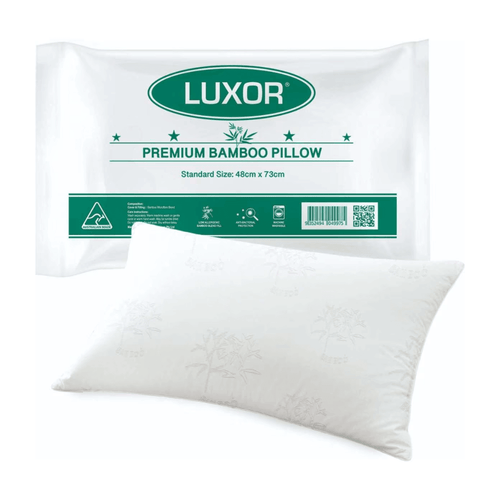
Fibre-filled pillows can go in the machine. The Bamboo Cooling Pillow has a filling of 30% bamboo and 70% polyester and no foam core, so its product page says the whole pillow is machine washable on a gentle cycle with a mild detergent. Follow the care label for water temperature, and dry it right through before use: any damp left in the fill will go musty.
Memory foam pillows must never be machine washed. The Mellow Pillow Memory Foam Cooling Gel Pillow has a slow-rebound memory foam core, and its care notes are clear: never machine wash, wring or tumble-dry memory foam, because water breaks it down and it will not recover its shape. Spot clean it with a barely damp cloth and let it air-dry completely, away from direct heat and sunlight.
A pillow protector does the washing for you. The Mellow Pillow Waterproof Bamboo Pillow Protector has a bamboo fabric surface over a waterproof backing and goes between the pillowcase and the pillow. It is machine washable on a gentle cycle, and it comes as a pack of two so one can be in the wash while the other is on the pillow. Avoid hot washing, hot tumble-drying or ironing, which damage a waterproof backing. Check its 50 × 70 cm size against your pillows; a standard Australian pillow is 48 × 73 cm.

You can see the full range of fillings in our pillows collection.
Think you have bed bugs? Check for these signs
Bed bugs are a pest problem, not a cleaning one, and they rarely stay in the mattress alone. Look along the mattress seams, piping and labels, and around the bed frame joints and headboard, for:
- small dark spots on seams, sheets or the frame;
- pale shed skins or tiny eggs tucked into joins and crevices;
- small rust-coloured marks on the sheets;
- itchy bites in a cluster or a line, although bites on their own do not confirm bed bugs.
If you find these signs, call a licensed pest controller and follow their instructions. Do not spray products on the mattress or bedding yourself, and do not drag the mattress or bedding through the house while you wait, as that can spread the problem to other rooms.
Mattress cleaning FAQs
How do I clean a mattress without a vacuum?
Use a stiff, clean brush to loosen dust from the surface and seams, then pick up what is left with a lint roller. Bicarb soda still works for smells: sprinkle it, leave it for a few hours, then brush it off thoroughly and wipe the surface with a barely damp cloth.
Can I steam clean a mattress?
We would not. Steam pushes heat and moisture into the cover and the foam underneath, and the care notes on our mattresses say to spot clean only and avoid soaking. A damp cloth, mild detergent and bicarb soda are gentler and dry faster.
Can I use bleach or vinegar on a mattress?
Stick to cold water and a mild detergent. Our mattress care notes say to avoid harsh chemicals, and bleach can mark or weaken the cover fabric. Strong-smelling liquids also add moisture that then has to dry out of the mattress.
Should I flip my mattress?
Only if it is designed to be flipped. Most modern pocket spring and foam-topped mattresses are single-sided, with the comfort layers on top. Rotate those head-to-foot every few months instead, and check the care label if you are unsure.
How long does a mattress take to dry after cleaning?
A lightly spot-cleaned patch usually dries within a few hours in a well-ventilated room, and faster with a fan. The less water you use, the quicker it dries. Make sure it is completely dry before putting the protector and sheets back on.
How do I know it is time to replace my mattress?
Look for a dip that stays when you get up, springs you can feel through the top, or a smell that comes back however often you clean it. Those are signs of wear that cleaning cannot fix.