
Queensland's sun doesn't mess around. Between the UV, sticky summer humidity, and storms that roll in without warning, your outdoor setting has to work harder here than almost anywhere else in the country.
Pick the wrong material, and you'll be dealing with fading, rust, mould, or warped timber inside a season or two. Fortunately, a handful of the best outdoor furniture materials can handle these conditions beautifully; you just need to know which ones and how to look after them. This guide walks you through what to buy, what to avoid, and how to keep it looking good year-round.
Key Takeaways
- Choose UV- and moisture-resistant materials like aluminium, teak, and synthetic wicker for the region’s heat and humidity
- Avoid untreated steel and low-quality softwoods, as they rust, rot, or warp quickly in humid conditions
- Invest in weatherproof outdoor cushions with UV-resistant, quick-dry fabric to match your frames
- Regularly cleaning outdoor furniture with mild soap and water extends its lifespan significantly
- Coastal homes need extra protection against salt air; look for marine-grade finishes
What Makes Outdoor Furniture Suitable for Queensland
The best outdoor furniture materials for our climate should be UV-, moisture-, and rust-resistant, and low-maintenance. Queensland summers bring intense sun and humidity above 70% in the mornings during wetter months, and the coastal regions see even higher relative humidity than island areas. Anything that soaks up moisture or oxidises quickly will show its age fast.
If you’re near the coast in Sandgate, the Gold Coast, or anywhere that catches salt spray, corrosion resistance matters even more. Marine-grade aluminium and properly treated timber are your friends here.
The Best Outdoor Furniture Materials for Heat and Humidity
Five materials consistently hold up to our harsh Queensland conditions:
- Aluminium: Lightweight, rust-proof, and happy in humid air as the powder-coated finishes resist fading and are easy to wipe clean, making it a strong pick for coastal homes.
- Teak: Dense tropical hardwood, packed with natural oils that repel water and resist rot. Weathers to a silver-grey over time or can be oiled to keep its honey tone.
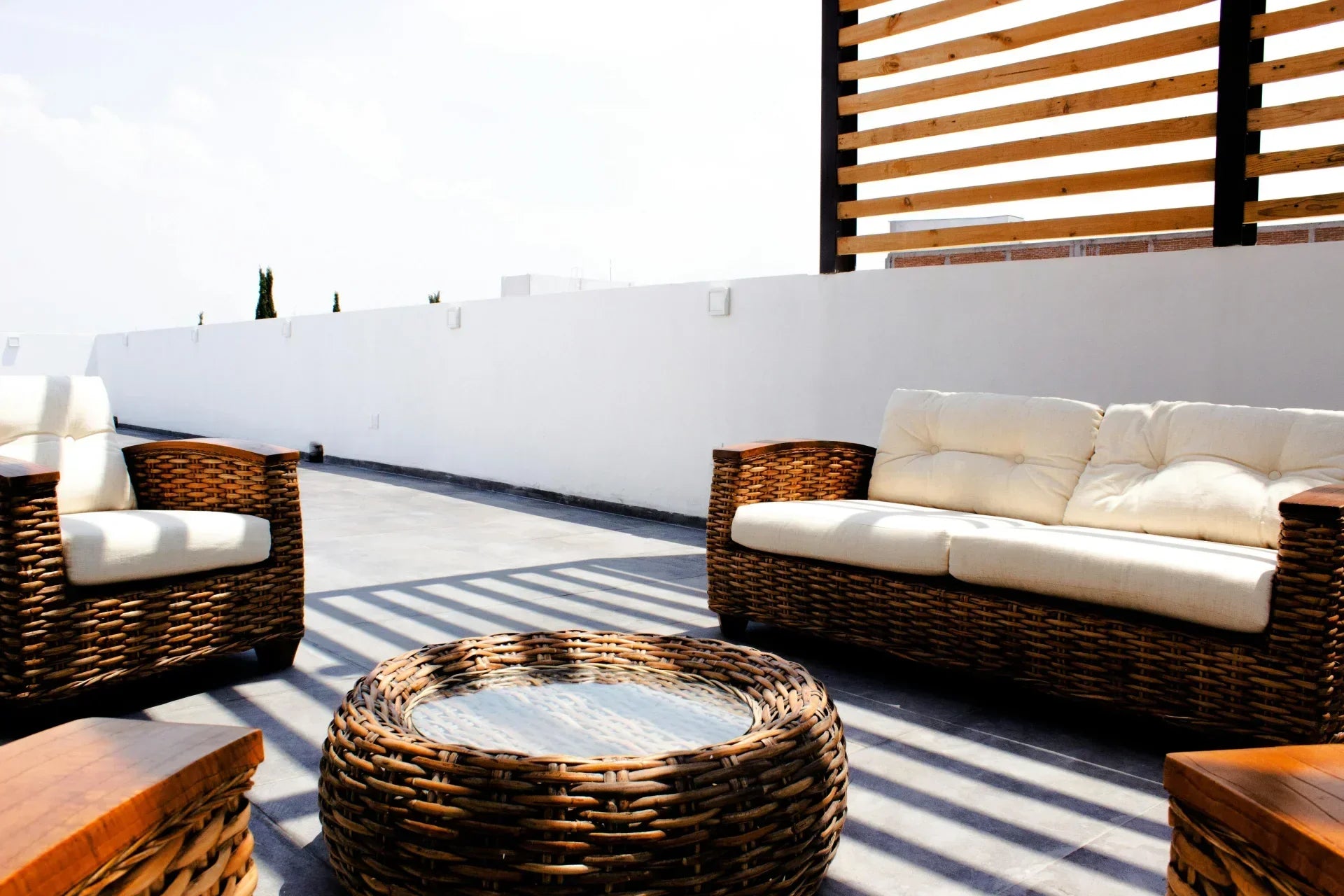
- Synthetic Wicker: Woven over an aluminium frame, it handles UV, rain, and humidity without fraying like natural wicker does. It’s low maintenance and stylish.
- Powder-Coated Steel: Stronger than aluminium, with the right coating, it resists rust well. It’s great for heavier lounge settings, though it needs to be checked for chips that expose bare material.
- Plastic/Resin: Plastic and resin are affordable, weather-resistant, and dead easy to clean, and UV-stabilised options don’t fade or turn brittle.
For softer seating, our outdoor lounges combine aluminium frames with durable synthetic weaves, perfect for our Queensland climate.
Materials to Avoid in Humid Climates
Untreated steel rusts quickly, and low-quality softwoods like pine or acacia absorb moisture, swell, and eventually rot. Cheap fabrics fade within a season and grow mildew. While opting for these materials might save you money on day one, you’ll need to replace them within a year or two.
Choosing Weatherproof Outdoor Cushions
Your frames are only half the job. Cushions are exposed to the same UV, rain, and humidity, so they need to be built to withstand it too. Weatherproof outdoor cushions use solution-dyed acrylic or polyester fabrics that resist fading, repel water, and dry quickly after a downpour.
Look for these features when choosing your cushions:
- Solution-dyed fabrics (colour goes through the fibre, not just the surface)
- Quick-dry foam or mould-resistant filling
- Removable, machine-washable covers
- UV rating noted on the label
Leaving cheap indoor cushions outdoors is a fast track to mildew and a musty smell. Spending a little more up front saves the replacement cost later.

Cleaning Outdoor Furniture the Right Way
Proper maintenance adds years to any outdoor set. The basics of cleaning outdoor furniture aren’t complicated:
- Wipe down frames every few weeks with warm water and mild soap
- Rinse off salt, pollen, or bird droppings promptly; don’t let them set
- Brush cushions weekly and spot-clean stains with a mild solution
- Cover or store pieces during winter and extreme weather
- Oil teak once or twice a year if you want to keep the warmer tone
For a deeper look at matching materials to your specific area’s climate, our guide to Outdoor Furniture for Queensland’s Climate covers regional differences in more detail, and our Outdoor Furniture in Brisbane & Queensland: Complete Guide walks through the full-setting choices.
How to Choose the Right Material for Your Space
There are four core factors to help you choose the best outdoor furniture materials that suit your place:
- Exposure: Is furniture exposed to full sun or covered under a patio? Fully exposed settings need the most UV and weather resistance.
- Location: Coastal homes need marine-grade aluminium or teak; inland homes have a bit more flexibility.
- Maintenance: Happy to oil timber (including teak or eucalyptus) once a year? Or want to hose it off and forget about it? Synthetic wicker and aluminium are the lowest-maintenance options.
- Budget: Teak sits at the premium end; powder-coated aluminium and synthetic wicker offer strong value; resin is the budget-friendly entry point.
For coastal and tropical styling inspiration, have a look at our Tropical & Coastal Outdoor guide.
Find the Right Outdoor Furniture at A2Z Furniture
Ready to furnish your patio, deck, or poolside? A2ZA Furniture holds stock in Queensland. Our range covers everything from aluminium dining settings to plush outdoor lounges, all at warehouse pricing and with flexible payment options.
Explore the full outdoor furniture range online or drop into one of our showrooms today.
Frequently Asked Questions
What is the most durable outdoor furniture material?
Dense tropical hardwoods like teak and eucalyptus are among the most durable natural options thanks to their natural oils and tight grain, which resist moisture and rot. For a lower-maintenance pick, powder-coated aluminium is equally long-lasting and won’t rust.
What furniture materials are best for humid climates?
Aluminium, quality timbers like teak and eucalyptus, and synthetic wicker (PE rattan) all handle humidity well. They resist moisture, don’t rust, and won’t grow mould when properly maintained.
Are outdoor cushions weatherproof?
Only if they’re specifically designed to be. Weatherproof cushions use water-resistant, UV-stable fabrics and quick-dry filling. Using standard indoor cushions outdoors will lead to mould growth and fading.
How do you protect outdoor furniture from sun damage?
Position pieces under shade sails, umbrellas, or pergolas where you can. Use UV-resistant covers when furniture isn’t in use, and choose solution-dyed weatherproof outdoor cushion fabrics that don’t fade.
How often should outdoor furniture be cleaned?
A quick wipe-down every two to three weeks keeps most settings looking fresh, with a deeper clean once a season. Timber pieces benefit from an annual oiling to maintain their finish, and coastal homes need more frequent rinsing to wash off salt build-up.