
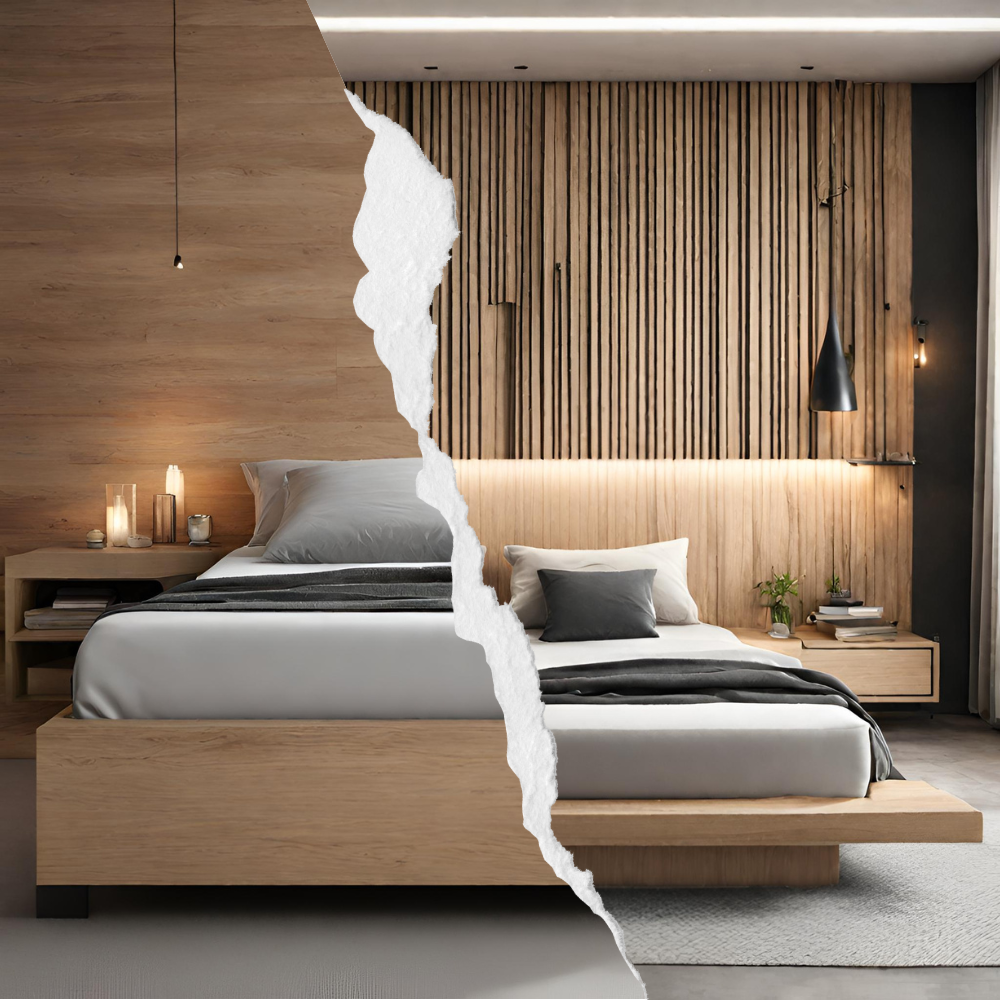
Floating Bed vs Traditional Bed Frame: Which Is Right for You?
Trying to decide between a sleek floating bed and a classic traditional frame? The right choice depends on your room size, storage needs, mattress support, preferred bed height and the overall look you want. This guide breaks down both styles clearly, so you can buy with confidence.
At The A2Z Furniture, we're a Queensland-owned, family-run furniture business established in 2013. Our team helps shoppers compare bed styles every day across our showrooms in Brisbane, on the Gold Coast, and in Ipswich and Western QLD, so this guide is built to be practical, not vague. For a complete overview of every bed frame style, our bed frame buying guide covers all materials and profiles in one place.
Quick answer
Choose a floating bed if…
You want a cleaner, more modern look, a lower profile, and a bed that visually opens up the room. Floating styles are especially popular in contemporary bedrooms and smaller spaces where visual bulk matters.
Choose a traditional bed if…
You prefer a higher sleep surface, easier under-bed storage, more classic styling, or a frame that feels substantial and familiar. They are often the more practical option for families and storage-first bedrooms.
What matters most?
- Room size and visual openness
- Storage needs
- Ease of getting in and out of bed
- Mattress compatibility and slat support
- Your preferred style: modern vs classic
Floating bed vs traditional bed: side-by-side comparison
If you just want the fast answer, this is the section to bookmark. Floating beds tend to win on aesthetics and open-room feel. Traditional beds usually win on storage, height and everyday practicality.

| Factor | Floating bed | Traditional bed |
|---|---|---|
| Look and feel | Minimal, modern, low-profile and visually light | Classic, versatile, often more substantial and grounded |
| Room size effect | Can make smaller rooms feel more open | Can feel fuller and more anchored, especially with tall headboards |
| Storage potential | Usually limited unless built with drawers or a platform extension | Often better for baskets, drawers, gas-lift storage or higher under-bed clearance |
| Bed height | Usually lower, which suits some sleepers but not all | Usually higher and easier for many people to get in and out of |
| Cleaning | Easy to vacuum around a recessed base if clearance allows | Also easy if clearance is open, but hidden dust can build under higher frames |
| Price range | Often higher because of more complex design and construction | Wider budget range, with more affordable entry points |
| Best for | Modern apartments, minimalist rooms, statement styling | Family homes, storage-led bedrooms, timeless styling |
What is it?
What is a floating bed?
A floating bed is a bed frame designed to look as though it is hovering above the floor. That effect usually comes from a recessed centre base, hidden supports or inward-set legs rather than true suspension. The result is a light, architectural look that pairs well with modern bedrooms.
Many floating beds also work beautifully with warm LED under-glow lighting, slim bedside tables and clean-lined décor. If you love contemporary styling, this is the bed style that tends to deliver the biggest visual change for the room.
What is a traditional bed?
A traditional bed frame is the style most shoppers already know: a visible frame with legs or a base, often paired with a headboard and sometimes a footboard. In Australia, traditional frames can include timber, metal, upholstered and storage designs. If you are weighing up materials, our guide to wooden vs fabric bed frames breaks down the key differences.
They are not always old-fashioned. A traditional bed can look modern too. The key difference is that its support is visually obvious, the bed often sits higher, and the frame is usually designed with practicality ahead of the "floating" illusion.
Pros and cons of floating beds
Why shoppers love them
- Modern visual impact: Few bedroom upgrades change the look of a room as quickly as a floating frame.
- Smaller-room advantage: The low profile and recessed base can make a room feel less crowded.
- Easy styling: They work beautifully with neutral palettes, timber finishes and modern lighting.
- Cleaner lines: Great for minimalist, Scandinavian-inspired and contemporary interiors.
- Strong centrepiece value: A good floating bed can become the focal point of the whole bedroom.
- Dark-finish options: Many floating frames come in black or charcoal — see our guide to styling black bed frames for ideas.
What to watch before buying
- Lower height: Some sleepers love it; others find it less convenient for everyday use.
- Less storage: The cleaner look usually comes with reduced under-bed storage flexibility.
- Higher upfront cost: Better floating beds often cost more because of build complexity.
- Support matters: Weight rating, centre support and slat spacing need careful checking.
- Wall-mounted versions: These can require professional installation and stronger wall conditions.
Pros and cons of traditional beds
Why they remain a favourite
- Practical storage: Higher frames, drawers and gas-lift options can add serious everyday utility.
- Easier entry height: Many people find a higher frame more comfortable to sit on and stand from.
- More choice: There is usually a broader range of materials, finishes and price points.
- Timeless styling: Traditional frames suit classic, Hamptons, farmhouse, upholstered and transitional rooms.
- Family-friendly: They often feel more versatile when priorities change over time.
Where they can fall short
- More visual bulk: In compact bedrooms, a chunky frame can make the room feel fuller.
- Style mismatch risk: Ornate or bulky designs can overpower minimalist rooms.
- Dust catch points: Open under-bed storage zones can attract dust if left unmanaged.
- Less "wow" factor: Practicality can be higher, but the visual transformation is often less dramatic.
How to choose the right bed for your bedroom
1) Start with room size and layout
If your room is compact, visual openness matters. A floating frame can make a tighter bedroom feel less crowded, especially when paired with slimmer bedside tables and a lighter palette. If the room is large or feels empty, a traditional bed with a taller headboard can help anchor the space.
Also think beyond the bed itself. You still need comfortable walking space, bedside access and room for drawers or robe doors to open properly.

2) Be honest about storage
If you rely on your bed for spare linen, seasonal bedding or off-season clothing, a traditional storage bed is hard to beat. Floating beds can look cleaner, but they are rarely the best answer if hidden storage is your top priority.
3) Think about daily comfort
Some people love a low bed. Others do not. If you want easier sitting height, regular under-bed access or a more familiar sleep setup, traditional beds often feel more convenient in everyday use.
4) Match the style to your home
Floating beds look strongest in modern, minimalist and contemporary rooms. Traditional beds work across far more aesthetics, from timber-led classics to upholstered statement suites.
Mattress support matters more than most blogs mention

The bed frame does not just hold the mattress. It affects support, airflow, long-term wear and sometimes warranty cover. Australian guidance from mattress and bedding businesses commonly states that larger sizes need proper centre support and slat spacing should stay fairly tight. For example, ABC Australasia says slats should be no more than 7cm apart and double sizes and above need a centre rail, while Latex Mattress Australia says king-sized beds need a centre support rail and wide slat gaps should be avoided.
That means the smartest question is not just "floating or traditional?" It is also "Does this frame support my mattress properly?" If you are pairing a new frame with a new mattress, see our mattress buying guide before checkout.
Sleep quality is not just about the mattress
A supportive bed is part of a better sleep setup, but the overall sleep environment matters too. The Australian Sleep Health Foundation recommends an optimal sleep environment, including a comfortable sleep surface and control of factors like noise and temperature. That is one reason bed height, room feel, airflow around the mattress and ease of cleaning can all matter more than they first appear.
If your bedroom tends to feel crowded, dusty or hard to move around in, a different frame style can improve how the room functions night after night.
Which bed is best for you?
Choose floating if your priority is style
Go floating if you want a clean, designer look, a visually larger room and a bed that instantly modernises the bedroom.
Choose traditional if your priority is function
Go traditional if you want practical storage, more height, broader design choice and a frame that adapts easily as your needs change.
Still unsure?
Measure your room, think about what you store, and decide whether your bedroom needs more visual calm or more practical function. That usually reveals the right answer quickly.
Why Queensland shoppers can trust this guide
The A2Z Furniture is an Australian-owned, family-run business established in 2013 (ABN 18 163 199 979), with showrooms across Brisbane, on the Gold Coast, and in Ipswich and Western QLD: Rocklea, North Ipswich, Beenleigh, Virginia and Bundall. That local footprint matters when you want to compare bed height, finishes and scale in person instead of guessing from photos.
Shop the bed style that suits your room
If you know which direction you're leaning, start with one of these hand-picked paths on our site.
Lauren Floating Bed Frame
For shoppers who want a sleek, low-profile floating look.Chandler Floating Bed Frame
For a stronger designer statement with coordinated bedroom styling.Leone Wooden Bed Frame
For a classic, solid bed with a more traditional presence.Browse all bed frames
Compare modern, traditional, timber, upholstered and storage options.Wooden bed frames
Ideal if you prefer classic materials and timeless bedroom styling.Storage bed options
Perfect when practicality and hidden storage matter most.Need help choosing between floating and traditional?
Visit a showroom to compare bed height, finish, visual scale and comfort in person. Our Queensland team can also help you match your frame to your mattress size, support needs and delivery area.
Helpful next steps:
- Measure your mattress and room first
- Check slat spacing and centre support
- Decide whether storage or style matters more
- Compare floating and traditional frames side by side
Under Australian Consumer Law, warranties sit alongside automatic consumer guarantees. See the ACCC warranty guidance for more detail.
Frequently asked questions
Are floating beds safe for everyday use?
Yes, provided the frame is well engineered, correctly assembled and suitable for your mattress and sleeper weight. Check the weight rating, centre support and construction details before buying. Wall-mounted styles need especially careful installation.
Do floating beds need a special mattress?
Not always, but the frame must support the mattress properly. Always check mattress compatibility, slat spacing and centre rail requirements. If you are buying a new mattress too, review our mattress buying guide first.
Are traditional beds better for storage?
In most cases, yes. Traditional frames more often allow under-bed baskets, drawers, shelves or gas-lift storage. If extra storage is a core requirement, traditional styles usually offer more options.
Which bed is better for a small bedroom?
Floating beds often make smaller rooms feel more open because they look lighter and sit lower. That said, a compact traditional storage bed can still be the smarter choice if you need every bit of extra storage space.
Can I see floating and traditional beds in person in Queensland?
Yes. A2Z Furniture has five South-East Queensland showrooms across Brisbane (Rocklea, Virginia, Beenleigh), the Gold Coast (Bundall), and Ipswich (North Ipswich). You can contact our team here for store details and advice.
Related guides
This comparison is part of A2Z Furniture's bed frame buying series. These guides are worth reading alongside it:
- Complete bed frame buying guide — covers every style, material and size consideration in one place
- Wooden vs fabric bed frames — a deeper look at materials for both floating and traditional frame styles
- Black bed frames: how to style them — floating frames often come in black and charcoal finishes; this guide covers styling ideas and what to look for