
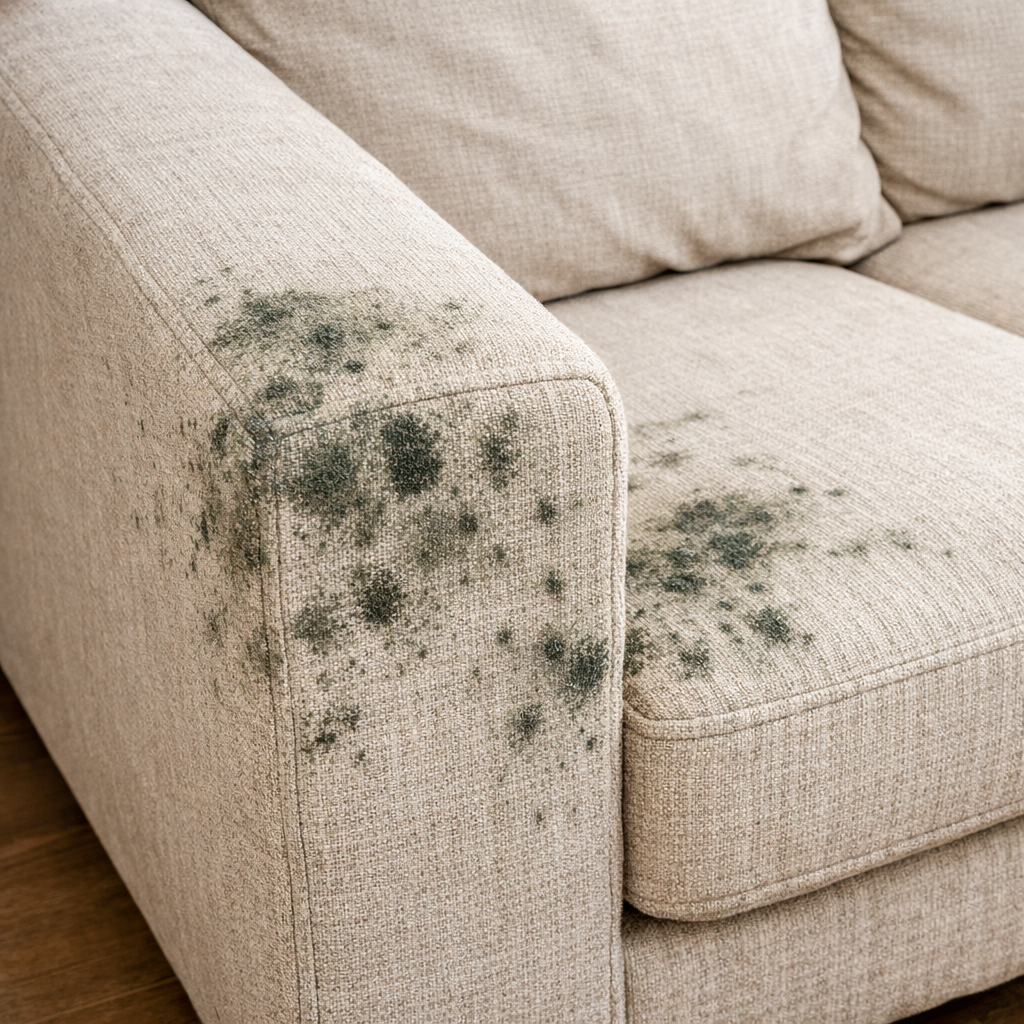
Noticed musty smells or dark spots on your fabric lounge? This guide shows safe, fabric-friendly ways to remove mould, lift stains, and prevent it coming back—especially in Queensland’s humid conditions.
Local note: The A2Z Furniture is based in Queensland with 5 showrooms across SE QLD. For recurring mould issues, we can help you choose materials and care products that suit our climate.
Before you start: Safety first (don’t spread spores)
Avoid dry brushing or aggressive dry scrubbing—this can send spores airborne and spread mould. Queensland Government guidance includes safe cleaning steps and cautions to reduce exposure risk. Queensland Government mould guidance .
Wear basic PPE
- Gloves (wash hands after)
- Eye protection if you’re sensitive
- A well-fitted mask for airborne particles (P2/N95 style) when dealing with visible mould or musty dust
If you have asthma/allergies or feel unwell, pause and seek medical advice. healthdirect has mould health guidance: healthdirect — mould health information .
Set up the area
- Move the item outdoors or into a well-ventilated space
- Open windows / use fans to exhaust air out
- Keep kids/pets away during cleaning and drying
- Have clean cloths ready (swap often so you don’t smear spores)

Step 1: Identify your fabric (this prevents damage)
The safest mould removal method depends on your upholstery fabric and care label. If you’re unsure, test any solution on a hidden area first (back hem or underside of cushion).
| Fabric type | What it’s sensitive to | Best approach |
|---|---|---|
| Microfibre / polyester blends | Over-wetting can leave water marks | Light mist + blot, fast drying, gentle brush after fully dry |
| Natural fibres (cotton/linen blends) | Can stain or shrink if soaked | Minimal moisture, controlled spot treatment, thorough drying |
| Bouclé / textured weaves | Spore residue can sit deep in texture | HEPA vacuum after drying + repeat gentle treatment if needed |
| “S” solvent-only care labels | Water-based cleaning may damage | Stop DIY and consult a professional upholstery cleaner |
Helpful reading: our general care guidance is here — Product Care.
Step 2: Remove mould from fabric upholstery (safe, effective method)
This method focuses on: removing spores, lifting staining, and drying fast. Faster drying matters in QLD humidity (mould rebounds when moisture stays trapped).
-
Dry the surface first
If the couch feels damp, run fans and open windows before applying any cleaner. Moisture control is one of the biggest drivers of long-term mould reduction. Read more on dampness and home health: CSIRO AHD — mould & home health . -
Vacuum with a HEPA filter (if available)
Use a soft brush head. If you don’t have HEPA, vacuum carefully and empty the canister outdoors. Skip aggressive dry brushing—this can spread spores. See Queensland Government guidance: qld.gov.au mould guidance . -
Apply a gentle cleaner (spot-test first)
For many fabrics, a mild detergent solution can work well, and white vinegar is commonly used as a household option when applied correctly. Queensland Government cleaning guidance .- Option A (gentle): mild detergent + water (lightly dampen cloth, don’t soak)
- Option B (common household): white vinegar solution applied as a light mist, then blot
Avoid mixing chemicals. If you’re unsure, use the gentle option first.
-
Blot (don’t rub) and rotate clean cloths
Work from the outside edge of the patch inward. Replace cloths often. -
Rinse lightly (only if fabric allows)
If you used detergent, wipe with a separate cloth lightly dampened with clean water to remove residue. -
Dry fast — the “mould comeback” stopper
Use fans, airflow, and (if you have one) a dehumidifier. Sunlight can help where practical. CSIRO highlights the importance of reducing dampness and improving ventilation to reduce mould risk: CSIRO — dealing with mouldy houses .

If mould is widespread, keeps returning, or came after flooding: Queensland Health provides mould advice after disasters and emphasises reducing exposure and cleaning safely: Queensland Health — mould advice .
Step 3: Treat mould stains and musty odours
Removing staining (after mould is gone)
- Repeat gentle spot treatment rather than soaking
- Don’t over-wet cushion seams (slow to dry)
- Professional cleaning is best for delicate fabrics or “S” solvent-only labels
Removing “mildew smell”
- Dry thoroughly (odour often = trapped moisture)
- Ventilate the room and increase airflow behind/under the lounge
- Consider a fabric deodoriser designed for upholstery (avoid heavy perfumes that mask the issue)
If you’re planning a deeper clean, our guide may help: How to Steam Clean Your Couch. Note: steam can help in some cases, but moisture control + fast drying are essential.
When DIY is NOT worth it (call a professional)
- Large areas (e.g., multiple cushions or the whole backrest)
- Recurring mould within days/weeks (moisture source not fixed)
- After flood/storm water exposure or if the couch smells “sour” even after drying
- High-risk households: asthma, allergies, immune conditions, elderly, infants (health guidance varies; use caution). Reference: healthdirect — mould health information .
- Solvent-only (“S”) care labels
How to prevent mould on fabric furniture (Queensland humidity playbook)
Placement & airflow
- Keep lounges a few cm off walls so air can circulate
- Avoid pushing fabric furniture into damp corners or against unventilated external walls
- Use fans on humid days; run A/C “dry mode” if available
Moisture control
- Fix leaks promptly (roofing, plumbing, window seals)
- Use a dehumidifier during long wet spells
- Dry wet throws/cushions immediately after storms

Protective care products (optional, but helpful)
After the couch is fully clean and dry, a fabric protector can help reduce liquid absorption and make future cleaning easier. Explore our fabric care range here: Fabric Furniture Care.
Trusted references (for safer decisions)
- Queensland Government — mould safety and cleaning cautions: qld.gov.au mould guidance
- Queensland Health — mould after disasters and exposure considerations: health.qld.gov.au mould advice
- healthdirect — mould health information and when to seek care: healthdirect mould topic
- CSIRO — practical guidance on managing mould and reducing dampness: CSIRO dealing with mouldy houses
These outbound references strengthen EEAT and help readers make safer choices.
FAQs
Can I use vinegar to remove mould from a fabric couch?
Vinegar is commonly used as a household option. Always spot-test first, apply lightly (don’t soak), blot rather than scrub, and dry fast. For widespread or recurring mould, consider professional help. Queensland Government guidance: qld.gov.au mould guidance .
Should I scrub mould off upholstery?
Avoid aggressive dry scrubbing or dry brushing, which can spread spores. Use gentle application, blotting, and frequent cloth changes, then dry the upholstery quickly. Queensland Government mould guidance .
How do I get rid of the musty smell after cleaning?
Odour usually means moisture is still trapped. Increase ventilation, use fans and/or a dehumidifier, and ensure cushions and seams dry completely. Moisture reduction and ventilation are key mould controls: CSIRO mould guidance .
Is mould on furniture a health risk?
Mould exposure can affect some people (especially those with asthma or allergies). If symptoms occur, stop cleaning and seek advice. Queensland Health and healthdirect provide guidance: Queensland Health and healthdirect .
When should I call a professional instead of DIY?
Call a professional if the mould is widespread, returns quickly, follows flood/storm exposure, or the care label indicates solvent-only cleaning. Queensland Health post-disaster mould guidance: health.qld.gov.au mould advice .
How can I prevent mould in Queensland’s humidity?
Focus on moisture control: airflow behind furniture, dehumidifier during wet spells, quick drying after spills, and addressing leaks promptly. CSIRO highlights ventilation and reducing dampness: CSIRO dealing with mouldy houses .
About The A2Z Furniture
The A2Z Furniture is a Queensland-based furniture retailer with showrooms across SE QLD. We share practical care guides to help customers protect their investment—especially in our humid climate. For store locations and support, visit: Contact Us.