
Furniture Care Guide · The Furniture Canvas
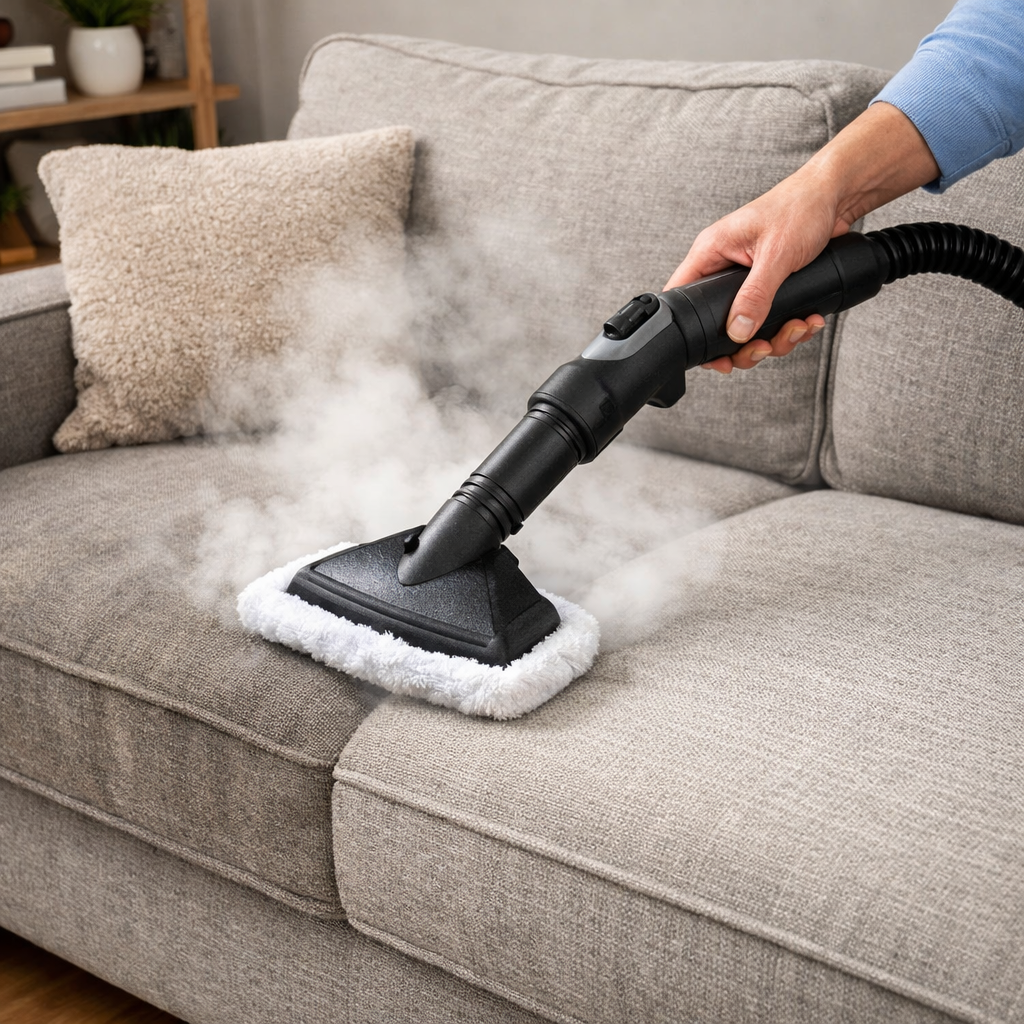
Steam cleaning is one of the fastest ways to bring a tired fabric couch back to life — but it's also one of the easiest jobs to get wrong. Too much moisture, the wrong material, or skipping the care tag can leave you with water rings, a musty smell, or a lounge that stays damp for days in Queensland's humidity. Here's how our team approaches it, and where steam cleaning simply isn't the right tool.

The short version. Check the care tag first — steam is generally fine for "W" or "WS" fabric codes, off-limits for "S" and "X". Steam is not recommended for leather or PU leather sofas, where heat and moisture can dry out and damage the surface — use a leather-specific cleaner instead. Vacuum thoroughly before you steam, work in short passes, blot as you go, and prioritise fast drying to avoid rings and odours in Queensland's humidity.
In this guide
Is steam cleaning safe for your couch?
Start with the care tag, usually found under a seat cushion or along the underside of the frame. The code tells you exactly what the fabric can handle. Steam uses moisture and heat together, so if your couch is coded "W" or "WS/W-S", it's generally safe to proceed after a spot test. If it's coded "S" (solvent-only) or "X" (vacuum-only), skip DIY steaming altogether and call a professional.
Materials that don't suit DIY steam cleaning
- Leather and PU leather — heat and moisture can dry out the surface and damage the finish (more on this below).
- Delicate or luxury weaves — may shrink, watermark or flatten under steam.
- Unsealed cane, rattan or woven panels — can warp with moisture.
- Veneered timber trim — steam can weaken glued joints and finishes.
If you're unsure, treat steam cleaning like a patch test for hair dye: try a hidden area first, then wait for it to fully dry before judging the result.
Why steam cleaning isn't for leather

This is worth being direct about: steam cleaning is a fabric-and-fibre technique, not a leather one. Genuine leather has a natural, breathable surface with an oil and moisture balance built into its finish. The combined heat and moisture from a steam cleaner strips that balance out, which can leave the leather dry, stiff or prone to cracking over time — the opposite of what you're trying to achieve. PU (faux) leather doesn't fare much better; the high heat can soften and damage the surface coating.
If you own a leather or PU leather sofa, the right approach is a leather-specific cleaner and conditioner, applied with a soft cloth, followed by conditioning every few months to keep the surface supple — especially in Queensland's humidity. If you're set on the steam-clean routine, it's a genuine reason to consider a fabric sofa for your next lounge purchase instead.
Shop the range
Whether you're refreshing a fabric couch or replacing one that's past saving:
What you'll need
| Category | Items |
|---|---|
| Tooling | Steam cleaner with upholstery attachment, vacuum with upholstery tool, soft brush for seams |
| Consumables | Distilled water (recommended), white microfibre cloths (no dye transfer), a fabric-safe pre-treat if the label allows it |
| Drying helpers | Fan, open windows, a dehumidifier if you have one, clean towels for blotting |
Distilled water is worth using where possible — it reduces mineral residue and helps avoid water marks, especially if your local tap water is hard. If you're hiring a machine, look for one with an upholstery hand-tool attachment; several major retailers hire these out.
Step-by-step: steam clean your couch
1. Do a fabric safety check and spot test
Confirm the care code first (avoid DIY steam for "S" and "X"). Test a hidden area with one small steam pass, blot it, and let it fully dry. Only proceed if there's no colour bleed, rings, shrinkage or texture change.
2. Vacuum thoroughly
Remove cushions and vacuum all sides. Use the crevice tool along seams, piping and between cushions, and brush out stubborn pet hair before a second vacuum pass.
3. Pre-treat stains only if the tag allows it
Blot spills rather than scrubbing them — scrubbing spreads the stain and fuzzes the fibres. Use a fabric-safe pre-treat matching the care code, let it dwell briefly, then blot excess moisture before steaming.
4. Steam in short passes — don't over-wet
Work in small sections, about the size of a tea towel. Keep the tool moving fast enough to avoid soaking the fabric but slow enough to lift grime. After each section, blot with a clean white microfibre cloth. Do cushions first, then the frame, arms and backrest.
5. Dry fast and evenly
Open windows, run a fan, and use a dehumidifier if you have one. Keep cushions upright so air reaches both sides, and avoid direct heat, which can cause uneven drying and rings.

Quick stain prep before steaming
Steam works best once you've removed the "bulk" mess first. Use this guide only if your care tag allows water-based cleaning.
| Stain type | What to do first | What to avoid |
|---|---|---|
| Food & soft drink | Blot, lightly dampen a cloth, blot again, then steam in short passes | Scrubbing hard — it pushes sugar deeper into the fibres |
| Coffee/tea | Blot quickly, minimal moisture, steam lightly | Over-wetting, which causes water rings |
| Body oils / headrest grime | Vacuum and soft-brush, gentle label-safe pre-treat, then steam in short passes | Holding heat in one spot |
| Pet accidents | Blot thoroughly, use an enzyme cleaner if label-safe, let it dwell, blot dry, then steam lightly | Masking the smell without removing the source |
If a stain keeps reappearing after drying, it's usually "wicking" — moisture pulling soil back to the surface. Reduce moisture, increase blotting, and prioritise faster drying next time.
Drying time in Queensland's climate
Most couches dry the same day if you keep moisture low and airflow high. In humid weather, plan for longer. Run a fan across the couch rather than directly into one spot, and stand cushions upright to expose all sides to the air.
Drying checklist
- Open windows where the weather allows it
- Run a fan and dehumidifier together for the fastest result
- Blot any damp zones with a dry towel
- Don't sit on the couch until it's fully dry
Still damp hours later? You likely used too much moisture — repeat with shorter passes next time and increase airflow immediately.
Common mistakes to avoid
- Over-wetting. Too much steam means slow drying, odours, water rings, and potential dampness inside the cushions.
- Skipping the care tag. Fabric codes exist for a reason — treat "S" and "X" as a no-DIY zone.
- Parking the nozzle. Holding steam in one spot can flatten fibres, discolour fabric, or create water marks.
- Steaming leather. Even a "quick pass" on leather or PU leather risks drying out the surface — always use a leather-specific cleaner instead.
When to call a professional
Some situations are better left to a professional upholstery cleaner:
- Your care tag says "S" or "X"
- The couch is vintage, delicate, or has an unknown fabric history
- You see water rings, colour bleed, or persistent odours after drying
- The stain is large, old, or keeps wicking back after cleaning
Beyond a refresh? If a couch has gone past what cleaning can fix, it may be time for an upgrade. Browse our sofas and lounges range across fabric, leather and modular styles.
Popular fabric sofas
Easy-care fabric sofas our customers keep coming back to:
FAQs
Can you steam clean a fabric couch at home?
Yes — if the care label allows it (typically "W" or "WS") and you spot test first. Work in small sections, keep the tool moving, and prioritise fast drying.
Is steam cleaning safe for leather couches?
No — steam cleaning is not recommended for leather or PU leather. The heat and moisture can dry out the surface and damage the finish. Use a leather-specific cleaner and conditioner instead.
How long does a couch take to dry after steam cleaning?
It depends on fabric thickness, how much moisture you used, and airflow. In humid Queensland conditions, allow extra time and speed it up with fans, open windows and a dehumidifier.
Should I use distilled water in my steam cleaner?
It's a good idea. Distilled water reduces mineral residue and helps avoid water marks, especially where local tap water is hard.
What if my couch has an "S" or "X" cleaning code?
Avoid DIY steam cleaning. "S" fabrics typically need solvent-only products, and "X" means vacuum-only or professional cleaning. When in doubt, call a professional upholstery cleaner.
My couch still smells musty after steam cleaning — what happened?
This is almost always a drying issue — too much moisture went in and not enough airflow got it back out. Next time use shorter passes, blot more, and dry with a fan and dehumidifier running together. If the smell persists, a professional clean may be needed.
Written by the A2Z Furniture team — five South-East Queensland showrooms, family-owned and operated since 2013. Last updated July 2026.