
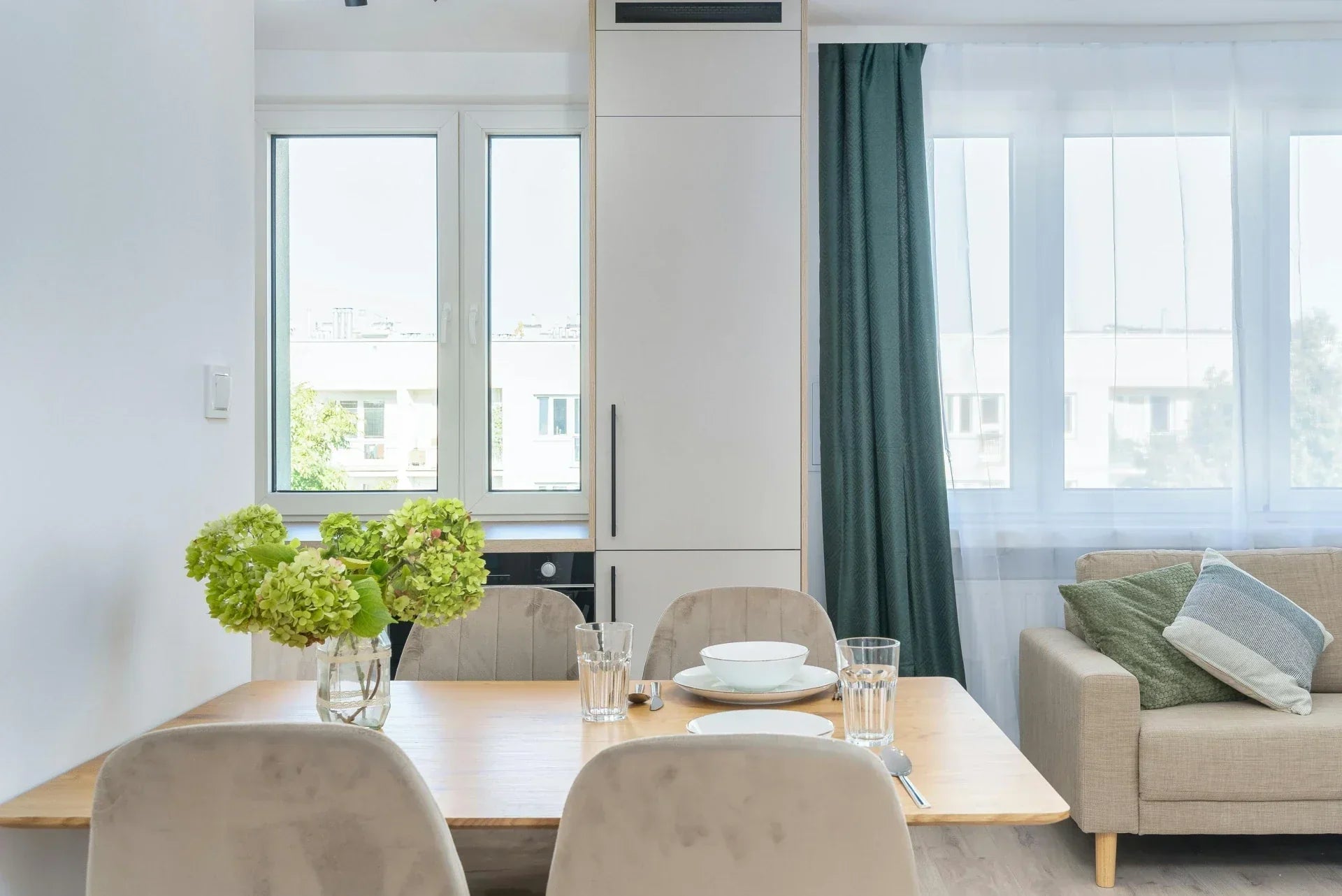
The dining table is where birthdays are celebrated, homework is finished, and Sunday lunches stretch into the afternoon. With so many daily and special moments happening around the dining table, it’s important to get the right size for your space, family and lifestyle.
This dining table size guide walks you through measuring your space, matching a table to your room, and planning a layout that actually works. The aim isn't just fitting the table in; it's leaving enough room for chairs, walkways, and easy movement around it.
Top Tips
- Always measure usable space, not just total room dimensions
- Allow at least 90 cm of clearance between the table edge and any wall or furniture
- Match the table size and shape to the room’s proportions, not just your seating wishlist
- Confirm seating capacity based on regular use, not occasional gatherings
- Map out the full layout (table, chair, sideboard, walkways) before you buy
What Size Dining Table Do You Need?
The right dining table comes down to three things: room dimensions, the number of people you seat, and the amount of space you need to move around comfortably.
Knowing how to choose your dining table size starts with the clearance around the table, not just the table itself. Allow around 60 cm of table edge per person and 90 cm of clearance on every side so chairs can pull out and people can walk past without squeezing.
Standard Dining Table Sizes and Seating Capacity
Use this dining table size guide as a quick reference when comparing options:
|
Seats |
Rectangular (cm) |
Round (cm) |
Square (cm) |
|
4 |
120 x 75 |
90-100 |
90 x 90 |
|
6 |
180 x 90 |
120-140 |
140 x 140 |
|
8 |
210-240 x 100 |
150-180 |
N/A |
Shape matters as much as size. Rectangular tables seat the most and suit long rooms. Round tables ease traffic flow and work well in smaller spaces. Square tables sit neatly in compact or square layouts.
How to Measure Space for a Dining Table
Here’s how to measure space for a dining table properly:
- Measure the full length and width of your dining area in centimetres
- Subtract space taken up by walkways, doorways, and other furniture like buffets or sideboards
- Mark out the table’s footprint on the floor with masking tape so you can see how it sits in the room
- Keep 90cm clear on all sides for chairs.
In an open-plan space, factor in how the table sits in relation to the kitchen island or living area.
Choosing the Right Table Shape for Your Room
Matching the table’s shape to your room’s shape almost always gives a better result.
- Rectangular suits long, narrow dining rooms and households that entertain often.
- Round tables improve flow in smaller or square rooms where capacity matters less than movement.
- Square options fit in compact spaces and feel intimate for daily family meals.

How Dining Table Size Affects Layout and Flow
A table that’s too big swallows the room and makes every meal feel tight. A table that’s too small leaves the space feeling empty and unfinished. Beyond the table itself, consider the other furniture pieces, including chairs, side tables, or buffets and how they fit in the space.
Use this dining table size guide as your starting point: visual balance and clear walkways are what make your dining area feel finished, not crammed.
Common Mistakes to Avoid
- Choosing by seat count alone without measuring the room
- Skipping the 90cm clearance rule
- Ignoring the room’s shape when picking the table shape
- Forgetting other furniture, like sideboards or display cabinets
- Sizing for the maximum number of guests rather than everyday use
Most of the time, when learning how to measure space for a dining table, people focus on the table and forget the room around it, and that’s where things go wrong.
Choosing the Right Dining Table for Your Lifestyle
Consider how you’ll actually use it. A four-seater suits couples and small families. A six-seater handles regular guests. If you entertain occasionally but want everyday space, an extendable table gives you both.
Browse our dining tables collection or the wider dining room furniture range. For something with more presence, shop elegant black & gold dining furniture for warmth and character.
Find the Right Dining Table for Your Space
A great dining setup starts with the right size and shape for your room. With this dining table size guide in hand, you’ll be set up to choose with confidence. At A2Z Furniture, we stock a wide range of dining tables across every size and style, with fast delivery and flexible payment options.
Explore the range online, visit one of our showrooms, or read our expert furniture arrangement guide for layout inspiration. If sticking to a budget is important, our Mastering the Art of Calculating Your Furniture Budget article can help.
Frequently Asked Questions
How much space do you need around a dining table?
We recommend allowing at least 90 cm of clearance on all sides so chairs can pull out and people can move around the space comfortably. If the table sits near a wall, 60 cm may be enough on the wall side.
How do you measure space for a dining table?
Measure the room’s full length and width, subtract walkways and other furniture in your dining room, then mark the table’s footprint on the floor with tape. Before committing to a size, confirm there’s 90 cm of clear space on all sides.
Is a round or rectangular table better for small spaces?
Round tables generally suit small spaces better as they remove sharp corners and improve flow. Rectangular tables seat more people but need more length. A round 90 to 100 cm four seater or a 120 cm by 75 cm rectangular four seater works well in small dining areas, as both keep walkways clear and accessible.
How many people can fit at a dining table?
Allow about 60 cm of table edge per person to ensure they have enough space to eat comfortably. A 180 cm rectangular table can comfortably seat six, while a 120 cm round table seats around four to five.