
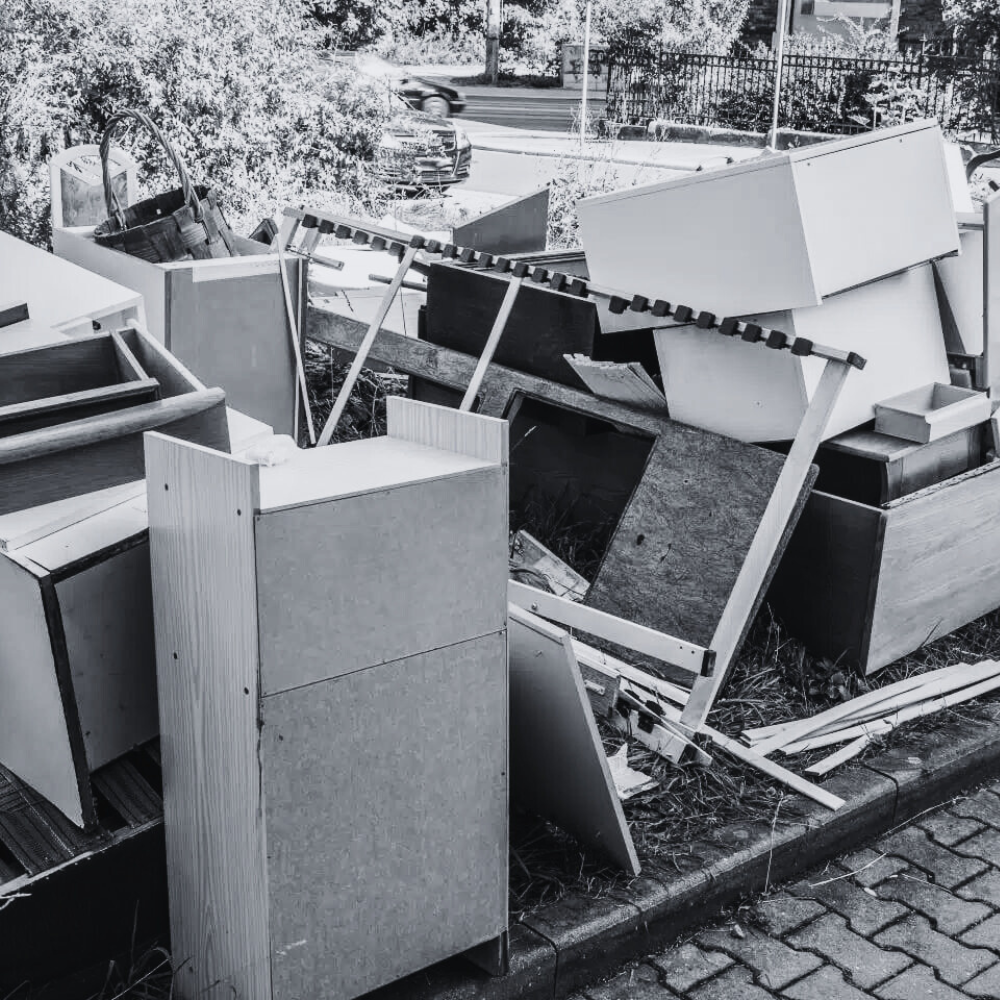
Upgrading your home? Before you drag that couch to the kerb, use this practical guide to choose the most responsible option—donate, sell, recycle, book council kerbside, or drop off at a facility. We’re based in Queensland, so you’ll see QLD-first tips throughout.

On this page
Quick decision guide (save this)
The most responsible path is usually: Reuse → Repair → Donate/Sell → Recycle → Dispose. Use the cards below to choose the best next step in under 30 seconds.
✅ Still sturdy & safe?
Donate or sell first. This keeps bulky items out of landfill.
🛠️ Minor damage only?
Consider repair or upcycle. Even a small fix can make it donatable.

❌ Broken / unsafe?
Use council collection or a drop-off facility—and recycle what you can.
Step 1: Check condition, cleanliness & safety (5-minute checklist)
Is it safe to reuse?
- No sharp edges, broken legs, exposed staples, or unstable frames.
- For beds/sofas: no severe sagging, and the frame feels solid.
- For kids’ furniture: no missing parts, and stable on the floor.
Is it clean and pest-free?
- Wipe down hard surfaces; vacuum upholstery thoroughly.
- Ensure items are completely dry (mouldy furniture is rarely accepted by charities).
- If there’s any pest concern, choose recycling/disposal over donation.
Can you move it safely?
- Measure doorways and lifts; remove legs where possible.
- Get help lifting heavy pieces to avoid injury.
Photo checklist (for selling/donating)
- Front + side + close-up of any wear
- Brand/label photo (if available)
- Measurements in one photo (tape visible)

Option A: Donate furniture (best for the planet—if it’s reusable)
Donation is ideal when the item is clean, complete, and safe. Many charities publish “what we accept” rules—check those before arranging a pickup.
Donation do’s
- Donate during opening hours or via a booked pickup.
- Be honest about wear (small scuffs are usually fine; structural damage often isn’t).
- Clean and dismantle large items if requested.
Donation don’ts
- Don’t donate broken, unsafe, wet or mouldy items.
- Don’t leave goods on the footpath “for someone to take”.
- Don’t dump outside op shops after hours.

Helpful official donation links (Australia-wide)
Option B: Sell or give away (fast, local, and keeps items in use)
If you’ve got a solid piece that still has life left, selling or giving it away is often the quickest path. Add measurements, delivery notes, and clear photos to reduce back-and-forth.
Best practice listing template
- Title: “3-seater fabric sofa – sturdy frame – pick up only”
- Include: dimensions (W×D×H), age (approx.), material, condition notes
- Pickup: suburb, stairs/lift info, whether you can help load
Quick safety tips
- Keep pickups to daylight hours.
- Have a second person home if possible.
- Use contactless payment methods where practical.
Option C: Council kerbside / hard rubbish (QLD-friendly walkthrough)
Council services are the “rules-based” way to dispose of bulky items when donation/sale isn’t suitable. Always check your local council for dates and acceptable items first.
Brisbane example (if you’re in Brisbane City Council area)
- Brisbane residents can use the council’s annual kerbside collection for large household items.
- Check the kerbside collection calendar and the acceptable/unacceptable list before putting items out.
Not in Brisbane?
Use a location-based directory to find the right option for your suburb, then confirm details on your council site.
Option D: Drop-off facilities & resource recovery centres (Brisbane + general)
If the item isn’t suitable for reuse, drop-off centres can help separate recyclable materials and dispose of what’s left. Fees may apply depending on item type and load.
Brisbane resource recovery centres
- Can accept a range of household items for recycling/disposal.
- Mattresses may require payment on entry.
- Good-quality reusable items can be diverted to reuse channels (e.g., tip shop pathways).
Donation through “tip shop” reuse (Brisbane)
Brisbane’s Treasure Troves sell quality second-hand items donated via resource recovery centres—great for keeping usable furniture in circulation.
- Only donate clean, undamaged, usable items.
- Ask staff where to drop “reuse” items when you arrive.

Material-by-material recycling tips (so you recycle more, dump less)
🪵 Timber furniture
- Remove metal hardware if easy (handles, brackets).
- Keep timber dry and stacked for drop-off.
- Painted/treated wood rules vary—confirm with your facility.
🔩 Metal frames
- Disassemble bed frames where possible.
- Bundle small parts (bolts/screws) in a bag.
- Many centres separate scrap metal for recycling.
🛏️ Mattresses
- Mattresses are bulky—choose a proper recycling route if available.
- Look for specialist mattress recyclers or council-supported programs.
Find the right option for your suburb (Australia-wide)
The fastest way to confirm what’s available where you live is to search by postcode/suburb and material type:
What not to do (and why it matters)
Avoid illegal dumping
In Queensland, illegal dumping includes leaving items on the footpath outside organised collection days or outside charity bins/shops. It can also apply to larger waste volumes (around a wheelie bin size and above).
Common “oops” moments
- Putting furniture out weeks early “so someone can take it”
- Leaving donations outside an op shop after hours
- Mixing unacceptable items into kerbside piles
A2Z Furniture (QLD): quick links
If you’re replacing old pieces, we can help you find furniture that suits Queensland living—from outdoor settings to everyday essentials. We have 5 stores across QLD.
Shop outdoor furniture
Ready for an upgrade? Explore outdoor furniture for Brisbane, Ipswich, Bundall and Sandgate.
Browse outdoor furnitureFind your nearest store
Need help choosing the right size, material, or care tips? Contact your closest A2Z store.
Contact us / Store locationsSources & further reading (trusted)
- Brisbane City Council – kerbside collection
- Brisbane City Council – acceptable kerbside items
- Brisbane City Council – resource recovery centres
- Queensland Government – illegal dumping
- Planet Ark – Recycling Near You directory
- Soft Landing – mattress recycling
- Vinnies – donate goods
- Salvos Stores – donation guide (PDF)
FAQs
Can I put old furniture on the kerb anytime?
Usually no. Only put items out during your council’s scheduled kerbside/hard rubbish window (or by booking a service if your council requires it). Putting items out at the wrong time can be considered illegal dumping in Queensland.
What furniture is generally OK to donate?
Clean, complete, safe furniture that you’d be happy to give to a friend (no major stains, mould, pests, missing parts or structural damage). Always check the charity’s “what we accept” guidelines before organising pickup.
What’s the best way to dispose of a broken couch?
If it’s unsafe or beyond repair, use council kerbside collection (if available) or take it to a resource recovery centre/tip. Recycling options depend on materials (timber/metal can be separated at some facilities).
Do drop-off centres charge fees?
It depends on your council and the type/size of your load. Some items are free to recycle, while bulky waste and mattresses may attract fees. Check your local facility page before you go.
How do I recycle a mattress in Australia?
Look for specialist mattress recycling services (where available) or council-supported options. Some councils also accept mattresses at waste facilities for a fee.
Where can I find the right option for my suburb?
Start with your local council’s waste page and cross-check using a location-based directory like Planet Ark’s Recycling Near You, then confirm details (dates, limits, accepted items) on the official council page.
Can I leave donations outside an op shop after hours?
Avoid it. Unattended items can be treated as dumping, can be damaged by weather, and can create cleanup costs for charities. Use opening hours or arrange a proper pickup/drop-off.
What’s the most eco-friendly choice overall?
Reuse first: repair/upcycle, donate, or sell. If reuse isn’t possible, recycle by material where facilities exist, then use council services or drop-off centres for what can’t be recovered.
Note: Disposal rules and accepted items vary by council and facility. Always confirm current requirements before placing items out or dropping off.