
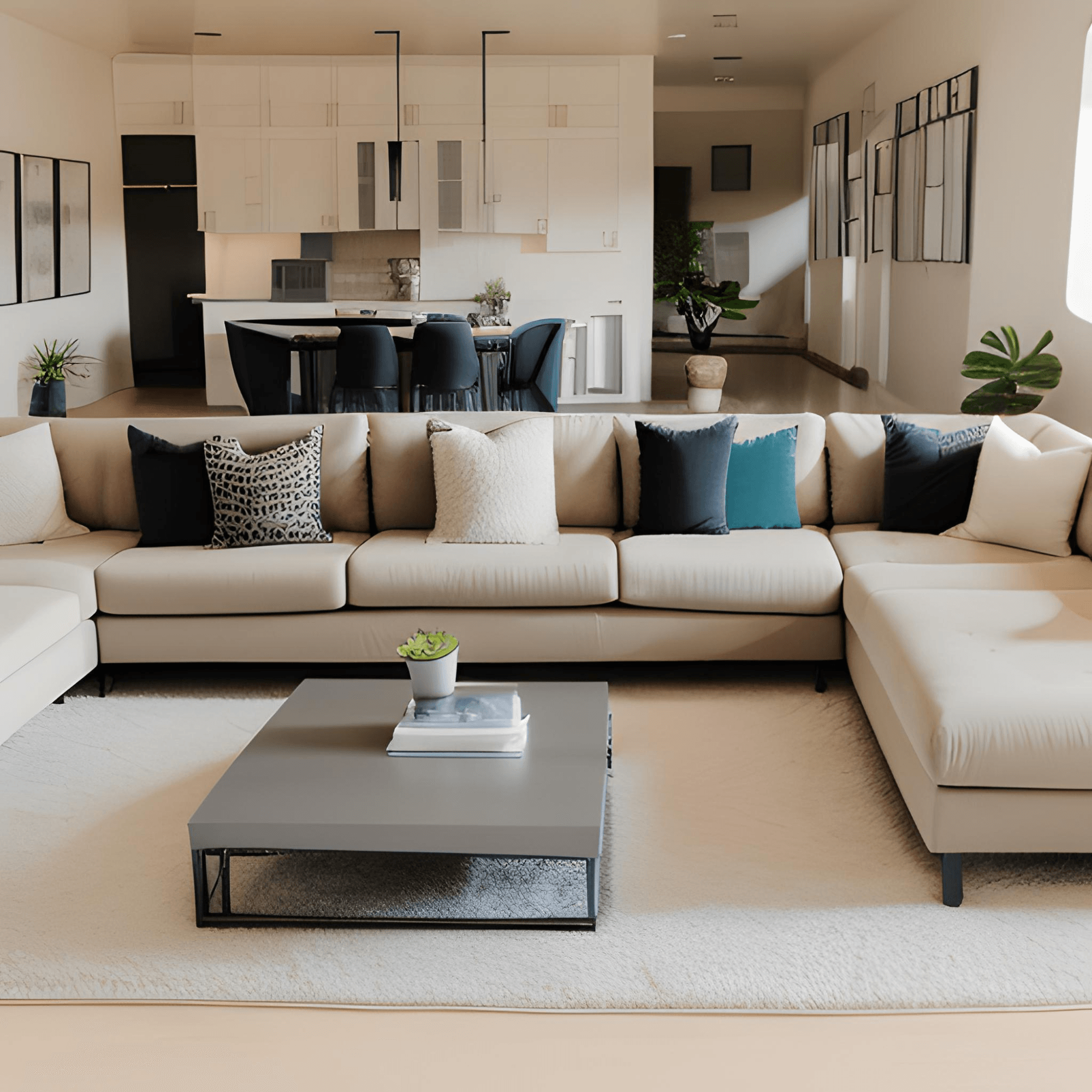
Open-concept homes can feel bright and spacious — until the furniture looks like it’s “floating” with no plan. This mobile-friendly guide shows you how to zone your lounge + dining, improve traffic flow, and choose pieces that suit real Queensland living.

What “open-concept” means (and why furniture layout matters more)
Open-concept (open-plan) generally means fewer walls between kitchen, dining and living spaces. Without walls, your furniture has to do the “architecture work”: define zones, guide traffic, and keep sightlines clean.
The fastest way to make an open plan feel “finished”
Build around one anchor (usually the sofa), add one boundary (rug/console/shelving), then add one light per zone (pendant over dining, lamp in lounge).
Step-by-step: plan your open-concept furniture arrangement
1) Mark your “no-go” walkways first
Identify the real routes: entry → kitchen → dining → lounge → patio/doorway. Keep these pathways clear so the room feels easy to move through (especially with kids, pets, or guests).
2) Pick a lounge anchor
Choose your main seating piece first. In open plans, a modular is ideal because you can shape the zone without building walls.
3) Create a boundary (rug + sofa line)
A large rug defines the lounge instantly. Then “draw a line” with your sofa back (or add a slim console table) to separate lounge from dining.
4) Align edges for calm, not chaos
Open plans look best when major edges align: rug edge ↔ sofa line ↔ dining table edge. It reads as intentional and keeps the space visually tidy.
4 proven open-plan layout templates (copy these)
Template A: The “floating sofa” divider (most popular)
Float the sofa off the wall to divide lounge from dining/kitchen. Add a console behind the sofa if you want a sharper boundary.
- Large rug under the front sofa legs to “lock in” the lounge zone.
- Dining table aligned behind the sofa line for a clean grid.
- Side table + floor lamp to complete the lounge “room”.
Template B: L-shape modular + dining behind
Great for families. The modular creates a cosy lounge zone while the dining sits behind, close to the kitchen.
- Pick storage pieces to keep the open plan tidy.
- Use two smaller accent chairs if you need flexible seating for guests.
Template C: Long + narrow open plan (“carriage layout”)
Zone in a straight line: dining nearest the kitchen, lounge at the far end. Keep one clear path down one side.
- Nesting tables reduce bulk and improve flow.
- Closed TV storage keeps the whole space visually calmer.
Template D: Small apartment open plan (space-max mode)
In compact spaces, a 2-seater plus a chair can feel better than one oversized sofa — you keep airflow and walkways.
- Use storage coffee tables for a cleaner look.
- Keep big pieces neutral; add colour with art and cushions.
Clearance rules (so your open plan feels effortless)
The difference between “crowded” and “expensive” is usually spacing. Use these as practical planning targets, then adjust for your room size and household needs.
| Area | Practical target | Why it matters |
|---|---|---|
| Main walkways | Aim for ~90cm where possible | Stops bottlenecks between kitchen ↔ dining ↔ lounge |
| Dining chair pull-back space | Allow ~90–120cm behind chairs in high-traffic zones | Lets people sit/stand while others pass |
| Coffee table gap | Keep enough space to walk past comfortably | Makes the lounge usable, not just pretty |
QLD entertaining tip
If guests naturally gather near the kitchen island, keep the dining zone slightly “downstream” so people can circulate without cutting through the cooking area.
Furniture picks that make open-concept living easier
Modular sofas
Perfect for defining a lounge zone in a big open room — and easy to reconfigure later.
Storage coffee tables
Open plans show clutter fast. Hidden storage keeps the whole space looking calm.
Right-size dining sets
Keep enough space behind chairs so guests can move comfortably during meals.
TV & entertainment units
Closed storage helps open plans look cleaner and more “designed”.

Common open-plan mistakes (and the fast fixes)
Mistake: Everything pushed to the walls
This often creates an awkward empty middle and weaker conversation zones. Fix: float the sofa slightly and anchor the lounge with a rug. For extra reading, see this designer perspective: why designers avoid pushing furniture against walls.
Mistake: No zoning, so it feels random
Fix: rug + lighting + a clear sofa line. If you want more zoning ideas, this Australian guide is a handy reference: open-concept living room zoning tips.
Mistake: Traffic cuts through the cooking zone
Fix: place dining so guests naturally walk around the kitchen work area, not through it. Kitchen planning guidelines (good background reading): NKBA kitchen planning guidelines (PDF).
Why trust this guide (EEAT)
Written by The A2Z Furniture team (Queensland). Prefer advice in person? Visit one of our SE QLD showrooms to test comfort, check sizes, and compare finishes.
Updated: 5 March 2026 · Brisbane, QLD
Sources & further reading
FAQs
How do I zone an open-concept room without building walls?
Start with a large rug to anchor the lounge, float the sofa to create a boundary, then add distinct lighting per zone (pendant over dining, lamp in lounge). A slim console behind the sofa can sharpen the separation.
Should my sofa face the TV or the kitchen?
Most homes work best when the sofa faces the primary relaxation focus (TV, view, or fireplace). If you entertain often, add one or two chairs that can rotate toward the kitchen/dining area.
What clearance do I need behind dining chairs in open plans?
If the dining zone sits on a main walkway, plan roughly 90–120cm behind chairs so people can pass while others are seated. In low-traffic zones you can often go a little tighter.
What furniture works best for small open-concept apartments?
A compact 2-seater plus a chair, nesting tables, and hidden storage (like a storage coffee table) usually makes the space feel larger than one oversized sofa.
Can I get help choosing sizes if I’m in QLD?
Yes — visit one of our showrooms or message the team here: Store locations & contact.
Want a layout recommendation for your floor plan?
If you share your room dimensions (or a screenshot of your floor plan), our team can help you choose sizes that fit your walkways and zones.