
Selling Your Home · The Furniture Canvas
Home staging is about helping buyers instantly understand a room the moment they walk in — or scroll past a listing photo. Furniture is the single biggest lever you have: the right pieces define zones, open up walkways, and give a space the calm, move-in-ready feel that photographs well and sells fast. This guide walks through the furniture-led approach room by room, with Queensland-specific tips for indoor-outdoor living.

The short version. Staging isn't decorating for yourself — it's arranging furniture so buyers can read the room in seconds. Five moves matter most: right-size the pieces, keep a neutral foundation, define zones clearly, give every room one focal point, and stay consistent from room to room. If you're after professional styling advice or hired furniture for the sale period, a dedicated home stylist can help with that — A2Z Furniture's role is supplying the quality pieces, whether you're refreshing a couple of rooms before photos or replacing furniture you'll keep for your next home.
In this guide
What home staging is (and why furniture matters)
Home staging is the process of presenting a property so it looks as appealing as possible to potential buyers — arranging or refreshing furniture and homewares so the home shows well for photos and open homes. It's different from decorating: decorating reflects the owner's personal taste, while staging is designed for broad buyer appeal, which usually means swapping out bulky, dated, or overly personal furniture for pieces that make rooms feel brighter, larger, and easier to understand at a glance.
- Furniture makes rooms "read" instantly. Buyers decide quickly. The right pieces show where to sit, eat and sleep without them having to guess.
- Furniture drives listing photos. Staging is a photo-first exercise now. Well-chosen furniture creates scale, balance and a clear focal point on a small screen.
- Furniture controls flow. Layout shapes how spacious a home feels. Clear walkways and sensible spacing reduce visual clutter pressure in photos and in person.
- Furniture sells the lifestyle. A welcoming dining setting, a calm main bedroom and usable outdoor seating all help buyers picture themselves living there.
Five furniture principles that help homes sell
1. Scale: choose pieces that fit the room
Remove oversized furniture that blocks walkways or crowds a room — an undersized sofa or dining table almost always reads better in photos than an oversized one squeezed in. Keeping the entry-to-living-to-outdoor path clear is one of the simplest, highest-impact changes you can make before a photo day.
2. Neutral foundation, warm accents
Start with neutral big-ticket pieces — sofa, bed frame, dining table — then add warmth with cushions and a throw rather than bold upholstery. Neutral tones photograph cleanly and appeal to the widest range of buyers.
3. Define zones, especially in open-plan homes
A coffee table anchors the living zone visually. A dining setting scaled to the room (not overcrowded) signals function without clutter. If space allows, even a small desk can show a work-from-home nook.
4. Give every room a focal point
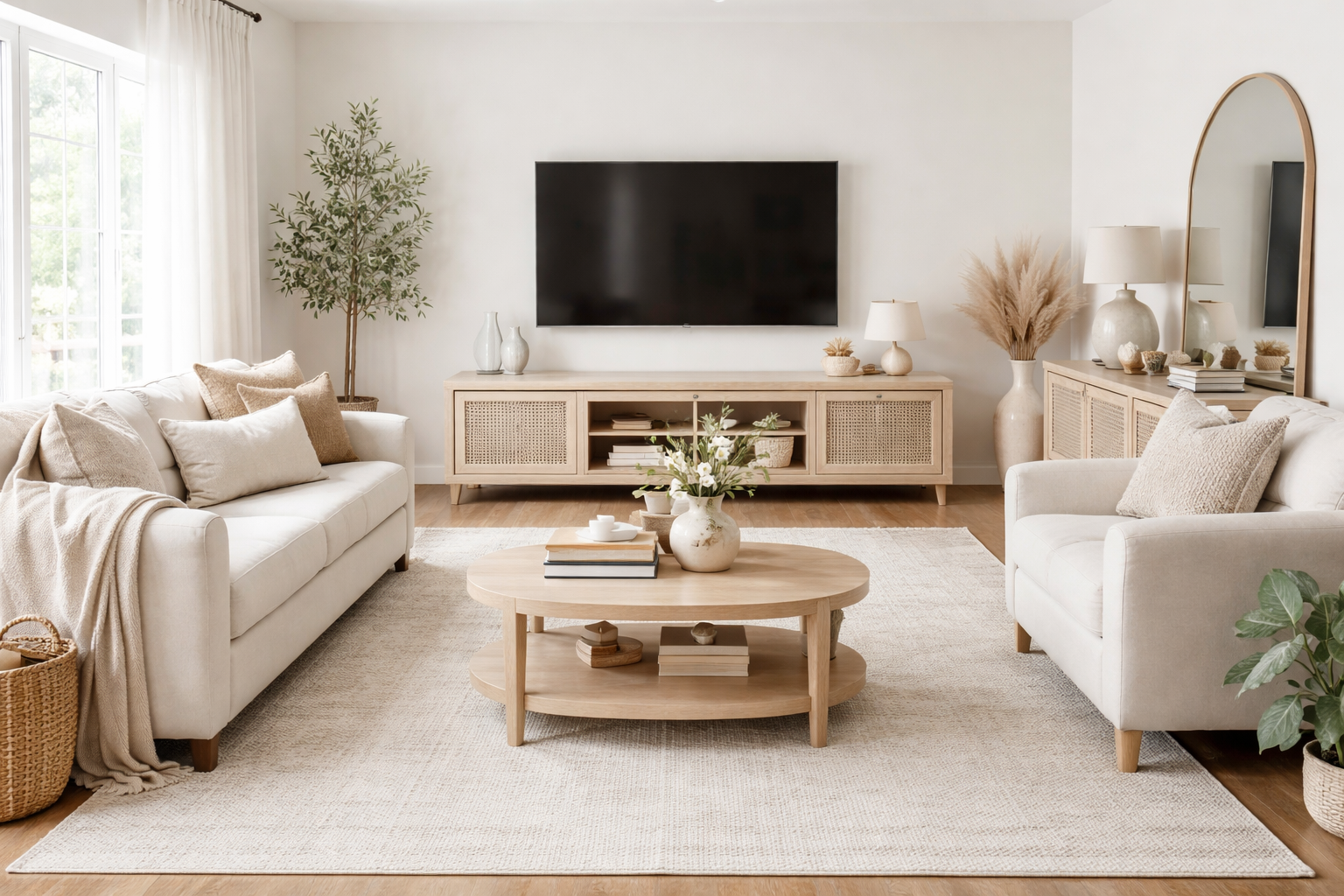
In the living room, that's the sofa facing the TV unit or a feature wall. In the main bedroom, it's the bed, centred, with matching bedsides either side. In the dining room, it's a table with breathing room around the chairs.
5. Stay consistent from room to room
Keep finishes broadly aligned — timber tones, metal accents — from the entry through to the living and dining areas. Consistency reads as "move-in ready" and helps a listing's photo set feel premium and considered rather than patchwork.
Shop by room
Staging-friendly furniture, ready across South-East Queensland:
Room-by-room staging furniture guide
Living room: the value-maker
Choose a sofa that leaves comfortable walkways rather than pushing every piece hard against the walls. Add a coffee table to define the seating zone, and use a TV unit or console to create a clean focal point that hides cables and reduces visual noise. See our coffee table range for pieces that suit a range of room sizes.

Dining: entertaining-ready without crowding
Pick a dining setting scaled to the room — oversized tables make dining areas feel tight in photos. Keep the tabletop clear except for a simple centrepiece, and set two to four places even if the table seats more, so the space reads as social and easy to move around.

Main bedroom: calm, clean, hotel-like
Centre the bed and add matching bedsides either side to create symmetry — one of the fastest ways to make a bedroom feel considered. Use light, neutral bedding with one throw for texture rather than a pile of cushions, and keep the wardrobe doors closed and the floor visible where you can, since visible floor space reads as room size to buyers.

Home office or spare nook: show a flexible lifestyle
If you have a spare room or nook, staging it with a compact desk and chair shows buyers a genuine work-from-home option rather than leaving them to imagine an empty room's purpose. Keep cords out of sight and add one simple styling item — a lamp or a plant — rather than a full desk setup. Browse our home office range for compact desks that suit a spare-room nook.
Queensland tips: indoor-outdoor living and light
- Lean into indoor-outdoor living. Staging a patio or deck with even a small outdoor setting helps Queensland buyers picture weekend living, which is a genuine selling point here.
- Maximise natural light. Lighter furniture and uncluttered layouts help rooms photograph brighter — open the curtains and blinds before every shoot or inspection.
- Keep it breathable. Avoid over-furnishing. Space and airflow read as comfort in a Queensland home, especially through the warmer months.
Hiring a stylist vs buying furniture yourself
Many sellers bring in a professional home stylist who supplies furniture and homewares for the selling period — photos through to settlement — and then removes it afterwards. Others stage with what they already own, simplifying and rearranging rather than replacing. A third option is buying a handful of "hero" pieces you'll keep for your next home, which works well if you were planning to upgrade key furniture anyway.
Where A2Z Furniture fits in: we're a furniture retailer, not a styling service — we don't provide staging or interior-styling services ourselves. What we do is stock the neutral, well-proportioned sofas, dining settings and bedroom furniture that work well whether you're staging a home for sale, refreshing it for your next move, or furnishing it as a hired stylist's brief. If you're weighing up hiring a stylist against buying, our showroom team can talk through what suits a given room and budget.
A note on cost. Professional styling services typically charge for furniture hire plus a styling fee for the listing period, which can be worthwhile for a vacant home. Buying your own pieces makes more sense when you're planning to keep them, or when only one or two rooms need a refresh.
Staging checklist
Quick plan for inspection week:
- Declutter surfaces — kitchen benches, bedside tables, bathroom vanity.
- Remove oversized or extra furniture to open up walkways.
- Create one clear focal point per room — sofa facing the TV unit, bed centred, dining table centred.
- Add a coffee table to anchor the living zone.
- Make beds crisp and neutral; clear floor space where possible.
- Stage outdoor seating, even a small setting.
- Open curtains, replace dead bulbs, and add a lamp to dark corners.
- On photo day, hide bins, cords, pet items and excess décor.
Common staging mistakes to avoid
- Too much furniture. Over-furnishing makes rooms feel smaller. Remove extras first, then add back only what defines the room's function.
- Dark, heavy pieces everywhere. Bulky dark furniture can visually shrink a room in photos — use lighter or neutral anchor pieces where you can.
- No clear layout. If buyers can't immediately see where to walk or where the sofa or dining table goes, that uncertainty works against you.
- Personal clutter in hero spaces. Keep the living room, main bedroom and dining area calm and neutral so buyers can picture themselves there.
Popular staging picks
Neutral, right-sized pieces buyers respond well to in photos:
Home staging FAQs
What rooms should I stage first?
Prioritise the rooms that shape first impressions and appear most in listing photos: living room, main bedroom and dining. In Queensland, staging an outdoor area can also help sell the lifestyle.
Should I remove furniture before listing photos?
Usually, yes. Removing extra pieces makes rooms feel larger, improves flow, and helps buyers understand the layout from photos. Keep only the furniture needed to define each room's purpose.
Should I hire a stylist or buy my own furniture for staging?
If the home is vacant or your furniture is mismatched, a professional home stylist can create a cohesive look quickly with hired pieces. If you're upgrading anyway, buying a few neutral "hero" pieces can work out well because you keep them after the sale. A2Z Furniture supplies the furniture either way — we're a retailer, not a styling service.
What furniture colours photograph best?
Neutral tones — light grey, beige, cream, natural timber, black accents — tend to photograph cleanly and appeal to the widest range of buyers. Add warmth with simple cushions, a throw and one piece of artwork per room rather than bold colour choices.
Can I stage a home effectively on a budget?
Yes. Start with decluttering, removing oversized pieces and improving layout — all free. Then add one or two anchors, such as a coffee table or a matching pair of bedsides, to finish the look without a full furniture refresh.
Does A2Z Furniture offer a home staging service?
No — A2Z Furniture is a furniture retailer with five South-East Queensland showrooms, not a styling or staging service. We stock the neutral, well-proportioned furniture that works well for staging, and our showroom team can help you choose the right pieces, but the styling and staging service itself would need to come from a dedicated stylist.
Written by the A2Z Furniture team — five South-East Queensland showrooms, family-owned and operated since 2013. Last updated July 2026.