
Interior Design & Styling · The Furniture Canvas
Biophilic design is not about filling every corner with plants. It is about choosing furniture, materials, shapes and layouts that help your home feel calmer, lighter and more connected to the natural world. In Australian homes, that usually means warm timber tones, breathable textures, softer curves and layouts that work with daylight instead of fighting it — with a few well-placed plants as the finishing touch, not the whole plan.

The short version. Biophilic design leans on four things: natural-looking materials (timber, woven texture, stone-inspired finishes), softer geometry (rounded coffee tables, curved edges), light-first layouts, and a few intentional green accents rather than a jungle of small pots. Start with one or two furniture pieces that carry visible grain or texture, then build the room around them.
In this guide
What is biophilic design in furniture and interiors?
Biophilic design is the practice of bringing the qualities of nature into built spaces so they feel more restorative, more human and less harsh. That can include visible greenery, but it also covers natural-looking materials, daylight, airflow, tactile texture, earth-led colour palettes and shapes that feel more organic than rigid.
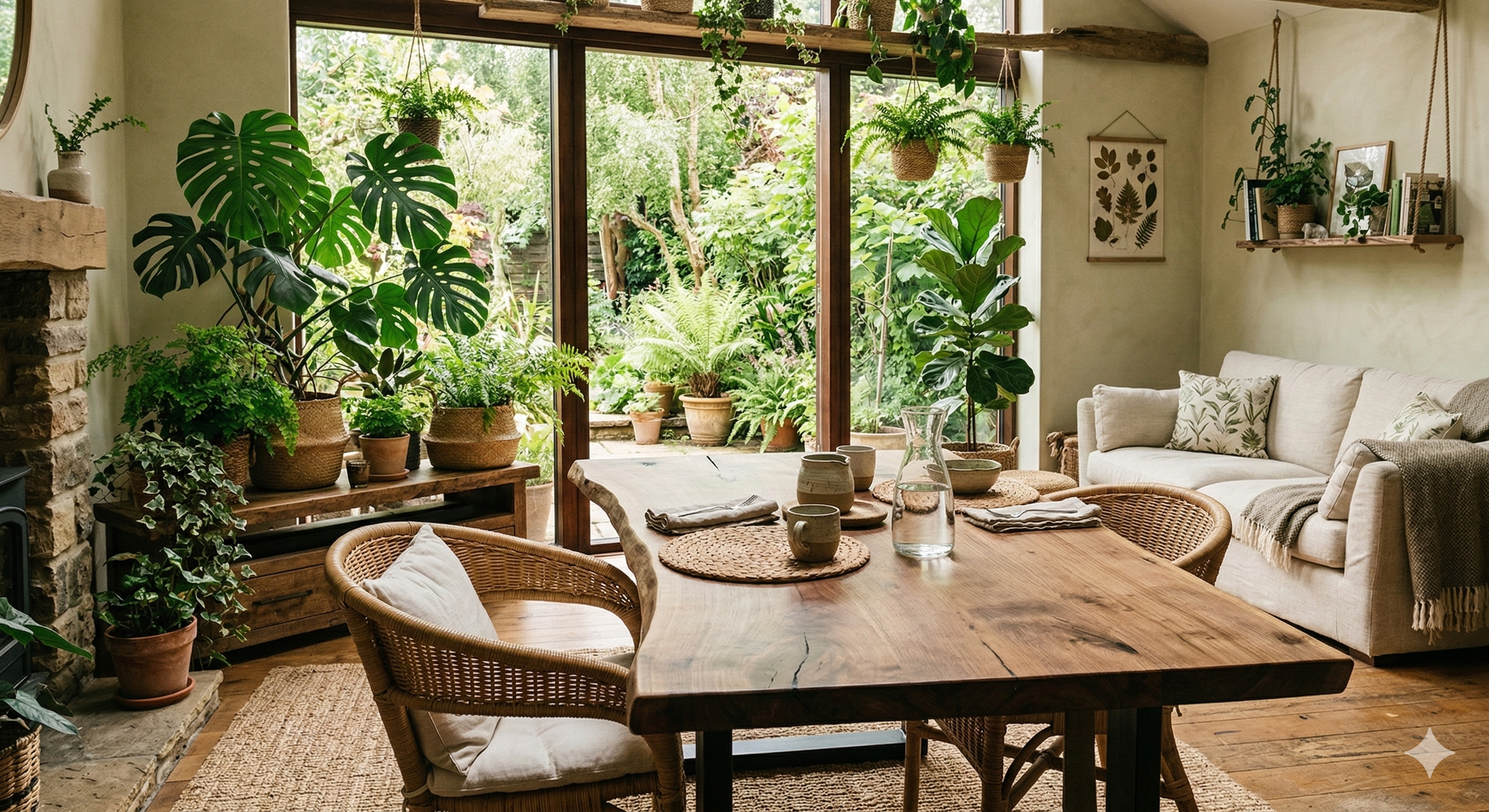
In furniture, biophilic design usually shows up in pieces that feel warm rather than cold, tactile rather than glossy, and grounded rather than over-styled. Think timber-grain surfaces, linen or textured fabric, rattan accents, rounded coffee tables, soft-edged dining settings, layered natural tones and layouts that let furniture work with windows and views instead of blocking them.
It is also a practical design approach. A home can look beautiful and still support comfort, storage, movement and family life. The best biophilic spaces do not feel themed — they feel easy to live in.
For deeper reading on the underlying research, see Terrapin Bright Green's 14 Patterns of Biophilic Design and the WELL biophilia feature.
6 key biophilic design principles that work in everyday homes
1. Start with natural-looking materials
Furniture does a lot of the heavy lifting. Timber dining tables, wood-grain coffee tables, woven details and stone-inspired finishes bring warmth into a room before you even style it.
2. Let curves soften the space
Organic shapes help a room feel calmer. Rounded coffee tables, oval mirrors and curved sofas can make a layout feel more open and more inviting.
3. Work with natural light
Keep furniture heights balanced near windows, use lighter finishes where a room feels heavy, and avoid blocking the best daylight in the room.
4. Layer texture, not clutter
Biophilic styling feels rich because it mixes visible grain, woven fibres, stone-look surfaces, soft upholstery and greenery without becoming busy.
5. Add greenery with intention
A few well-placed plants usually work better than lots of small ones. One floor plant, one shelf plant and one table accent can frame a zone without taking over the room. Plants are a styling layer here, not something we stock — pair whatever greenery you choose with the furniture that gives it a natural home.
6. Keep the room emotionally calm
Good biophilic design is restful. Use storage, balanced spacing and furniture that fits the room properly so the final look feels easy, not crowded.
Room-by-room biophilic furniture ideas

Living room
Start with the furniture that sets the mood fastest: a warm-toned coffee table, a textured sofa and one curved accent piece. If your room is compact, a rounded coffee table can soften traffic flow and make the layout feel less boxed in. Browse sofas and lounges and pair them with a wooden coffee table for an easy nature-led base.
Dining room
The dining area is one of the best places to lean into timber finishes. A timber-look dining table creates instant warmth, especially when styled with a simple vase, woven placemats and natural daylight. Explore dining room furniture and wooden dining tables for a stronger biophilic foundation.
Bedroom
Bedrooms benefit from restraint. Natural textures, softer bedding tones, one timber bedside table and filtered light can make the room feel restorative without over-styling it. Keep the palette soft and consistent so timber details feel intentional rather than random.
Entry, study or small apartment zone
Even small homes can feel biophilic. Use a compact console table, a mirror to bounce daylight, and a bench or chair with visible grain or woven texture. Small moves often make the biggest difference in tight spaces. Browse console & hall tables that work in apartments, family homes and multi-use spaces alike.
Shop the look
Start with the natural-wood pieces that carry a room:
Best furniture materials and finishes for a biophilic home
Timber and oak tones — ideal for dining tables, coffee tables and console or hall tables. Visible grain instantly adds warmth and makes a room feel less synthetic.
Textured fabrics — linen-look and woven upholstery add softness and depth, especially in neutral or earthy colour palettes.
Rattan and woven details — great for occasional chairs, lamps, baskets and accent furniture when you want lightness without losing texture.
Stone-inspired finishes — use sparingly to add contrast and grounding. Stone-look surfaces work best when balanced with warmer timber or fabric touches.

Biophilic design ideas for Queensland homes
Use light, airflow and easy-care materials well
In many South-East Queensland homes, the most effective biophilic choices are the practical ones: lighter visual weight, breathable textures, furniture that does not overwhelm the room, and layouts that keep windows, breezeways and movement paths open. This is especially useful in open-plan living areas where a large sofa, dining setting and coffee table all need to work together without making the room feel heavy.
See colour and texture in person
Biophilic styling is tactile, so photos only tell part of the story. If you want to compare timber tones, fabric textures or the scale of a table in real life, visit one of our five showrooms in Rocklea, North Ipswich, Beenleigh, Virginia or Bundall (Gold Coast). Find your nearest showroom.
Easy biophilic upgrades you can make this week
- Swap one high-gloss piece for a warmer finish. A timber-look coffee table or dining table can instantly soften a room.
- Bring in one larger plant. A single floor plant near a window often has more impact than several tiny pots.
- Introduce a woven accent. Think baskets, a textured throw, or a chair with visible weave.
- Use earthy neutrals, not stark contrast. Sand, taupe, soft olive, off-white and clay tones keep rooms feeling grounded.
- Make windows part of the styling plan. Position your best-looking furniture so it supports the light and view.
- Reduce visual noise. Less clutter means your textures and furniture shapes work harder.
Biophilic design FAQ
What is biophilic design in simple terms?
Biophilic design is a way of designing homes so they feel more connected to nature. In furniture and interiors, that usually means using natural-looking materials, greenery, light, texture and calmer shapes to make a room feel more restorative and less artificial.
Can biophilic design work in a small apartment?
Yes. Small spaces can benefit even more from biophilic design because the focus is on better light, cleaner layouts and smarter furniture choices. A compact timber-look coffee table, one statement plant and a soft neutral palette can go a long way.
Which furniture materials suit a biophilic home best?
Timber and oak tones are the most obvious starting point, but textured fabrics, woven accents and stone-inspired finishes also work well. The key is balance: mix natural-looking surfaces with practical comfort and avoid making the room feel too polished or too busy.
Do I need lots of plants for a biophilic look?
No. Plants help, but biophilic design is broader than greenery. Natural materials, softer forms, daylight, airflow, tactile texture and earthy colour palettes are just as important. A2Z Furniture sells furniture, not plants — for greenery, pair your new furniture with plants from your local nursery.
Where can I see A2Z Furniture in person in Queensland?
You can visit our showrooms in Rocklea, North Ipswich, Beenleigh, Virginia and Bundall on the Gold Coast. Head to our contact page for addresses, opening hours and directions.
Do you offer delivery in Brisbane, Gold Coast and Ipswich?
Yes. We offer free local delivery within about 10 km of our Rocklea warehouse on qualifying outright purchases, ground floor only. Check the terms on the delivery page for the latest conditions and service areas.
Written by the A2Z Furniture team — five South-East Queensland showrooms, family-owned and operated since 2013. Last updated July 2026.