
For most children, a King Single mattress with a medium feel is the practical choice. At 106 × 203 cm it is as long as a Queen, so there is room to grow, and a medium surface suits kids who change position through the night. Add a waterproof mattress protector from the first night.
- If the room is small or your child is young: a Single at 92 × 187 cm fits better, such as the slim, soft Sleep Essential III Pocket Spring Mattress.
- If you want zoned support at a medium feel: the Spine Care 5 Zone Pocket Spring Mattress sits at about 5 out of 10.
- If your child is older or heavier and likes a firmer bed: the Posture Delight Pocket Spring Mattress is labelled Firm, 7 out of 10, on its product page.
In this guide
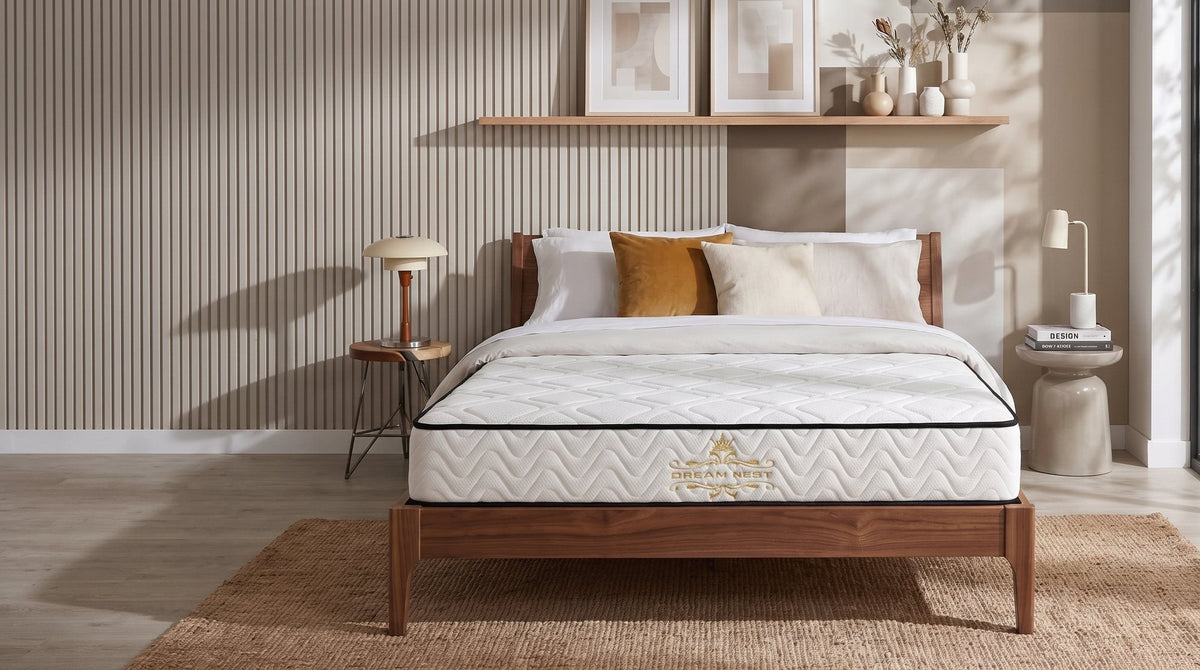
Single or King Single: which size for a child?
The size decision comes down to two things: the room, and how long you want the mattress to suit your child. A Single is the compact option. A King Single is wider and, more importantly, 16 cm longer, which is the measurement a growing child runs out of first.
| Feature | Single | King Single |
|---|---|---|
| Size | 92 × 187 cm | 106 × 203 cm |
| Length | Same length as a Double | Same length as a Queen and King |
| Floor space | Leaves the most room for a desk or play space | Needs 14 cm more width and 16 cm more length |
| Best for | Younger children, small rooms, guest and spare beds | Older children and teenagers, or buying once to last |
Before you choose, measure the room and check what bed frame the mattress will go on, because a mattress has to match the frame's size exactly. Our Single mattress range and King Single mattress range list everything we have in each size, and the kids mattress collection brings the kids' room options together in one place.
All seven mattresses mentioned in this guide come in King Single.
Pieces in this guide

How firm should a child's mattress be?
Firmness is a feel, set by the spring gauge and the density of the comfort layers, not by the type of mattress. We group our mattresses into four collections: Soft & Plush, Medium Firm, Firm and Extra Firm. Each product page also gives the mattress its own feel label and a score out of 10.
The general guide is the same for children as it is for adults:
- side sleepers usually suit Soft & Plush or Medium Firm;
- back sleepers usually suit Medium Firm;
- stomach sleepers usually suit Firm;
- combination sleepers, who change position through the night, usually suit Medium Firm;
- heavier builds usually suit one tier firmer.
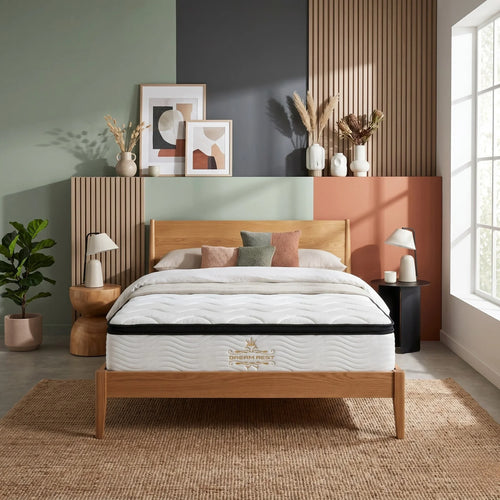
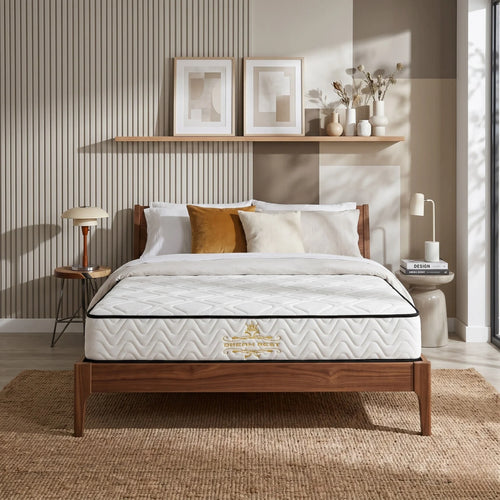
Most children move around a lot in their sleep, so a medium feel is a sensible starting point. On our pages, the Spine Care and the Cradle Rest 5 Zone Pocket Spring Mattress are both labelled Medium, 5 out of 10, and both split their pocket spring core into five zones along the length of the bed. The Posture Delight is firmer, labelled Firm, 7 out of 10, with a 5 cm comfort foam layer and convoluted foam quilting over a 20 cm pocket spring core.

If your child is a side sleeper who likes a softer bed, several mattresses in the range are labelled Soft, 4 out of 10, including the Sleep Essential III, the Sleep Vital Pillow Top Mattress and the Sleep Essence Bonnell Spring Mattress.
Feel is personal, so the best test is a simple one. Ask which of our five showrooms has the mattress on display, and let your child lie on it for a few minutes in the position they usually sleep in. For more on matching feel to sleeping position, see our guide to sleeping positions and mattress firmness.
Pocket spring or Bonnell spring?
Every mattress in this guide has springs, but they are built in two different ways.
Pocket springs are individually wrapped, so each spring moves largely on its own. The Sleep Essential III, Spine Care, Cradle Rest and Posture Delight are all pocket spring mattresses.
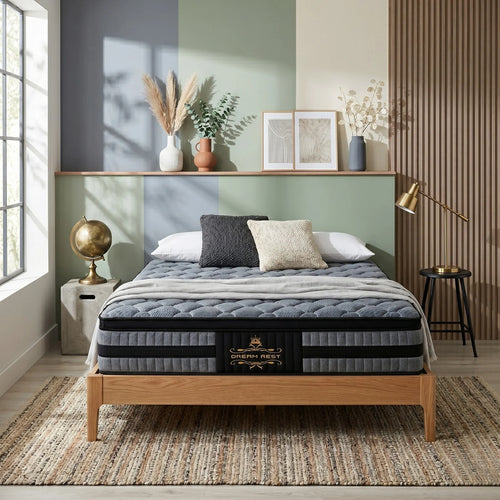
Bonnell springs are a traditional system of interconnected coils, described on our pages as giving firm, even support, durability and good airflow. The Sleep Essence, Sleep Vital and Deluxe Sleep Bonnell Spring Mattress each put a soft, cushioned top over a 17 cm Bonnell core. The Sleep Essence and Sleep Vital product pages name kids' rooms, guest rooms and spare beds as good uses.
| Mattress | Springs | Comfort top | Feel | Height |
|---|---|---|---|---|
| Sleep Essence | 17 cm Bonnell | Polyester fibre and comfort foam | Soft, 4/10 | 18 cm |
| Sleep Essential III | 18 cm pocket | 2 cm comfort foam quilting | Soft, 4/10 | 20 cm |
| Deluxe Sleep | 17 cm Bonnell | Quilted pillow top of PP foam and D20 foam | Soft, 4/10 | 22 cm |
| Sleep Vital | 17 cm Bonnell | Pillow top and 3.5 cm high-density foam | Soft, 4/10 | 23 cm |
| Spine Care | 20 cm, 5-zone pocket | Quilted knitted top over cushioning foam | Medium, 5/10 | 26 cm |
| Posture Delight | 20 cm pocket | Convoluted foam quilting and 5 cm comfort foam | Firm, 7/10 | 28 cm |
| Cradle Rest | 25 cm, 5-zone pocket | Polyester fibre and 3 cm comfort foam, plus 2 cm support foam | Medium, 5/10 | 30 cm |

Height matters for a kids' bed in a practical way. A slimmer mattress keeps the sleeping surface lower, and every mattress here arrives rolled and boxed, which makes it easier to carry into a small bedroom. All of them are single-sided: rotate them head-to-foot every few months, but do not flip them.
Protecting a kids' mattress from spills and accidents
Kids' beds see more spills, drinks, crumbs and night-time accidents than any other bed in the house. A waterproof, machine-washable mattress protector from the very first night is the simplest way to keep the mattress clean, because a protector can go in the wash and a mattress cannot. We sell two, both made in Single and King Single: the Waterproof Mattress Protector, a cotton terry surface over a PU (polyurethane) waterproof backing, and the Mellow Pillow Bamboo Waterproof Mattress Protector, a bamboo surface over a waterproof backing. Both are machine washable; avoid hot washes, hot tumble-drying and ironing, which damage a waterproof backing. A second protector means there is always a clean one ready while the other dries.

If something does get through, strip the bed, blot up as much as you can with dry towels, then blot the patch with cold water and a little mild detergent. Once it is nearly dry, cover it with bicarb soda overnight and vacuum it off. Our mattress care notes say to spot clean only and avoid soaking or harsh chemicals. Our guide on how to clean a mattress covers the full method.
One more house rule helps a mattress last: no jumping on the bed. It puts concentrated strain on the springs and comfort layers that they are not built for.
When to replace a child's mattress
Go by the signs, not the calendar. It is time to look at a new mattress when:
- there is a dip that stays after your child gets up;
- you can feel individual springs through the top;
- a smell keeps coming back, however often it is cleaned;
- your child's feet reach the end of a Single, which is the usual time to move up to a King Single;
- your child tells you it is uncomfortable.
Kids mattress FAQs
What mattress is best for a child?
There is no single best mattress, but for most children a King Single with a medium feel is a practical choice: long enough to grow into, and comfortable for kids who change position through the night. A Single suits younger children and small rooms. Whatever you choose, add a waterproof mattress protector.
Can a child sleep on an adult mattress?
Yes. A kids mattress is mainly about size and feel. Every mattress in this guide is a standard mattress that also comes in adult sizes, and all of them come in King Single.
Is a soft mattress OK for a child?
A softer feel can suit a child who sleeps on their side and likes a cushioned bed. Because most kids change position through the night, a medium feel is the more common starting point. If you have a concern about your child's sleep, speak to your GP.
Can we try a kids mattress before we buy?
Yes. Ask which of our five showrooms has the mattress on display, and bring your child along so they can lie on it in the position they usually sleep in.
How do I clean a mattress after a bed-wetting accident?
Strip the bed, blot up as much as you can with dry towels, then blot the area with cold water and a little mild detergent. When it is nearly dry, cover it with bicarb soda overnight, vacuum it off, and let it dry completely before remaking the bed. Do not soak the mattress.