
Interior Design Guide · The Furniture Canvas
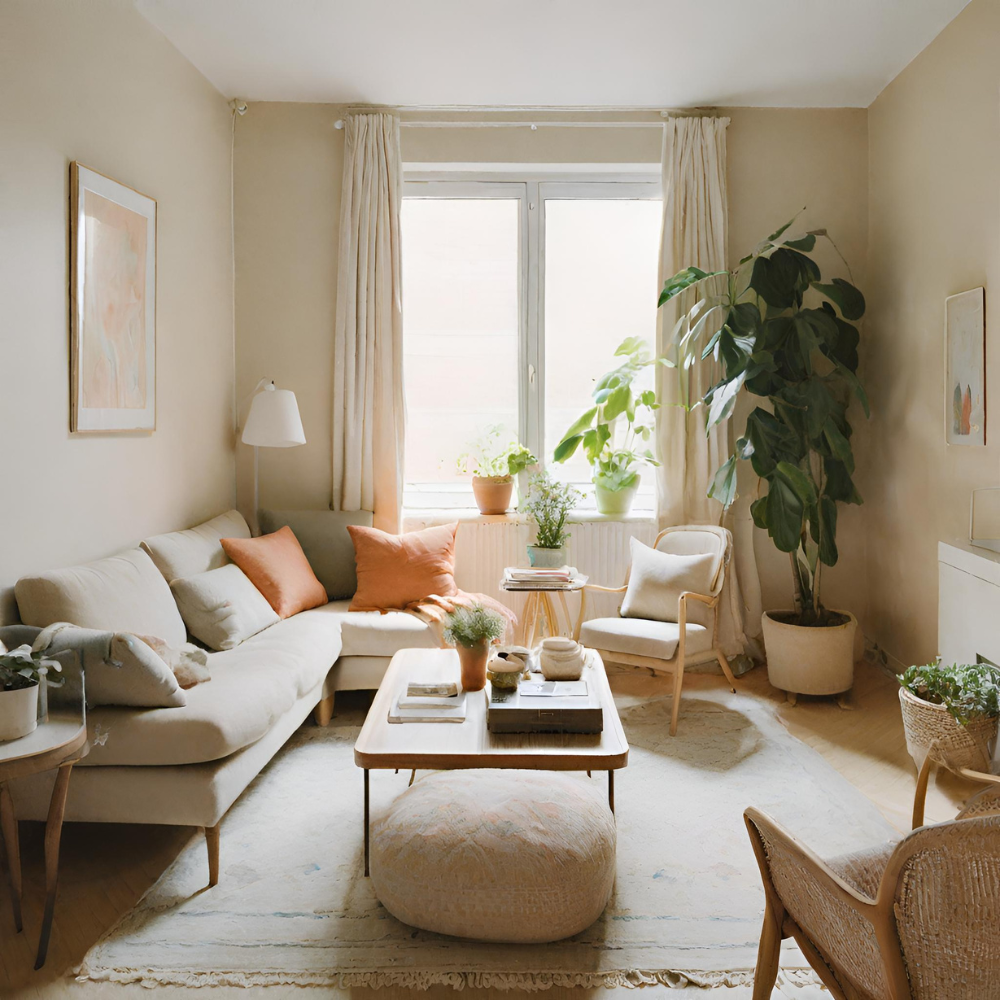
Living in a compact apartment in Brisbane, the Gold Coast or anywhere across Queensland doesn't mean you have to compromise on style, comfort or function. With the right furniture choices and a few clever design principles, even the smallest space can feel spacious, stylish and completely liveable. This guide is written specifically for Queensland apartment dwellers — accounting for our subtropical climate, indoor-outdoor lifestyle and the reality of living in Brisbane, Gold Coast and Ipswich apartments.

The short version. Four moves matter most in a small apartment: plan zones before you buy anything, choose furniture that does at least two jobs, use a warm neutral palette with a few large mirrors, and push storage vertically instead of sideways. Queensland's climate adds a fifth: your balcony is a free extension of your living space almost year-round, so furnish it properly.
In this guide
- Space planning & zoning your apartment
- Multi-functional furniture that works harder
- Colour palettes & light for compact spaces
- Clever storage solutions
- Maximising your balcony or outdoor area
- Style, texture & décor details
- Common mistakes to avoid
- Visit us at our Queensland showrooms
- Frequently asked questions
Space planning & zoning your apartment
Before you buy a single piece of furniture, the most important step is planning how your apartment's floor space is used. Good space planning doesn't just make a small apartment more functional — it makes it feel significantly larger. The number one mistake apartment dwellers make is choosing furniture that's too large for the room, disrupting the natural flow and making the space feel cramped immediately.
Define zones without walls
Open-plan apartments are the norm in Queensland's newer developments, particularly in inner-city Brisbane suburbs like Fortitude Valley, South Brisbane and Newstead. The challenge is creating a sense of distinct areas — living, dining, working and sleeping — without the luxury of separate rooms.
- Area rugs: Place a rug beneath your sofa and coffee table to visually anchor the living zone, extending 30–45cm beyond the sofa on each side.
- Furniture as dividers: Position a sofa with its back facing the dining area to create a subtle room divider without blocking light.
- Lighting: Use different light sources (a pendant over dining, a floor lamp in the living zone) to signal a change of area. Queensland's strong natural light means layered ambient lighting usually beats harsh overheads.
- Colour variation: A feature wall or a different artwork cluster can mark where one zone ends and another begins.
The 60-30-10 furniture rule
Interior designers use the 60-30-10 rule to prevent furniture from overwhelming a small space: 60% dominant furniture (sofa, bed, dining table) in a neutral tone, 30% secondary pieces (armchairs, side tables, shelving) in a complementary colour, and 10% accent pieces (cushions, artwork, plants) in your statement shade. This keeps the visual weight balanced and avoids the "furniture showroom" look that makes small apartments feel cluttered.
Queensland-specific tip. Most apartments here run on split-system air conditioning. Plan your layout around the unit's airflow — a tall bookshelf or large piece directly in its path will disrupt circulation and increase energy bills. Keep at least 1.5m of clearance for optimal airflow through our long, humid summers.
Measure first, buy second
This sounds obvious, but our Queensland showroom team regularly sees customers who've bought sofas, beds or dining tables that don't fit their space. Before you visit us, measure total room dimensions, door and window swing clearance, ceiling height, power point positions, and any structural pillars or niches. As a general rule, leave at least 60–90cm of clear walkway between major furniture pieces.
Multi-functional furniture that works harder
If there's one principle that separates a beautifully designed compact apartment from a cramped one, it's the strategic use of multi-functional furniture. Every piece should earn its place by doing at least two jobs.
Living room
- Sofa beds: The ultimate dual-purpose piece — your everyday sofa and a comfortable guest bed when needed. Look for a design with a quality mattress insert for genuine comfort, like the Elvis 3 Seater Pull-Out Sofa Bed. Browse the full sofa bed range.
- Storage ottomans and sofas with storage: Acts as a coffee table, extra seating and hidden storage in one. Explore our ottoman collection.
- Nesting or compact coffee tables: Tuck away when not in use, expand for entertaining — far more practical than a single fixed coffee table in a tight living room.
- Modular sofas: Reconfigure as your needs change — remove a chaise for more floor space, or rearrange for a better TV angle.
Dining & sleeping
- Extendable dining tables: Keep the table compact day to day and pull out the leaf when entertaining.
- Benches instead of chairs: A dining bench slides neatly under the table when not in use, freeing significant floor space.
- Bed frames with storage drawers: Use the dead space beneath your bed — one of the most underused storage areas in any apartment.
Furniture leg height matters
Choosing furniture with exposed legs is one of the simplest wins in a small apartment. Pieces that sit directly on the floor — particularly low-profile sofas and bedroom furniture — create a visual heaviness that makes compact rooms feel smaller. When furniture has visible legs, light travels beneath it, creating the perception of more floor space.
A2Z expert pick. For a standard Brisbane apartment living room of 15–20m², we recommend a 2.5-seater sofa or a compact 3-seater with a maximum depth of 85cm — anything deeper eats into your walkway. Visit any of our five Queensland showrooms and our team can help you find the right fit for your exact floor plan.
Shop the range
Furniture built for small Queensland apartments:
Colour palettes & light for compact spaces
Colour is one of the most powerful — and most misunderstood — tools in small apartment design. Used correctly, the right palette can make a compact room feel twice its actual size. The 2025–26 trend in QLD interiors has moved away from stark whites toward warm, earthy tones that reference our natural environment — think Mocha Mousse, terracotta, dusty sage and warm sand.
| Role | Recommended tones | Where to use | Why it works in QLD |
|---|---|---|---|
| Base / walls | Warm white, linen, soft sand | All walls, ceiling | Reflects QLD's abundant natural light; prevents glare |
| Secondary | Dusty sage, warm taupe, Mocha Mousse | Feature wall, large furniture | References tropical greenery; pairs naturally with timber |
| Accent | Terracotta, rust | Cushions, artwork, throws | Complements Queensland's warm tones and sunsets |
| Contrast | Deep navy, charcoal, burnt umber | Single feature piece or rug | Adds depth without closing in the space |
Strategic use of mirrors
Mirrors are a non-negotiable tool in small apartment design. Beyond reflecting light, a large mirror on a wall can make a room appear significantly wider. Full-length leaning mirrors in bedrooms or hallways make a space feel twice as long. Mirror panels opposite windows bounce natural light deep into the apartment — particularly effective in Brisbane apartments with north-facing windows.
Lighting layers
Queensland's subtropical sunshine is a natural asset, but most apartments still need thoughtful artificial lighting for evenings and overcast days. Avoid a single ceiling light, which casts flat, institutional light that shrinks a space visually. Layer three types instead: soft ambient light on dimmers, task lighting (floor lamps, wall sconces) that frees up floor and table space, and warm accent lighting for evenings.
Pro tip. If your apartment is south-facing or has limited windows, use sheer curtains rather than blockout blinds during the day. Hang curtains from ceiling to floor — even if your windows don't reach the ceiling — to visually extend the wall height and make the room feel taller.
Clever storage solutions for small apartments

Poor storage planning is the single biggest cause of clutter in small apartments — and clutter is the enemy of the spacious, calm home most Queensland renters and owners are chasing. Small apartments can have just as much usable storage as larger homes; it simply requires more intentional planning.
Vertical space: your most underused asset
Australian apartments typically have 2.4m–2.7m ceiling heights. Most furniture reaches only 180cm, leaving up to 90cm of completely unused wall space above. This vertical zone is prime real estate for floor-to-ceiling bookshelves, wall-mounted floating shelves, tall wardrobes with overhead storage, and over-door organisers.
Hidden & built-in storage ideas
- Bed bases with storage drawers — ideal for linen, towels and off-season clothing
- Bedside tables with drawers rather than open shelves
- A slim hallway console or bench with a lift-up lid for shoe storage at the entry
- TV units and coffee tables with deep drawers and closed cupboards to hide cables and everyday items
- Storage ottomans in entryways — tuck shoes, bags and everyday items out of sight
The declutter-first rule. No storage system can organise more belongings than a space can reasonably hold. Aim to remove at least 20–30% of your current possessions before adding new storage furniture — the result is a calmer, more spacious-feeling home.
Maximising your balcony or outdoor area in QLD
Here's the advantage Queensland apartment dwellers have over most of Australia: our climate allows outdoor spaces to be used almost year-round. A well-furnished balcony is effectively a free extension of your apartment's living space — and it's one of the most underutilised areas we see in compact QLD homes.
Not all outdoor furniture suits Queensland's climate. High UV, wet-season humidity and, in coastal locations like the Gold Coast and Virginia, salt air, mean your furniture needs to be genuinely weatherproof. Powder-coated aluminium, teak or acacia hardwood, and synthetic rattan all outperform natural rattan or untreated timber here. For balconies under 6m², a compact bistro set (two chairs plus a small table) is usually the best fit; medium balconies can take a loveseat or 2-seater outdoor sofa.
Creating indoor-outdoor flow
The most effective way to visually expand your apartment using your balcony is to create design continuity between inside and outside: keep a similar colour palette, echo your indoor cushions outdoors, and add a simple outdoor rug to define the balcony as a true room.
Style, texture & décor details

Once your layout is planned, furniture selected and storage sorted, the finishing layer of style and décor is where a small apartment transforms from a functional space into a home that reflects your personality. The key is restraint — a curated selection of thoughtful pieces is always more powerful than a collection of many individual items.
Texture combinations that work in QLD
- Linen + timber + rattan: The quintessential Queensland coastal interior — natural, relaxed and warm.
- Bouclé + marble + brass: Elevated sophistication, well suited to inner-city Brisbane apartments.
- Woven textiles + terracotta + whitewashed timber: Mediterranean-inspired; popular in Gold Coast coastal apartments.
Plants: curate, don't crowd
Resist the urge to fill your space with plants — a common mistake that quickly creates a cluttered feel. Instead select three to five well-chosen specimens: one large statement plant as an anchor, two medium plants on floating shelves for height variation, and one trailing plant on a high shelf to draw the eye upward.
Artwork & vertical interest
Art placement in small apartments follows one counter-intuitive rule: hang artwork slightly higher than you think, with the centre at roughly 145–160cm from the floor. This draws the eye upward and creates the perception of a taller room — particularly effective in Queensland apartments with standard 2.4m ceilings.
The one-in-one-out rule. Every time a new item enters the home, an existing one leaves. This simple discipline prevents the slow accumulation of clutter that gradually makes compact apartments feel oppressive.
Common interior design mistakes in small apartments
Based on years of helping Queensland families and apartment dwellers furnish their homes, our team has identified the most frequent and easily avoidable design mistakes in compact spaces.
What works
- Furniture proportioned to the room
- A consistent colour palette (3–4 tones max)
- Exposed-leg furniture for visual airiness
- Curtains hung from ceiling to floor
- Multi-functional pieces that earn their space
- Layered lighting (ambient, task, accent)
- A large mirror opposite a window
- Vertical storage to full ceiling height
What doesn't work
- Oversized sofas or dining tables that crowd the room
- Too many colours and patterns competing for attention
- Bulky, floor-touching furniture with no visual breathing room
- Short curtains that visually cut the wall height
- Furniture that only does one job
- A single central light fitting with no layers
- Ignoring the wall space above 180cm
- Neglecting the balcony or outdoor area entirely
Visit us at our Queensland showrooms
Seeing furniture in person — especially when space planning for a compact apartment — makes an enormous difference. Our team can walk you through the best options for your specific floor plan, budget and style. We have five showrooms across South-East Queensland, making us one of the most accessible furniture retailers in the state for apartment dwellers: Rocklea (our flagship, 77 Randolph St), Beenleigh (87 Logan River Rd), North Ipswich (7 Lowry St), Virginia (1/26 Radley St, north Brisbane) and Bundall on the Gold Coast (3-4/24 Strathaird Rd). Free local delivery applies within roughly 10km of our Rocklea store, ground floor only.
Popular apartment picks
A few pieces small-apartment buyers keep coming back to:
Frequently asked questions
What is the best furniture for a small apartment in Queensland?
For Queensland apartments, the best furniture combines multi-functionality with climate-appropriate materials. We recommend sofas with exposed legs, sofa beds or modular sectionals for versatility, storage ottomans or coffee tables that replace a separate storage unit, and extendable dining tables for flexible hosting. Visit one of our five Queensland showrooms for personalised advice for your specific apartment.
How do I make a small apartment feel bigger?
Use a consistent, light warm-neutral colour palette across walls and major furniture; hang curtains from ceiling to floor; place a large mirror opposite your main window; choose furniture with exposed legs so light travels beneath each piece; use area rugs to define zones rather than adding more furniture; and keep surfaces as clear as possible. Maximising your balcony as a living space extension is a unique advantage of Queensland's subtropical climate.
What colours work best for small apartments in Australia?
Australian interior designers are moving away from stark whites toward warm neutrals that reflect our natural environment. For Queensland apartments specifically, we recommend warm white or linen for walls, dusty sage or terracotta as a feature tone, and natural timber accents to ground the space. Avoid more than four tones in total — the more consistent your palette, the more spacious your apartment will feel.
What outdoor furniture is best for a Queensland apartment balcony?
You need furniture that can handle UV intensity, subtropical humidity and, in coastal locations, salt air. Powder-coated aluminium, synthetic rattan or wicker, and teak or acacia hardwood all perform well. For small balconies under 6m², a bistro-style set or loveseat with a side table is ideal.
How do I create a home office in a small apartment?
Create a dedicated zone without a permanent wall. A floating wall-mounted desk in a corner or hallway nook is highly space-efficient, or a console/dining table that doubles as a desk works well for most home workers. A distinctive desk lamp signals "work mode," and a room divider or shelving behind your chair separates the workspace from living areas visually.
Should I use dark or light colours in a small apartment?
A light base palette is generally the best starting point for most Queensland apartments. Dark colours can still work when used intentionally — a single dark feature wall (deep navy, charcoal or forest green) adds depth and sophistication without closing in the whole room.
How much should I spend on furniture for a small apartment?
Investment in quality furniture matters more in a small apartment than in a large home, because each piece is more visible and used more frequently. Prioritise your budget on the pieces you use most — a quality sofa, a comfortable bed frame, and a practical dining or multi-use table — and save on lower-ticket items like side tables and cushions. Visit our Queensland showrooms for advice on getting the best value for your space and budget.
Where can I find small apartment furniture in Brisbane or Queensland?
A2Z Furniture has five showrooms across South-East Queensland — Rocklea (flagship), Beenleigh, North Ipswich, Virginia and Bundall on the Gold Coast — designed to help apartment dwellers find perfectly proportioned furniture. Browse our full range online at thea2zfurniture.com or contact us to arrange a visit.
Written by the A2Z Furniture team — five South-East Queensland showrooms, family-owned and operated. Last updated July 2026.