
Side sleepers usually suit Soft & Plush or Medium Firm. Back sleepers suit Medium Firm, or Firm for heavier builds. Stomach sleepers suit Firm, and couples or combination sleepers suit Medium Firm. If you are a heavier build, go one tier firmer. Firmness is a feel, so lie on it in your usual position first.
- If you sleep on your side: try a plush, cushioned top like the Supreme Care 5 Zone Memory Foam Mattress, a memory foam top over zoned pocket springs.
- If two of you sleep in different positions: a medium feel like the Cradle Rest 5 Zone Pocket Spring Mattress is the safest middle ground.
- If you sleep on your stomach, or like sleeping "on" a mattress: go firm, like the Posture Rest Firm Pocket Spring Mattress.
In this guide
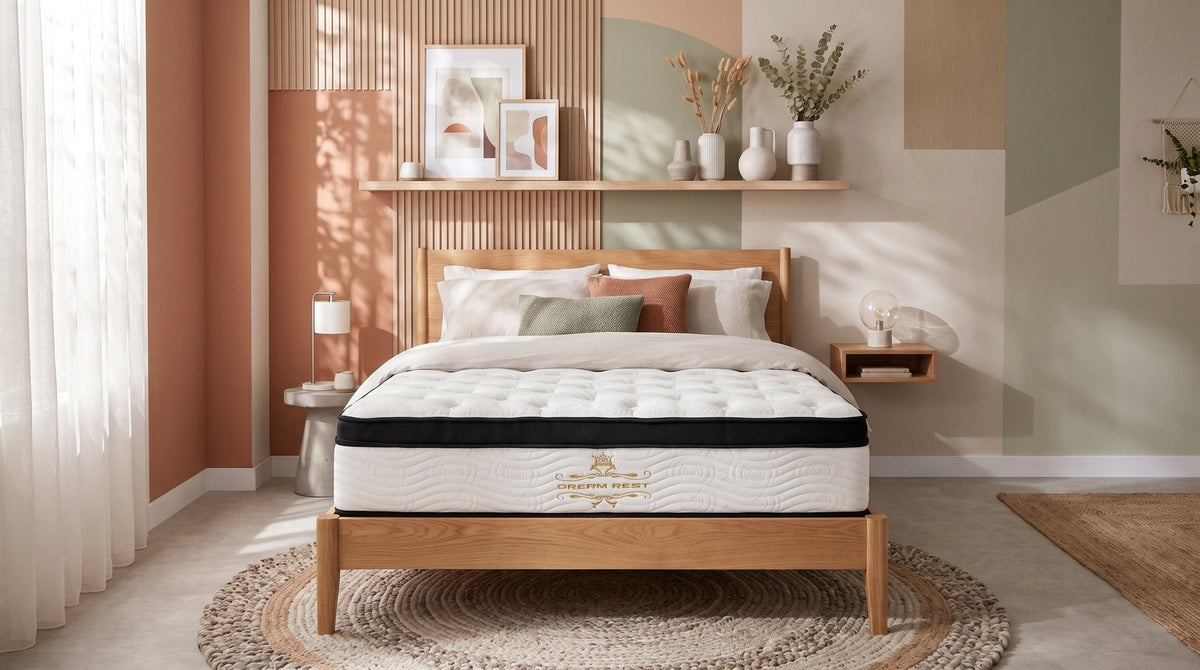
Our four firmness collections, and what sets them
We group our mattresses into four collections: Soft & Plush, Medium Firm, Firm and Extra Firm. Each product page also gives the mattress its own feel label and a score from 1 (soft) to 10 (firm), so the Medium Firm collection holds mattresses labelled Medium (about 5) as well as Medium-Firm (about 6). Firmness is a feel, not a type of mattress. It is set mainly by two things: the gauge of the spring wire, where thicker wire resists more, and the depth and density of the comfort layers on top. That is why a pocket spring mattress can be soft or firm, and a Bonnell mattress can be a plush pillow top or extremely firm.
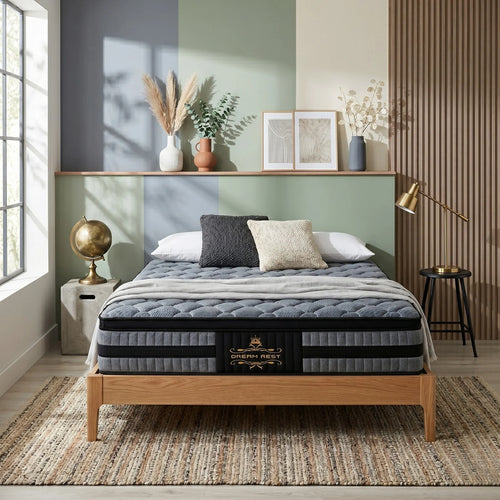
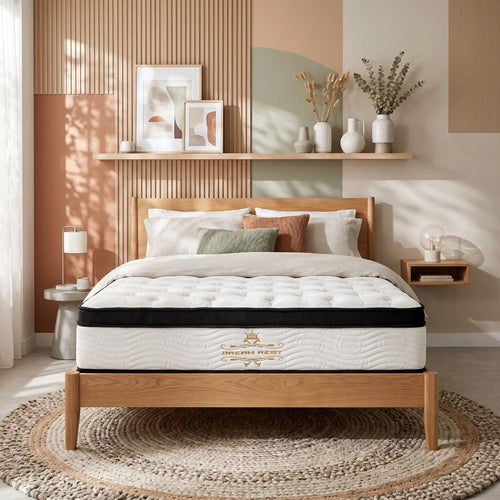
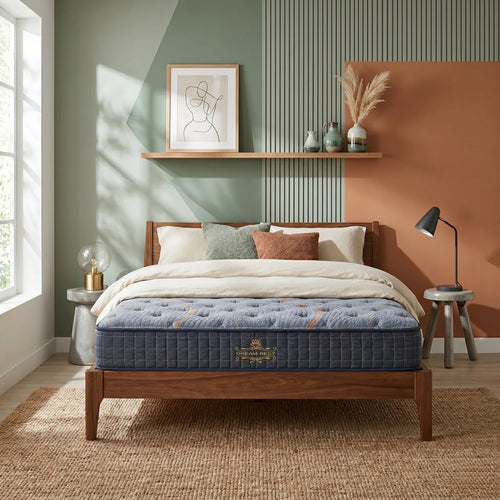
Pieces in this guide

| Feature | Soft & Plush | Medium Firm | Firm | Extra Firm |
|---|---|---|---|---|
| How it feels | You sink in and the top wraps around you | Cushioned on top, supportive underneath | A little give, then a solid base | You lie on it, not in it |
| Usually suits | Side sleepers | Back, combination and side sleepers; couples | Stomach sleepers; heavier back sleepers | Heavier stomach and back sleepers; anyone who wants very firm |
| Examples, with the label on each product page | Supreme Care (Plush, 4/10), Sleep Essential III (Soft, 4/10) | Cradle Rest (Medium, 5/10), Spine Care (Medium, 5/10), Cool Night (Medium-Firm, 6/10) | Posture Delight (Firm, 7/10), Posture Rest Firm (Firm, 8/10) | Crisp Support (Extra Firm, 10/10), Core Correct (Extra Firm, 10/10) |
Browse each tier directly: Soft & Plush mattresses, Medium Firm mattresses, Firm mattresses and Extra Firm mattresses.
Side sleepers: Soft & Plush or Medium Firm
On your side, your shoulder and hip carry most of your weight on a narrow strip of mattress. A softer comfort layer lets them settle in, so the rest of you stays level instead of balancing on two points. That is why side sleepers usually do best on Soft & Plush, or on Medium Firm if they want a little more support underneath.
- Soft & Plush picks. The Supreme Care pairs a memory foam quilted top with a 25 cm, 5-zone pocket spring core that gives a little more at the shoulders; its page labels it Plush, 4 out of 10. The Sleep Essential III Pocket Spring Mattress is a slimmer, simpler soft option, with 2 cm of comfort foam quilting over an 18 cm pocket spring core.
- Medium Firm picks. If a fully soft bed feels like too much sink, the Cradle Rest (Medium, 5/10) keeps a plush quilted top over a 5-zone core.
Lighter side sleepers often find a firm mattress feels hard at the shoulder. Heavier side sleepers compress the comfort layer further, so they may find Medium Firm suits them better than Soft & Plush.

Back and stomach sleepers: Medium Firm to Firm
Back sleepers
On your back, your weight is spread more evenly, and the heaviest section is your hips and lower back. A Medium Firm mattress cushions the surface while the springs stop that middle section dipping too far. The Spine Care 5 Zone Pocket Spring Mattress is a good reference point: its page labels it Medium, 5 out of 10, with a 5-zone pocket spring core tuned for even support across the body. The Cool Night, labelled Medium-Firm at 6 out of 10, sits a step firmer in the same collection. Heavier back sleepers usually move up to Firm, such as the Posture Delight Pocket Spring Mattress: a plush comfort top over a 20 cm pocket spring core with a firmer 2.3 mm wire, labelled Firm, 7 out of 10.
Stomach sleepers
Lying face down, your hips are the lowest point. On a soft mattress they sink further than your chest and shoulders. A Firm feel keeps the surface flatter. Firm does not have to mean hard: the Posture Rest Firm puts profiled wave foam and a foam-and-latex layer over a 2.3 mm pocket spring core, so there is some give on top of a base its page labels Firm, 8 out of 10. It is delivered as a full-size, uncompressed mattress.

Couples, combination sleepers and heavier builds
If you change position through the night, a mattress tuned for one position will be wrong for some of the others. Medium Firm is the middle ground that works reasonably well on your side, back and front. It is also where most couples land when they prefer different feels.
For couples, construction matters as much as firmness. Individually wrapped pocket springs respond mainly under each sleeper, which helps limit partner disturbance. The Cradle Rest, Spine Care and Posture Delight all use them. If one of you sleeps warm, the Cool Night Gel Memory Foam Mattress is labelled Medium-Firm, 6 out of 10, with a gel memory foam top designed to feel cooler than standard memory foam over a 23 cm pocket spring core.
Body weight shifts every recommendation above. A heavier build compresses the comfort layers and springs further, so the same mattress feels softer than it does to a lighter person. The rule of thumb is one tier firmer than your sleeping position alone suggests. If Firm still feels like too much sink, Extra Firm is the next step. The Core Correct Firm Bonnell Spring Mattress is a 15 cm Bonnell coil system with a border frame and butterfly edge support under a quilted top, rated 10 out of 10. The Crisp Support Extra Firm Mattress adds a 2 cm layer of natural coconut fibre above a similar Bonnell base. Both are labelled Extra Firm and are delivered flat, ready to use.

How to test a mattress in a showroom
Firmness labels are not standardised between brands, so one maker's "medium" can feel like another's "firm". Lying on the mattress is the only reliable check. A quick press with your hand tells you very little. This is how to get a useful answer in one visit.
- Know your starting tier. Use the guide above to pick a tier for your position and build before you arrive, so you test with a plan.
- Start in the middle. Lie on a Medium Firm mattress first, then try one tier softer and one tier firmer. Comparing side by side is easier than judging one mattress on its own.
- Lie in your real position for several minutes. Not sitting on the edge, and not flat on your back if you sleep on your side. Bring your own pillow if you can, so the height under your head matches home.
- Notice where you sink. On your side, check whether your shoulder settles in or feels pushed back. On your back or front, check whether your hips dip below the rest of you.
- Test with your partner. One of you lies still while the other rolls over and gets up. Feel how much movement reaches your side.
- Sit on the edge. If you sit on the bed to dress, or want an easy push-up to stand, check how the edge holds. Reinforced edges, such as the Core Correct's border frame and butterfly edge support, are built to be firmer and more stable.
Our five showrooms are in Rocklea, Virginia, North Ipswich, Bundall and Beenleigh. Not every mattress is on the floor at every store, so ask which store has the ones you want on display before you visit.
Firmness questions
Can side sleepers use a firm mattress?
Some do, particularly heavier side sleepers who sink further into the comfort layer. Most side sleepers, though, find Soft & Plush or Medium Firm more comfortable, because a firm surface can feel hard at the shoulder and hip. Try both in your side-sleeping position before you decide.
Are there mattresses that suit several sleeping positions?
A Medium Firm feel is the closest thing. It works reasonably well on your side, back and front without being tuned for one position. Zoned pocket spring mattresses such as the Cradle Rest, Spine Care and Supreme Care add support that changes along the body; in the Supreme Care, the springs are firmer through the centre.
Why does the same firmness feel different between brands?
There is no standard firmness scale across manufacturers. Firmness comes from spring gauge and comfort layers, and every maker combines them differently, so two mattresses labelled "medium" can feel quite different. Test in person rather than relying on the label.
Is a firmer mattress always more supportive?
No. Support comes from the core holding you level; firmness is how the surface feels. A Medium Firm mattress with a zoned pocket spring core can be very supportive, while a mattress that is too firm for you may leave gaps under parts of your body.
Does a new mattress get softer after delivery?
A rolled, boxed mattress keeps settling over the first few days after you unbox it, so give it a few nights before judging the feel. Mattresses delivered flat, such as the Core Correct and Crisp Support, are ready to sleep on straight away.