
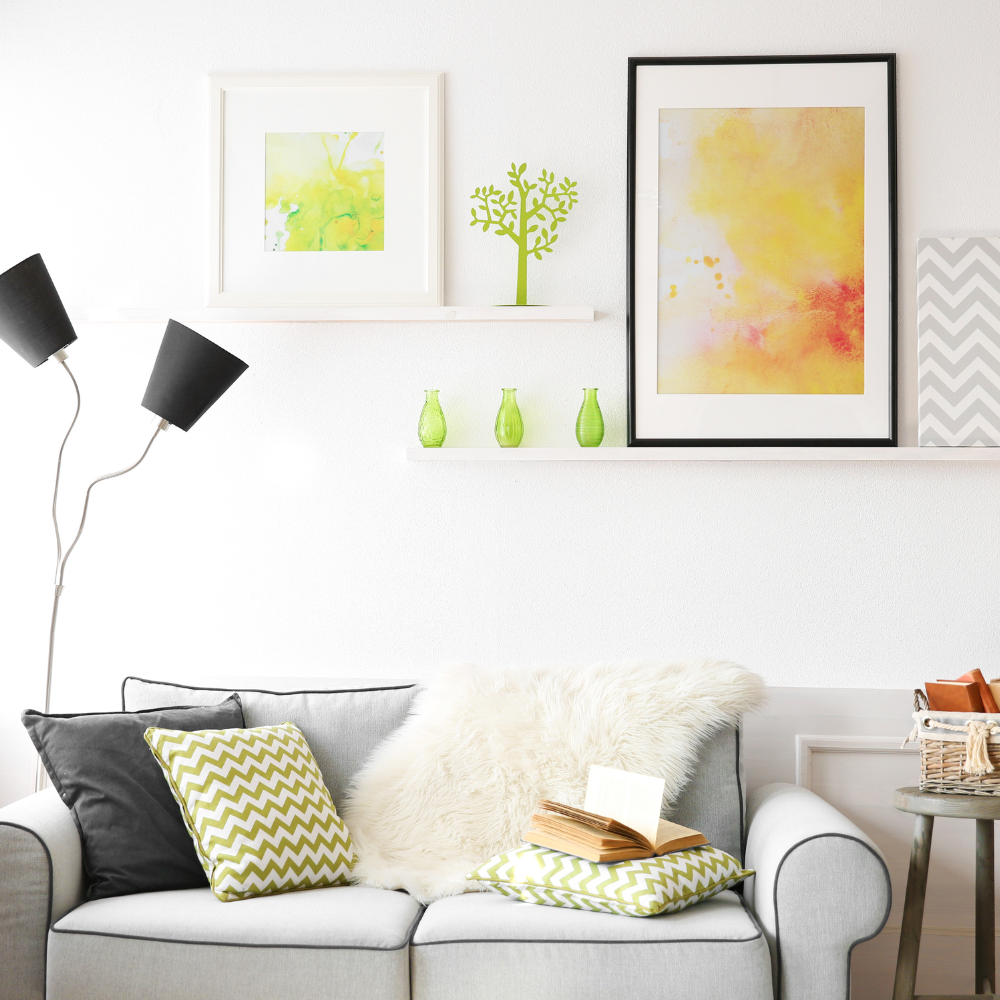
Styling & Inspiration — Sofas
Cushions are the fastest, cheapest way to transform a living room — but getting colour, texture, size and arrangement right takes a bit of know-how. Whether you've just bought one of our lounges and sofas or you're refreshing an existing couch, this guide walks through exactly how to match, size and arrange cushions like a professional stylist.
Start with your sofa
Before you buy a single cushion, look at two things: your sofa's colour and its style. These are your brief — every cushion decision after this builds from them.

The rule of thumb: your sofa is the anchor and your cushions are the accessories. Just like a well-put-together outfit, they should complement the hero piece — not compete with it.
Sofa colour categories
Your sofa's colour falls into one of three camps, and each calls for a different cushion strategy:
- Neutral sofas — white, beige, grey, cream. The most cushion-flexible; almost any palette works.
- Bold sofas — navy, green, terracotta, mustard. Choose cushions that ground or complement the bold base.
- Dark sofas — charcoal, chocolate, black. Need lighter, contrasting cushions so the room doesn't feel heavy.
Sofa style categories
A mid-century modern sofa calls for very different cushions than a plush corner lounge. Matching cushion style to sofa style matters just as much as matching colour:
- Contemporary / modern sofas: clean, structured cushions in pairs of complementary tones; geometric prints work well.
- Traditional sofas: no more than two patterns at once; fringing or piping adds timeless flair.
- Relaxed / coastal sofas: linen, cotton and natural textures; soft neutrals and ocean-inspired blues and greens.
- Eclectic / boho sofas: mix freely — this is where bold, mismatched patterns and global prints belong.
Colour matching by sofa colour
The most common question we hear in-store is: "what colour cushions go with my sofa?" The answer depends on the sofa, so here's the breakdown by colour.

| Sofa colour | Best cushion colours |
|---|---|
| Grey | Mustard & golden yellow · terracotta & burnt orange · blush pink · navy & teal · white, cream & charcoal |
| Beige / cream | Warm rust & terracotta · sage green & olive · dusty blue & slate · deep burgundy & plum · warm whites & naturals |
| White | Bold brights (cobalt, emerald) · earthy tones (mustard, rust) · pastel florals & geometric prints · monochrome black & white · natural linen & beige layers |
| Navy / dark blue | Crisp white & ivory · mustard & warm yellow · coral & blush tones · metallic gold & bronze · lighter blues (sky, powder) |
| Green | Warm neutrals (cream, sand) · terracotta & rust · mustard yellow · chocolate & camel · blush pink (unexpected but effective) |
| Charcoal / black | White & light grey for contrast · bold primary colours (red, teal) · geometric patterns in any tone · gold & metallic accents · layered blacks in different textures |
The 3-colour rule: pick one dominant colour, one complementary colour and one accent colour, then distribute these across your cushions. It's the formula professional stylists use, and it works for any sofa colour.
Texture & fabric combinations
Texture is the secret weapon of great cushion styling. Even cushions in a single colour family create depth and richness when the textures are mixed, rather than looking flat and matchy.

| Cushion fabric | Best paired with | Creates |
|---|---|---|
| Velvet | Linen, cotton, bouclé sofa fabrics | Luxury, warmth, depth |
| Linen / cotton | Leather, velvet, wool sofas | Relaxed, natural, coastal feel |
| Bouclé / knit | Smooth fabric or leather sofas | Cosy, Scandi, tactile warmth |
| Faux fur | Neutral fabric sofas | Glamorous, statement, seasonal |
| Embroidered | Any solid-coloured sofa | Artisan, global, handcrafted feel |
| Silk / satin | Formal, traditional or dark sofas | Elegant, high-end, polished |
The contrast texture rule: if your sofa fabric is heavy and textured (a chunky weave or bouclé), choose lighter, smoother cushion fabrics like cotton or silk. If your sofa is smooth leather or velvet, add tactile interest with linen, knit or faux fur cushions.
Pattern mixing rules
Pattern mixing is where most people lose confidence — but with a few rules, you can mix prints with the same confidence as a stylist. The trick is scale variation plus a shared colour running through every pattern.
- Large pattern: bold geometric, oversized floral, or abstract print.
- Medium pattern: stripe, small check, or tonal botanical.
- Solid / texture: plain velvet, linen or embroidered fabric.
One pattern from each category, linked by a shared colour, is a near-foolproof formula — for example, a bold navy geometric, a navy-and-white stripe, and a solid navy velvet with a gold trim.
| Do | Don't |
|---|---|
| Mix three scales: large, medium, solid | Use three or more busy patterns at the same scale |
| Keep a shared colour running through all cushions | Mix clashing warm and cool tones |
| Use one strong pattern as the hero | Choose patterns with zero colour in common |
| Balance busy patterns with plain solids | Put five different patterns on a small 2-seater |
| Vary texture even within solid cushions | Choose patterns that compete equally for attention |
Cushion size guide
Getting cushion dimensions right matters — cushions that are too small get lost on a large sofa, while oversized cushions overwhelm a compact 2-seater.

| Cushion type | Common size | Best used as | Notes |
|---|---|---|---|
| Large square | 55–65 cm | Back foundation layer | Great on 3-seater, sectional & corner sofas; can overwhelm a 2-seater |
| Standard square | 45–50 cm | Core / main cushions | Suits all sofa sizes; the most versatile choice |
| Lumbar / rectangular | 30 × 50 cm | Front accent layer | Use in odd numbers (1 or 3); adds visual interest & back support |
| Round / bolster | 35–45 cm diameter | Statement / focal accent | Mix one with square cushions for a playful, curated look |
| Small scatter | 30–35 cm | Front accent detail | Best as a final detail on a large sofa; can look lost alone |
A sizing formula that works well for most 3-seaters: two large square cushions (55 cm) at the back, two standard cushions (45–50 cm) layered in front, plus one lumbar cushion (30 × 50 cm) centred at the front.
How many cushions by sofa size
Interior design has moved away from piling sofas high with cushions. The current trend is "less is more" — the goal is a sofa that still looks good to actually sit on.
- 2-seater sofa: 2–3 cushions. Two at one end plus one at the other for a casual, asymmetric look.
- 3-seater sofa: 4–5 cushions. Two at each end plus one lumbar in the middle as the hero piece.
- Corner / L-shape: 5–7 cushions. Two to three at each end of the L, with a grouped cluster at the corner.
- Modular / sectional: 7–9 cushions. Treat each section as its own smaller sofa with 2–3 cushions each.
For corner sofas specifically, interior design specialists commonly recommend placing a few extra cushions along the chaise length to maximise the welcoming feel of the extended seating area.
Arrangement techniques
Even perfectly chosen cushions can look messy with poor arrangement. Here are the three most useful, field-tested techniques.

Technique 1: the classic 2:2:1 layer
The most versatile technique for any sofa:
- Start with two large cushions at the outer ends, resting against the sofa arms. These form the foundation.
- Overlap two medium cushions slightly in front of the first pair — angled inward so both layers show.
- Place one lumbar or accent cushion in the centre to finish the composition and add a focal point.
Technique 2: asymmetric (modern & relaxed)
Perfect for casual living rooms and contemporary sofas. Group two or three cushions to one end of the sofa instead of distributing symmetrically — it looks effortless and relaxed. A 50 cm + 45 cm + 30×50 cm lumbar stack at one end looks especially good on 3-seater sofas.
Technique 3: corner sofa cluster
For corner sofas and chaise lounges, treat each arm end as a separate grouping. Place two large cushions at each arm end, then cluster two to three cushions at the inner corner junction. Leave the chaise end with just one or two cushions for a relaxed, uncluttered finish.
Styling by interior design style
Your sofa's style personality should guide cushion choices just as much as colour. Here's how to nail the look for five popular Australian living room styles.

Scandinavian / minimalist: neutral tones only — white, oatmeal, light grey. Focus on texture differences: bouclé, linen, cable knit. Keep cushion count low (2–3 max), with no patterns or only very subtle geometric outlines.

Bohemian / eclectic: go bold — mix global prints, embroidery, tassels and fringe. Layer jewel tones: teal, terracotta, ochre, deep burgundy. Over-mixing is the point; the lived-in imperfection is the look.

Contemporary / modern: keep it paired and architectural — two matching large cushions plus one contrasting accent. Geometric prints, monochrome palettes or bold single colours work well against a dark or light neutral sofa.
Coastal / Australian relaxed
Queensland homes in particular suit a relaxed coastal aesthetic: natural linen in sandy beige and soft white, with ocean-influenced accents in seafoam, washed blue and pale sage green. Woven cotton and sun-bleached linen textures work well, with subtle patterns such as watercolour washes, fine stripes and simple botanicals. Browse our fabric sofa range to find sofas that suit a coastal cushion palette.
Hamptons style
A perennial favourite in Australian homes. Navy and white is the cornerstone: striped cushions, classic geometrics, and navy velvet cushions layered on a white, cream or light grey sofa. Add coastal warmth with a sand or rope-textured cushion. If you love this look, our corner sofas and chaise lounges are a natural fit.
Common mistakes to avoid
- Too many perfectly matching cushions. A set that matches exactly looks mass-purchased and flat. Mix at least two variations — size, texture or a pattern — so the arrangement feels intentional rather than generic.
- Cushions too small for the sofa. A 35 cm cushion on a large 3-seater reads as a misplaced accent, not a sofa cushion. Scale up — a 50–55 cm cushion as the back layer makes a far more confident statement.
- Piling cushions so high you can't sit down. A sofa that needs eight cushions moved to the floor before you can use it is a styling failure. Leave room to sit.
- Ignoring the rest of the room. Cushions need to connect to a rug, curtain, artwork or accent wall — without a shared colour thread, the arrangement always looks disconnected.
- Ignoring sofa style when choosing cushion style. A structured, tailored sofa calls for tailored, simpler cushions; piling boho prints onto a formal frame creates a jarring look. Let the sofa's personality guide the cushions.
FAQs
How many cushions should I put on my sofa?
A 2-seater sofa looks best with 2–3 cushions, a 3-seater suits 4–5, and a corner or modular sofa can carry 6–9 comfortably. Always leave enough room to actually sit down without moving cushions to the floor — a few well-chosen, differently-sized cushions outperforms an overcrowded pile of matching ones.
Should sofa cushions match the sofa colour?
No — cushions that match your sofa colour exactly can make a room feel flat and overdone. Blend or contrast instead: for neutral sofas (grey, beige, white), add cushions in warm terracotta, mustard or deep teal; for bold-coloured sofas, ground the look with neutral or complementary tones. The goal is coordination, not uniformity.
What size cushions are best for a sofa?
Standard 45–50 cm square cushions work as the foundation for most sofas. Large 55–60 cm cushions add presence on bigger sofas, while lumbar cushions (30 × 50 cm) make great accent pieces in front of the main arrangement. Avoid cushions larger than 60 cm on a 2-seater, and mix at least two sizes in any arrangement.
How do I arrange cushions on a corner sofa?
Start with two large matching cushions at each end of the L-shape, then layer two medium cushions overlapping slightly inward, finishing with a lumbar or accent cushion at the corner junction. Group two to three cushions on the chaise end for a relaxed, layered look — asymmetric arrangement feels more natural on a corner sofa than strict symmetry.
What cushions go with a grey sofa?
Grey sofas are one of the most cushion-friendly colours you can choose. For warmth, pair with mustard yellow, terracotta or burnt orange. For a cool, contemporary feel, use navy, teal or blush pink. For a timeless neutral look, layer whites, creams and charcoal in mixed textures such as velvet, linen and bouclé.
Shop the range
Found the perfect palette? Browse the sofas ready to style it around.