
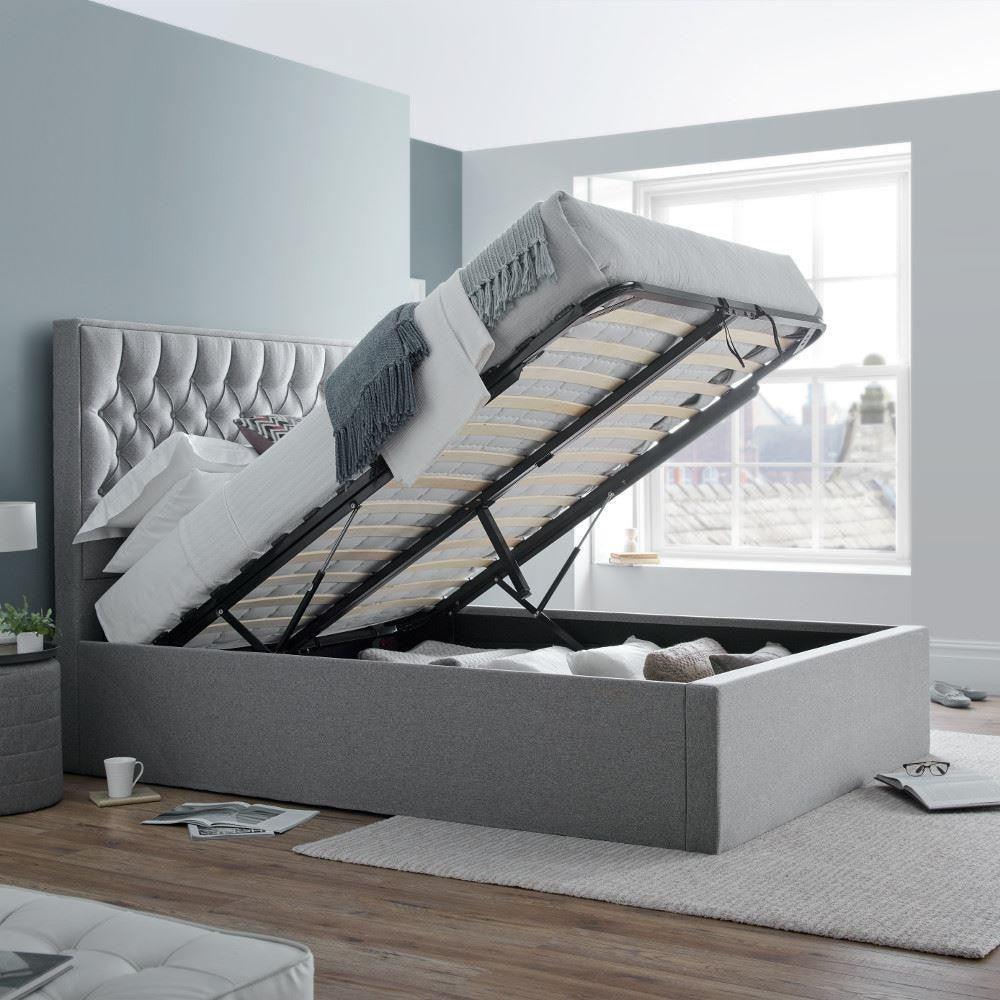
A small bedroom is one of the most common furniture challenges in Australian homes — particularly in newer builds and apartment-style townhouses where bedrooms sit at 3×3 m or less. The right bed frame choice can make that space feel considered and calm; the wrong one makes it feel like the bed chose the room. Here is a practical guide to choosing well.
In this guide
The Small Bedroom Challenge
Three problems make small bedrooms feel cramped, and they’re all related to the bed frame:
- Visual weight: Dark, bulky frames absorb light and visually shrink the room. A king-size frame with a deep footboard and heavy timber posts can occupy 60–70% of a small room’s floor area.
- Poor clearance: Bedroom ergonomics recommend at least 60 cm of walkway around the bed. Below that, the room becomes functionally awkward — you’re sidling past furniture rather than moving naturally.
- Scale mismatch: A feature headboard sized for a master bedroom dominates a guest room or teenager’s room. Height and width need to be calibrated to the room, not just to the mattress.
The good news: bed frame design has moved well past “small room = basic frame.” Storage beds, low-profile designs, and smarter sizing give you real options without sacrifice.
5 Strategies That Work in Small Bedrooms
1. Choose a storage bed
Ottoman and gas-lift beds tuck away bedding, off-season clothing, and bulky items in the space beneath the mattress. This often eliminates the need for a separate chest of drawers, freeing up significant floor and wall space.
2. Go low-profile
A platform or low-profile frame (30–40 cm total height including slats) sits close to the floor. Lower frames make ceilings feel higher and reduce the visual mass of the bed. They work especially well in rooms with standard 2.4 m ceilings.
3. Skip the footboard
A footboard is optional on most bed frames. Removing it from consideration immediately opens up 15–20 cm of visual depth in the room — worth one full step of walkway clearance at the end of the bed.
4. Use light colours
Light grey, cream, and white upholstered frames reflect light and recede visually. A linen-look fabric bed in off-white can occupy the same floor area as a dark timber frame but feel significantly less dominant.
5. Right-size the mattress
Many small rooms are best served by a queen (153×203 cm) rather than a king (183×203 cm). The 30 cm difference in width translates to 30 cm of walkway on one side — enough to shift a room from cramped to comfortable.
Room Size to Bed Size Guide
Use this as a starting point. Measure your room and subtract the bed dimensions — you need at least 60 cm on the access side and 90 cm on the walking side for comfortable daily use.
| Room size (approx.) | Recommended bed size | Notes |
|---|---|---|
| Under 2.8 × 3.0 m | Single (92×187 cm) | Leaves room for a bedside table; best for children’s rooms |
| 2.8 × 3.2 m | King single (107×203 cm) | Good for teenagers; longer length accommodates growth |
| 3.0 × 3.5 m | Double (137×187 cm) | Comfortable for couples in a tight space; limited bedside table room |
| 3.2 × 3.8 m | Queen (153×203 cm) | Most versatile; works in secondary bedrooms and small masters |
| 3.8 × 4.0 m+ | King (183×203 cm) | Need at least 4 m room width for comfortable clearance either side |
Storage Beds: Ottoman vs Gas-Lift
If a storage bed is on your list, the two main mechanisms work differently — and suit different room layouts.
| Ottoman (end-lift) | Gas-lift (side-lift) | |
|---|---|---|
| How it opens | Lifts from the foot end; mattress tilts toward the headboard | Lifts from one side; entire base rises on a hinge |
| Clearance needed | None at sides; works when bed is against a wall | Needs clear space on the lift side (typically 60–80 cm) |
| Storage access | Excellent — full base exposed, easy to reach all areas | Good — side access; may need to reach across |
| Best for | Rooms where bed sits against a wall or in a corner | Open rooms with space on both sides of the bed |
For a detailed breakdown of all storage bed types including drawer bases, see: Storage Bed Types: Ottoman, Gas-Lift, and Drawers Explained.
What to Avoid in Small Bedrooms
- Dark, bulky frames: Heavy timber with posts or thick rails visually fill a small room far beyond their physical dimensions. If you want timber, go with a slimmer rail profile or a lighter finish.
- Oversized headboards: A 140+ cm high headboard in a room with 2.4 m ceilings leaves very little breathing room. Aim for 90–110 cm above the mattress in tighter spaces.
- Chunky four-leg bases: Four-leg bases can create the visual illusion of a floating piece, which helps — but only if the legs are slim and the base is low overall. Chunky four-leg bases often look heavier than platform frames.
- Going too small: Picking a double when a queen would fit can backfire — you still have all the challenges of a small room, plus an uncomfortable sleeping situation for years.
Shop A2Z Bed Frames for Small Spaces
A2Z stocks a range of storage beds and single/king-single frames in-store across Brisbane and the Gold Coast, with friendly advice from our team on sizing for your specific room.
Frequently Asked Questions
What is the minimum room size for a queen bed?
Do storage beds cost significantly more than regular frames?
Is an ottoman or gas-lift bed better for a small room?
How much clearance should I leave around a bed?
What colour bed frame makes a small room look bigger?
Shop space-saving bedroom furniture
Ready to reclaim some floor space? Browse bed frames with storage for drawers and gas-lift bases, single bed frames for compact rooms, and bedside tables sized to fit beside a narrow bed.