
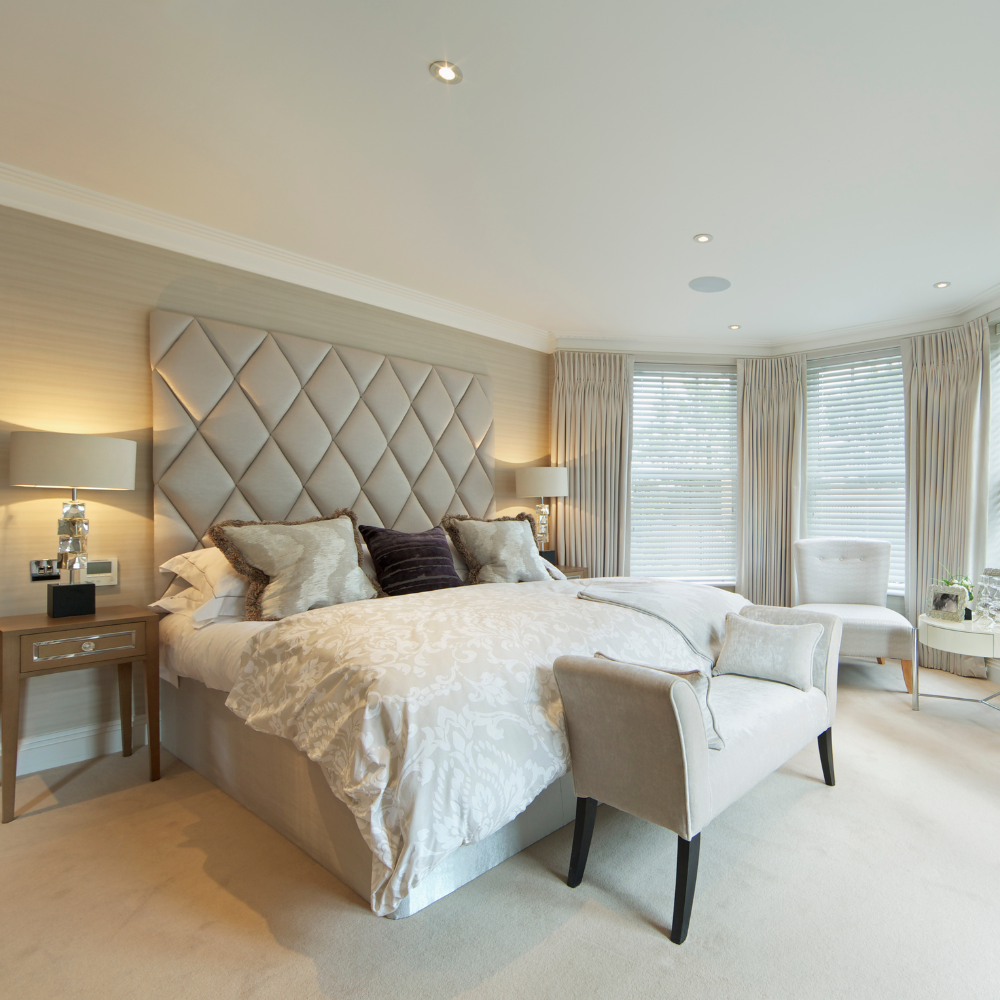
A high headboard fabric bed frame does more than fill a wall — it anchors the bedroom, softens noise, and gives you something genuinely comfortable to lean against. But height, fabric choice, and scale all interact. Get one wrong and a statement piece can feel overwhelming or cheap. This guide walks through everything so you can choose with confidence.
In this guide
What Makes a High Headboard Fabric Bed Frame Distinctive
Standard headboards sit roughly 90–110 cm above the mattress surface. A high headboard starts at 120 cm and can reach 160 cm or more on statement designs. That extra height brings three real benefits:
- Visual anchor: A tall upholstered panel draws the eye upward, giving even a mid-size bedroom a sense of height and proportion. It acts like a focal point that interior designers otherwise achieve with art or a feature wall.
- Sitting comfort: If you read, scroll your phone, or watch TV in bed, fabric at head and shoulder height is significantly more comfortable than a timber rail or bare wall. High headboards essentially bring a piece of sofa-like cushioning into your sleep space.
- Acoustic benefit: Upholstered panels absorb sound rather than reflecting it. In rooms with hard floors or plaster walls, this noticeably reduces echo and can improve sleep quality.
The tradeoff is scale. A high headboard that suits a 4×4 m master looks oppressive in a 3×3 m room. Height and fabric together determine whether the piece reads as luxurious or just large.
How to Choose the Right Headboard Height
The standard rule: the top of the headboard should sit no higher than two-thirds of the ceiling height. For Australian homes with 2.4 m standard ceilings, that means keeping headboard tops at or below 1.6 m from the floor — typically 90–130 cm above the mattress.
| Ceiling height | Recommended headboard top (from floor) | Typical headboard above mattress |
|---|---|---|
| 2.4 m (standard) | Up to 1.55 m | 90–120 cm |
| 2.7 m (higher set) | Up to 1.75 m | 110–140 cm |
| 3.0 m+ (heritage/new build) | Up to 2.0 m | 130–160 cm |
Room width matters too. In a bedroom narrower than 3.2 m, a king-size high headboard will feel wall-to-wall even if it isn’t. Consider a queen with a moderately tall headboard over a king with a very tall one — you’ll gain visual breathing room on both sides.
Fabric Types: Velvet, Linen-Look, and Polyester Compared
Most high headboard fabric beds at A2Z use one of three upholstery categories. Here is how they differ in practice:
| Fabric | Feel | Durability | Maintenance | Best for |
|---|---|---|---|---|
| Velvet (performance) | Plush, warm, premium | High if fibre-treated; shows pulls if snagged | Vacuum regularly; spot-clean with damp cloth; avoid steam | Feature bedrooms, adults-only rooms, cooler climates |
| Linen-look (polyester-linen blend) | Textured, matte, breathable | Very high; resists pilling and fading | Spot-clean easily; most blends are machine-washable covers | All-climate use, family homes, neutral palette rooms |
| Polyester (plain weave) | Smooth to slightly textured | High; colourfast and abrasion-resistant | Easiest to clean; wipe down with damp cloth | Rental properties, kids’ rooms, budget-conscious buyers |
In Queensland’s humid summers, linen-look blends outperform velvet for breathability. Velvet’s density can feel warm against skin on humid nights. If you’re drawn to velvet for aesthetics, pair it with breathable cotton bedding to offset the warmth.
For a deeper look at how upholstery options compare — including PU leather — see: PU Leather vs Velvet vs Fabric: Which Upholstery Is Right for You?
Styling a High Headboard Bed
Pillows
Layer two Euro pillows (65×65 cm) flat against the headboard, then standard sleeping pillows in front. Add one or two throw cushions for texture variety without crowding the panel.
Bedding layers
A relaxed linen duvet cover works well with velvet headboards — the contrast in texture reads as intentional. For polyester headboards, structured cotton percale keeps the look from feeling too casual.
Lighting
Wall sconces either side of the headboard (mounted at shoulder height when seated) avoid bedside table clutter and frame the headboard beautifully. If sconces aren’t possible, arc floor lamps behind bedside tables achieve a similar layered effect.
Colour
A high headboard in a contrast colour — charcoal in a white room, sage in a neutral room — acts as a feature wall without painting. Tonal choices (cream headboard, cream walls) create a calmer, more hotel-like feel.
Browse A2Z High Headboard Fabric Beds
A2Z stocks a curated range of high headboard fabric bed frames available in-store across Brisbane and the Gold Coast, with delivery throughout South East Queensland.
Frequently Asked Questions
How tall is considered a “high” headboard?
Will a high headboard make my room feel smaller?
Is velvet practical in a warm climate like Queensland?
How do I clean a fabric headboard?
Can I use a high headboard bed in a room with low ceilings?
Shop fabric and upholstered beds
Browse the full range of fabric bed frames and upholstered bed frames, or see every size in queen bed frames.